
Racism + Critical Race Theory
Critical Race Theory Opponents Stand in the Tradition of Anti-Abolitionists
Recognizing the racist fears and agenda of CRT critics
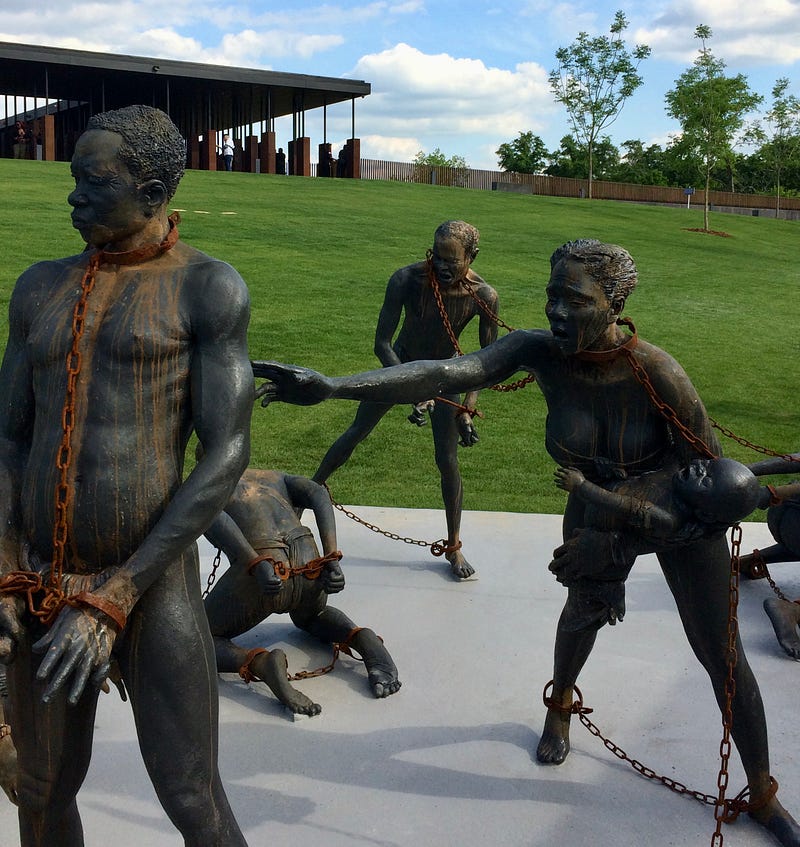
Very few opponents of Critical Race Theory (CRT) would say they support chattel slavery. Very few would admit they would have opposed the abolition of slavery if they were alive during the time of chattel slavery in America. However, their opposition to the teaching of CRT is virtually identical to earlier opposition to the dissemination of abolitionist teachings and literature.
The anti-abolitionist movement in America
As I write this article on 15 November 2023, I’m reminded that 193 years ago today, North Carolina passed two laws designed to limit the influence and dissemination of anti-slavery literature.
One of the laws, “An Act to Prevent the Circulation of Seditious Publications,” banned bringing into the state any publication with the tendency to inspire revolution or resistance among enslaved or free Black people. A first violation of the law was punishable by whipping and one-year imprisonment, while those convicted of a second offense would “suffer death without benefit of clergy.”
The 1830 law directly responded to a publication written in September 1829 by David Walker, a free Black abolitionist and activist living in Boston, Massachusetts. Walker published an anti-slavery pamphlet, An Appeal to the Coloured Citizens of the World. The pamphlet advocated for racial equality and called for free and enslaved Black people to actively challenge injustice, racial oppression, and the institution of slavery.
The pamphlet was quickly and secretly circulated among Black people, especially in the South, inciting anger among many white people and sometimes swift and harsh punishment. When Walker’s treatise reached his hometown of Wilmington, North Carolina, the police magistrate informed Gov. John Owen, who issued the following proclamation:
…every means which the existing laws of the State place within the reach of its citizens, should be promptly used…to prevent the dissemination of Walker’s pamphlet — the mischievous tendency of which is obvious to every one, and the design of which cannot be mistaken. The circulation of this book proves beyond a doubt that a systematic attempt is making by some reckless persons in the North to sow sedition among the slaves of the South; and that this pamphlet is intended and well calculated to prepare the minds of the slave population for any measure, however desperate… I beg you will lay this matter before the police of your town, and invite their prompt attention to the necessity of arresting the circulation of the book alluded to; and I would suggest the necessity of the most vigilant execution of your police laws, and the laws of the State.
North Carolina’s “An Act to Prevent the Circulation of Seditious Publications” sought to stem slave rebellions by repressing the spread of abolitionist literature. The law made it a felony to import and distribute “any written or printed pamphlet or paper…the evident tendency whereof would be to excite insurrection, conspiracy or resistance.” A second law at the time banned “the teaching of slaves to read and write,” saying it “has a tendency to excite dissatisfaction in their minds and to produce insurrection and rebellion to the manifest injury of the citizens of this State.”
Walker’s Appeal also led to Georgia’s December 1829 anti-literacy law, which made circulating insurrectionist texts punishable by death. Virginia, Missouri, and others followed. As a Missouri state archive website puts it, the bans were deemed necessary because “an uneducated black population made white citizens feel more secure against both abolitionists and slave uprisings.”
The first anti-literacy legislation in the colonies was nearly one hundred years earlier in the wake of South Carolina’s 1739 Stono Rebellion, which resulted in the death of 25 white people and more than 50 Black people and the burning of at least six plantations. Afterward, South Carolina passed An Act for the Better Ordering and Governing Negroes and Other Slaves in This Province. The law contained several provisions to keep enslaved Africans in “subjection and obedience,” often by limiting the dissemination of what today might be labeled “divisive teachings.”
This attempt by white people to limit the dissemination of abolitionist teachings that made explicit the racist oppression of Black people by white people is in many ways similar to the current attempt by conservatives to ban the teaching of any American history that highlights and makes explicit the racist oppression of Black people by white people.
White fear of Black resistance to white supremacy
The banning of abolitionist materials and the banning of American history falsely labeled “CRT” are rooted in fear of Black resistance and Black challenges to white supremacy. According to Ron DeSantis, Florida’s Republican governor and potential nominee for President of the United States, “Critical Race Theory teaches kids to hate our country and to hate each other. It is state-sanctioned racism and has no place in Florida schools.”
A bill DeSantis signed into law forbids teaching “that racism is not merely the product of prejudice, but that racism is embedded in American society and its legal systems in order to uphold the supremacy of white persons.” It also says educators “may not define American history as something other than the creation of a new nation based largely on universal principles stated in the Declaration of Independence.” The language of the bill echoes an op-ed article, “What Our Schools Should Teach As To Slavery,” published in the Richmond Enquirer in 1856:
Every school and college in the South should teach that slave society is the common, natural, rightful and normal state of society. Any doctrine short of this contains abolition in the germ: for, if it be not the rightful and natural form of society, it cannot last, and we should prepare for its gradual but ultimate abolition…To teach such doctrines, we must have Southern teachers and Southern school books. It is from the school that public opinion proceeds, and the schools should be set right. No teacher should be employed in a private family or public school at the South, who is not ready to teach these doctrines. Parents, trustees and visitors should look to this thing.
With the implementation of an “anti-woke” public school curriculum on Black history, Ron Desantis and his administration are promoting the type of teaching prescribed by anti-abolitionist racists in 1856. Florida’s teachers are now required to instruct middle-school students that enslaved people “developed skills which, in some instances, could be applied for their personal benefit.”
Controlling what children learn (and don’t learn) about racism and its history in America helps those who benefit from racist practices and policies. An uneducated American citizenry helps those who benefit from racism feel more secure against Black resistance and challenges to white supremacy.
White fear of Black resistance and challenges to white supremacy was forcefully articulated by conservative politicians immediately after Black Lives Matter protests in response to the police killing of George Floyd in 2020. As Americans rebelled against police killings of innocent Black people in general and George Floyd in particular, Texas Senator Ted Cruz said, “This is a terrorist assault in our country, and rioting cannot be tolerated.”
Anti-rebellion political rhetoric was channeled into so-called “anti-rioting” laws against looting, property damage, and even protesting, suggesting that America was under siege. “These people are violent, domestic extremists,” Marco Rubio said. “They hate the police, they hate the government, and they want this country to fall apart…some of them want a second civil war.” In light of the underlying cause of America’s Civil War, Rubio’s reference to a “second” Civil War is quite interesting.
Anti-protest bills represented the first round of opposition against Black Lives Matter demonstrations. As anti-racist literature like How to Be an Antiracist by Ibram Kendi and White Fragility by Robin DiAngelo became popular tools for challenging racism and white supremacy, conservatives turned their attention to creating legislation designed to ban the reading and teaching of such books.
CRT is not being taught in k-12 schools
CRT is an academic and legal framework developed 40 years ago to examine and analyze how racism is embedded in America’s laws and institutions. CRT is not being taught in public schools in America. CRT’s depth of examination and analysis of racism in America’s laws and institutions is not being taught in k-12 schools.
So-called “CRT bans” being passed by conservative state legislatures are not about banning CRT. Instead, they are designed to prevent schools from teaching about racism or any topics that confront America’s history of racial and gender oppression. The bans are intended to prohibit anti-racist teachings in classrooms and anti-racist teaching and training in workplaces nationwide.
Former Trump adviser Steve Bannon stated, “The path to save the nation is very simple — it’s going to go through the school boards.” Locally, parents have taken heed, turning school board hearings into tribunals to eradicate anti-racism.
As of the writing of this article, 18 states have banned the teaching of CRT. The governors of 17 states have vetoed legislation prohibiting the teaching of CRT. Eleven states have bills moving through the state legislature to ban CRT, and only seven states have not proposed CRT bans.
These bans often use language preventing the teaching of “divisive concepts.” A bulk of the bills include vague language, calling for a ban on what they call “race and sex stereotyping” or “race or sex scapegoating,” meaning they want to stop instruction that makes “value judgments” that lead to white people feeling guilty and black people challenging and resisting white supremacy.
Just as the slave-era legislation prohibiting the teaching and dissemination of “anti-abolitionist” literature was created to prevent challenges and resistance to white supremacy, the so-called “anti-CRT” legislation of the 21st century that prohibits teaching about race and racism in public schools has been created to prevent challenges and resistance to white supremacy.
It is impossible to eradicate racism without talking and teaching about racism. The bans against teaching CRT are about prohibiting discussions about racism. “When you’re really serious about addressing a problem, the last thing you do is punish people for building the tools to see the problem, to analyze the problem, and to develop the capacity to remove the problem,” legal scholar and founding critical race theorist Kimberlé Crenshaw told Vox. “You can’t fix a problem that you can’t name. Racism is a problem in the United States, and conservatives don’t want us to name it because they are uncomfortable with it.”
Is it possible that conservatives are uncomfortable naming racism because they don’t want to fix it? Is it possible they don’t want to fix it because they benefit from it? Is it possible they don’t want it taught because they’re afraid teaching it will encourage even more Black resistance and challenge white supremacy?
Upon close examination of anti-abolitionist and anti-CRT legislation, the similarities seem to suggest that anti-CRT legislation may be an ideological offspring of laws banning abolitionist literature. If so, we can only hope the efforts of anti-CRT advocates will eventually fail, just as the efforts of anti-abolitionists eventually failed.
Thanks for reading. If you’d like to get my articles emailed to you directly, you can subscribe here.
Learn more about Guy Nave here.
See ALL of my Medium articles here.
Follow me on Twitter: @guynave2.
If you enjoyed this article, you will most likely appreciate the following: