
Critical Lessons For Living In Sobriety

While any time in sobriety and recovery can be considered critical, there are more crucial times that we will go through, that will really test our sobriety to extreme lengths. There will be those times in our recovery where life really feels like we have to white knuckle it just to barely survive day to day, hour to hour, and even minute to minute.
When I consider what times in recovery are those more crucial, it has to be times that are the most stressful. When we are stressed, we can be a ticking time bomb when we are trying to stay sober.
Reverting back to drugs or alcohol has of course, been the solution for instant gratification, numbing and blocking for so very long, that we can be so trained to instantly, turn to substance abuse. As if it is done instinctively. We can easily take ourselves so many steps backwards, taking away our grasp, of every step we had gone forward.
There are many platforms that can be found that give self help pointers that are great tips for managing those extra stressful times for us who are living in sobriety.

One of the first parts I found helpful was one that says we have to learn how to master our time, and budget our responsibilities accordingly. Getting into a spot where we feel rushed because our “to do” lists are so long, and our time is still short, is a stressful experience for anybody. So it can be quite a struggle indeed for someone trying to keep themselves from falling off the wagon.
I can really relate to this issue of time. It goes deeper than you’d think too. These type of scenarios of time management can stress us out, not only for our feeling of feeling rushed, or perhaps flustered. It also represents a setting of not being in control. As with many other types of situations, a feeling of being out of control is a sure fire way to add extreme feelings of stress.
We have to learn to keep our day to day lives at a steady and stable pace. It is okay to slow down, and it is okay to have a desire to not be busy 16 hours a day. Don’t only focus on the act of slowing down.
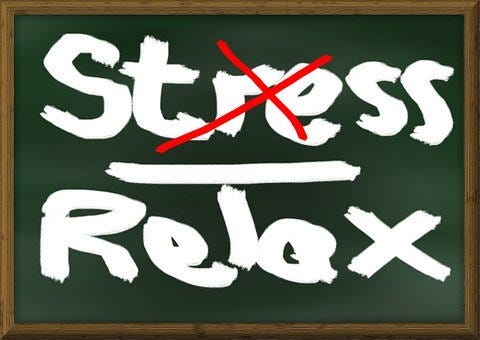
Focus on allotting time each day to give back to ourselves. Time for relaxation and unwinding are wonderful gifts that a sober person can give to themselves. Learn and realize that it’s deserving too.
I have come to find that relaxation techniques are a massive help with me in my day to day life, with my everyday stressors. My favorites being deep breathing, and meditation. I have heard of both of these since the dawn of my mental health and addiction problems all came to light a long time ago.
Finally, one of the best things that I have read about in this topic is one that is all about “the value of the word NO.”
It’s rather self explanatory in its title, but it is advice that is often most struggled with. This isn’t usually something that we can master in one shot, and become proficient at the drop of a dime. It is something that can feel rather strange when it is first practiced. It takes time to feel comfortable with.
We have become so unknowingly trained to be yes people, and our guilt has stopped us from protecting our own gift of time. I think true friends or loved ones should always be able to depend on each other for getting an answer of yes when requests for help with things arise. But this is all about finding a true and steady balance between helping others, and taking care of self.
Balance runs even deeper than that. Balance is something that will most certainly give us greater strength as we build a life of sobriety that can have a minimal amount of stress, as often as possible. None of us can pass by every single life struggle. However we can work on managing them and keeping stress and anxiety as much at bay as possible.
-End

Michael Patanella
is a Trenton, New Jersey Author, Publisher, Columnist, Editor, Advocate, and recovering addict, covering topics of mental health, addiction, sobriety, mindfulness, self-help, faith, spirituality, Smart Recovery, social advocacy, and countless other nonfiction topics. His articles, publications, memoirs, and stories are geared towards being a voice for the voiceless. Hoping to reach others out there still struggling.


