
Criminalization of Black Magic: The Most Gruesome Murder Case in Malaysian History
Rooted in grime, the occult, superstitions, and a strong rebellion against the word of God, black magic, has been implemented into helping businesses (or tarnishing those of others), forcing romantic relationships and getting ahead in politics.
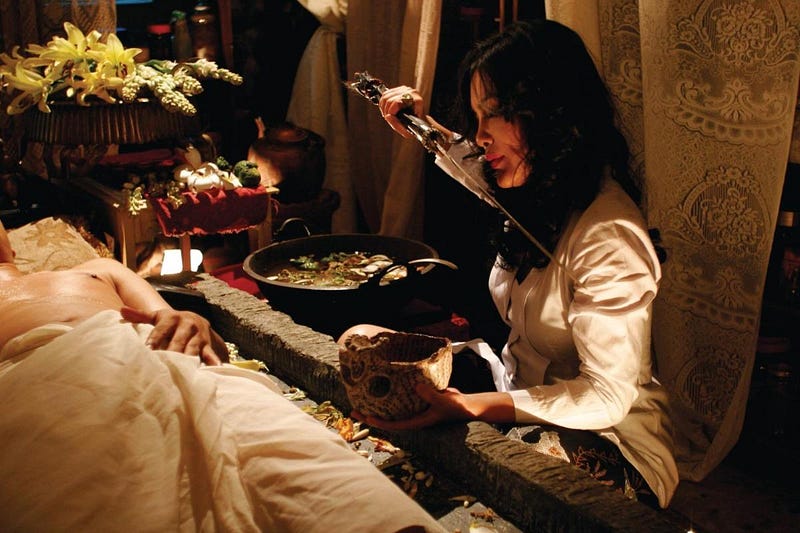
Belief in magic is so ingrained in Southeast Asian society that you don’t need to look far to find it. Trust in the healing powers of magic has its roots in antiquity. Black magic in Southeast Asia has a more nefarious intent and is often fuelled by all that glitters. Lust for power and control — these are the evil twin desires that drive people to the doors of a shaman or locally known as dukun, bomoh, or ‘master’.
The hideous murder of a Malaysian assemblyman Datuk Mazlan Idris by Mona Fandey captured headlines in the 1990s. It was reported that Mazlan wanted to boost his political career and sought the services of Mona for assistance. Mazlan was educated in the United States and was an ambitious politician from the ruling United Malays National Organisation (UMNO) party.

At the time, Mona (45) worked with her husband Mohamad Nor Affandi Abdul Rahman (44), and their assistant Juraimi Hassan (31). Mona and her husband promised to help Mazlan by giving him a talisman consisting of a cane and sbatmi headgear which was supposedly owned by former Indonesian President Sukarno. Mona convinced Mazlan that he would be “invincible” if he held the talisman. In return, Mona demanded RM2.5 million (approximately USD582,000).
The trio took part in a ritual in which the politician was persuaded to lie on the floor, close his eyes, and wait for money to “fall from the sky”. He was then beheaded with an axe, skinned, and his body cut into 18 pieces before being buried in a cement-covered hole.
Mazlan was reported missing on July 2, 1993 after withdrawing RM300,000 (USD70,000) from a bank. After the murder, Mona was reported to have been on a shopping spree where she bought a Mercedes-Benz and had a facelift.
Trial and Execution

It was alleged that the murder occurred between 10:00 PM and 12 midnight on July 18, 1993. On July 22, 1993, police found Mazlan’s body; Mona, her husband, and Juraimi were arrested and a highly publicized trial began. They were tried in Temerloh High Court by a 7-person jury (trial by jury was abolished from January 1, 1995). The High Court found all three of them guilty and sentenced them to death by hanging.
Mona and the others filed appeals to the Federal Court and in 1999 the court dismissed their appeals and upheld the death sentence. Finally, the three convicts sought to obtain a pardon or clemency from the Pardons Board of Pahang, their final chance redemption. However, the board refused to give clemency. Mona, Affandy, and Juraimi were finally hanged on November 2, 2001 at Kajang Prison. A prison official said the trio expressed no remorse at the pre-dawn execution.
The Controversy
It was also reported that Mona had said she would never die just before she was executed.
Throughout the trial, Mona exhibited strange behavior including appearing cheerful, constantly smiling, and posing for press photographers. She dressed extravagantly with bright and colorful designs on her dress. She also remarked, “It looks like I have many fans”.
At the time, it was often rumored that paranormal occurrences took place in the surroundings of Mona’s jail cell and claims that Mona often invoked her supernatural powers to briefly leave the prison for a drink but returned before dawn. However, this rumor was denied by the prison officer.
A senior prison officer had said there was a lot of crying and hugging as they spoke to their children and family for the last time. It was also reported that Mona had said she would never die just before she was executed. It is not known what she meant by that.
The Last Jury System in Malaysia
Mona Fandey’s case was Malaysia’s last jury trial in 1993 before the system was abolished and it will be long remembered. The Malaysian government at the time (circa 1994–1995) cited reasons such as, among other reasons, jurors being not legally trained and easily swayed by emotions and public opinions. The Minister of Justice back then quoted several factors that led to the decision to abolish the jury system: The jurors were easily convinced by the arguments of the defense counsel, jurors were reluctant to attend and do jury duty, and many jurors did not feel like being responsible for a person’s death sentence.
The Haunting
The main mystery of Mona remains questioned until now. Many have claimed to see the appearance of Mona at night near her house or at the prison which the Mona used to stay. They said they Mona spirit is still strong that it can’t vanish. Her house is said to be haunted by spirits as a result of the black magic that she practiced while living there. Those who have ventured into the house agreed that the house carries a very dark energy that is undeniable.
Rumors of Mona’s powers did not stop as the public claimed to have seen her dancing in nightclubs.
She once told the reporters that “Aku tak akan mati” or translated as “I will never die”. And those words continue to haunt many of us till the present day.