
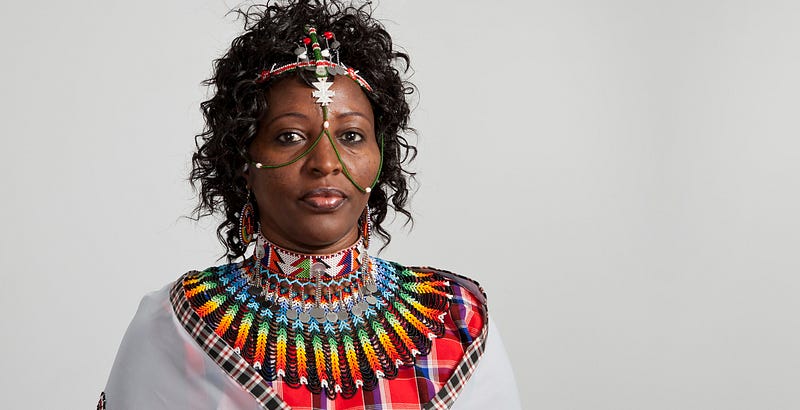
Cries from Our Forests — Listening to Agnes Leina
“Gone are the days when we see butterflies, and we know for sure, rains are somewhere around the corner. We miss those days. I can tell you that for sure, because of climate change. And that’s the thing that we’re facing every day.”
Agnes Leina comes from the Northern part of Kenya, Samburu County. This region is inhabited predominantly by the Samburu community, a subset of the Maasai peoples of Kenya, who are mainly pastoralists clinging strongly to their traditional way of life.
She has over 15 years of experience in working for rural Indigenous pastoralist communities, especially with women and girls, defending their human rights concerns in education, climate change, land and natural resource rights, violence against women, early marriages and female genital mutilation, as well as access to alternative livelihood options.
Agnes is the Founder and Executive Director of Il’laramatak Community Concerns (ICC) whose name denotes ‘care-givers’, or pastoralists. The Maasai are the “care-givers” of the grazing land throughout Kenya. In 2019, she was one of the participants of the 63rd session of the UN Commission on the Status of Women, the UN’s largest annual gathering on women’s rights issues.
She is also the Gender Coordinator of the Indigenous People of Africa Coordinating Committee (IPACC), alongside being a member of the Academic Advisory Council of the Global Forum for Indigenous Women (FIMI). Agnes works at the community, national, regional and international levels with different structures and communication strategies.
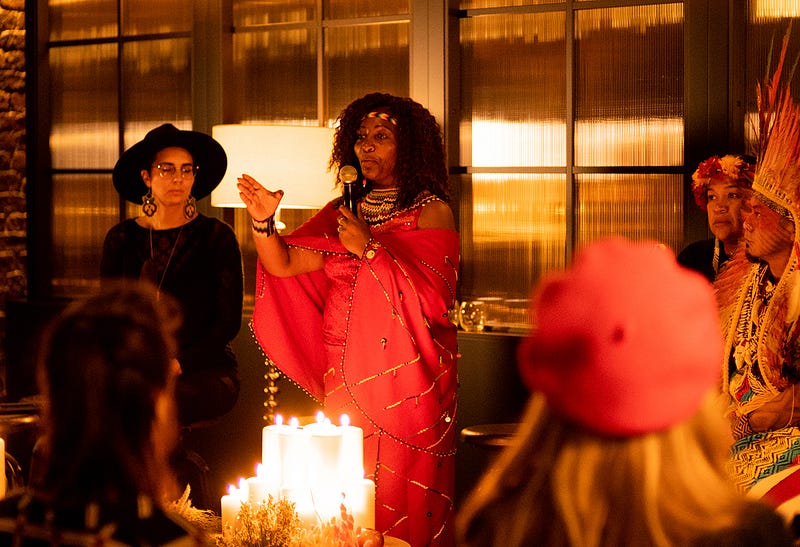
Recently, at COP26 in Glasgow, UK, Agnes was invited to speak at the Real World Leaders on Climate session organized by Lily Cole, Flourishing Diversity and Goals House.
In response to Farhana Yamin’s question: “What is the one thing you want to see the COP do?”, she had this to say:
“Water justice is a problem, not just in Kenya, not just in pastoralist communities, but in the whole of Africa. With all the technology we have about water, we still have so much shortage of water. Why? Because of climate change.
We’ve come to the COPs, all of us and talked and talked and talked and made presentations, but really what happened? I still keep coming. I’m still here. The same things. Nothing changes. The drought that we have, of course that’s irreversible. But how do we adapt to that?
We want to be recognized and we want to be given our chance.”
Agnes continues to fight for women and girls to become more empowered, self-reliant and independent.
Follow Agnes on Twitter and Facebook.
Agnes is also featured on the podcast by Lily Cole titled: New Year Ancient Wisdom: Indigenous Listening. Are we commodifying the sacred? Feat. indigenous leaders, activists, a Lord and a Prince.
Join our movement on Instagram.
Main image credit: Ryan Brown at UN Women.


