
INNOVATION AT RISK
Creativity Under Siege: Exposing Education’s Hidden War on Inventive Thinking
Unveiling the Crisis: Rethinking the Role of Creativity in Our Classrooms
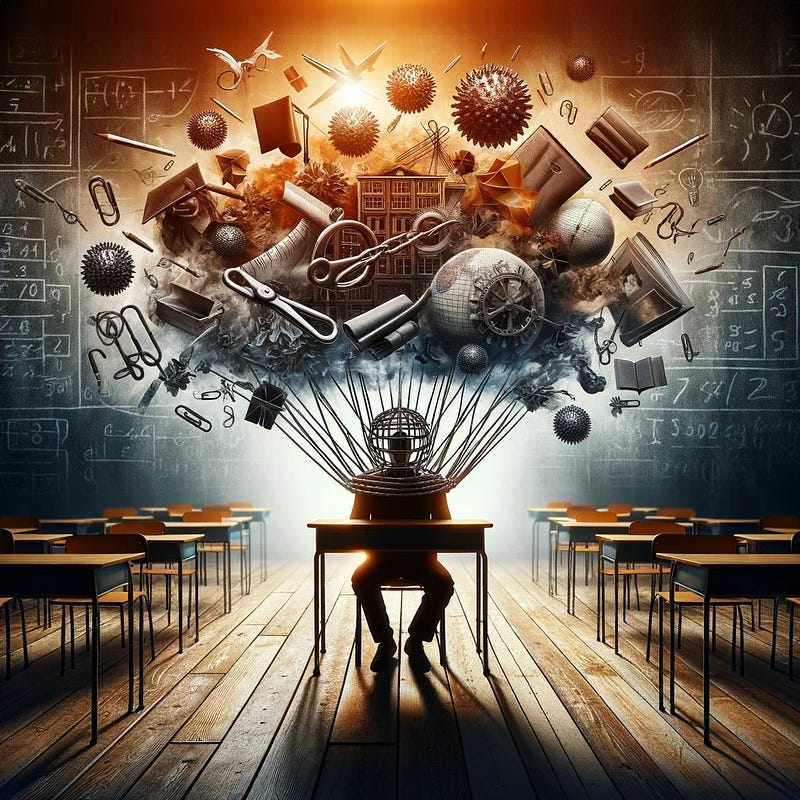
Did you know that according to a study by NASA, while 98% of 4-5-year-olds exhibit genius levels of creativity, this number plummets to a mere 2% by adulthood? This dramatic decline raises questions about the role of formal education systems in nurturing or stifling creative potential.
In a world that constantly evolves, brimming with diverse challenges and opportunities, one would expect education systems to be cradles of creativity and innovation. Yet, paradoxically, the halls of formal education, with their rigid structures and standardized tests, often echo with the silent whispers of stifled creativity. From the moment children step into the classroom, the unspoken mantra seems to be conformity over creativity and memorization over imagination.
The conventional structure of formal education, with its focus on standardized testing and uniform curricula, is often touted as the ladder to success.
But at what cost?
This article seeks to unravel a critical question:
Are these traditional educational paradigms more a barrier than a boon to creativity and personal growth?
Diving deep into the heart of education, we will explore the dichotomy between the rigidness of formal education and the fluidity of creative thought. This journey is not just an exploration of facts; it’s a call to rethink and reimagine the true essence of learning.
The Constraints of Formal Education
In the neatly arranged rows of a traditional classroom, where students are often valued for their ability to recall information, the vibrant hues of creativity and original thought risk being dulled. The stark reality is that the prevailing model of formal education, with its deep roots in industrial-age principles, is fundamentally at odds with the cultivation of creativity.
Standardization and Creativity
The cornerstone of most educational systems is standardization: standardized tests, standardized curricula, and standardized assessments. While this approach ensures a certain level of consistency in education, it inadvertently sidelines creative thinking. Creativity thrives on diversity, exploration, and questioning – elements that find little room in a system primarily focused on right answers and rigid guidelines.
Stifled Voices
Consider the story of Anna, a bright-eyed student with a penchant for imaginative writing. In her early school years, Anna’s stories filled the pages with fantastical worlds. However, as she progressed through the grades, her creativity was gradually overshadowed by the demands of standard essays and structured responses. Anna’s experience is not unique; it echoes the experiences of many students who find their creative voices muted in the pursuit of academic conformity.
The Loss of Potential
The impact of this creative stifling is not just individual but societal. When students like Anna conform to the narrow confines of standardized education, the world loses potential innovators, artists, and thinkers. Creativity is not just about art; it is a crucial skill for problem-solving, adapting to change, and envisioning new possibilities in every field.
Contrasting with Creative Learning Environments
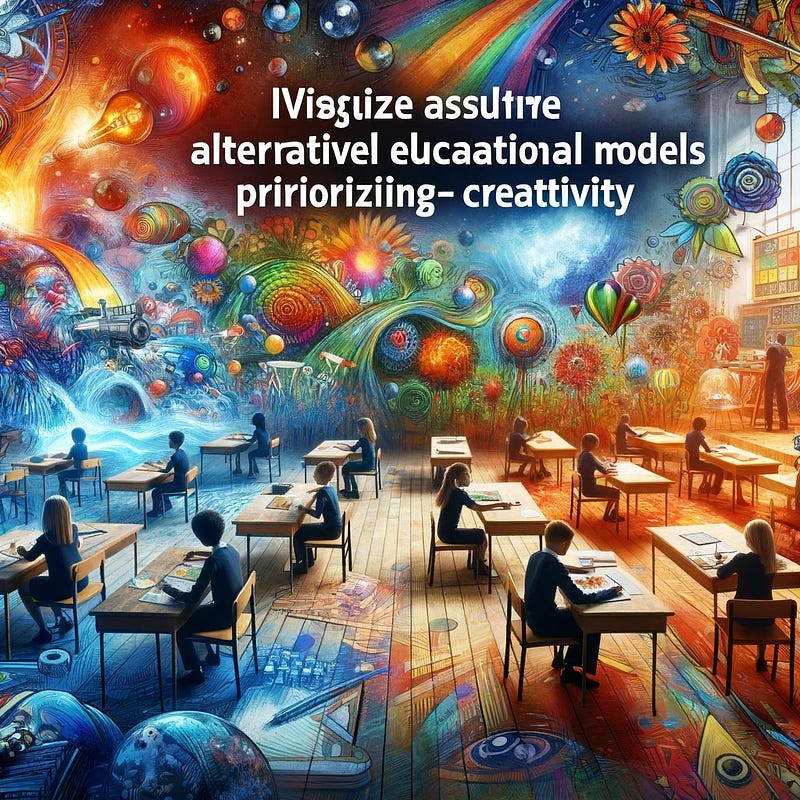
In stark contrast to the rigid framework of traditional education, there are educational philosophies and models that place creativity at the forefront of learning. These models, often seen as radical departures from conventional schooling, offer a glimpse into what education that truly values creativity looks like.
Alternative Education Models
- Montessori Approach: In Montessori schools, the focus is on child-led learning. Children are encouraged to explore and learn at their own pace in an environment designed to stimulate curiosity and creativity. This approach fosters independent thinking and innovation from a young age.
- Waldorf Education: Waldorf schools emphasize imagination in learning, integrating arts and creativity throughout the curriculum. This holistic approach nurtures a broad range of intelligences and talents, not just those valued in traditional academic settings.
- Project-Based Learning: This approach involves students in projects that provide real-world relevance to their learning. It encourages problem-solving, creative thinking, and collaboration skills that are crucial in today’s innovative and rapidly changing world.
Success Stories
- Case Study: Take, for example, the story of Maya, a student who transitioned from a traditional school to a Waldorf school. In her new learning environment, Maya’s love for art was not just accommodated but celebrated and integrated into her learning process, leading to a significant improvement in her overall engagement and academic performance.
- Impact on Lifelong Learning: Students who experience these creative learning environments often carry forward a love for learning and a capacity for innovative thinking into their adult lives. They are more likely to pursue careers that value creative problem-solving and show greater resilience in the face of challenges.
A New Perspective on Success
These alternative models challenge the conventional notion of educational success. They demonstrate that when education nurtures creativity, it prepares students not just for tests and grades but for life.
The Importance of Nurturing Creativity
In the rapidly evolving landscape of the 21st century, the ability to think creatively is not just an asset but a necessity. The importance of nurturing creativity in education goes beyond producing artists and writers; it’s about fostering a mindset that can innovate, adapt, and solve complex problems.
Creativity as a Crucial Skill
- Beyond Artistic Expression: Creativity is often equated with artistic talent, but its scope is much broader. It encompasses critical thinking, innovation, and the ability to view problems from multiple perspectives. In fields from engineering to entrepreneurship, creativity is the engine that drives progress.
- Adaptability in a Changing World: In a world where change is the only constant, the ability to adapt and innovate is crucial. A creative education equips students with the skills to navigate and shape an ever-changing global landscape.
Expert Insights
- Educational Experts: Voices from the educational field, including teachers and researchers, emphasize the need for creativity in curriculum design and teaching methodologies. They argue that an education system focused solely on standardized testing and rote learning is ill-equipped to prepare students for the challenges of the future.
- Psychological Perspective: Psychologists highlight the link between creativity and mental well-being. A learning environment that encourages creativity can foster higher self-esteem, resilience, and a more profound sense of fulfillment.
The Ripple Effect
- Societal Impact: When creativity is nurtured in education, the benefits extend beyond individual students. Societies with a strong creative workforce are better positioned to innovate and solve complex challenges, from technological advancement to environmental sustainability.
Rethinking Education for the Future
As we draw the curtains on this exploration of creativity in education, it becomes evident that the traditional paradigms of learning are in dire need of reform. The future demands an education system that doesn’t just impart knowledge but inspires, challenges, and nurtures the creative spirit.
A Call for Change
The time is ripe for a seismic shift in how we approach education. This involves moving away from a one-size-fits-all model to a more personalized, student-centered approach that recognizes and cultivates each student’s unique abilities and creative potential.
Envisioning a Creative Education System
- Integrating Creativity Across Subjects: A reimagined education system would embed creativity not just in arts and humanities but across all subjects, including sciences and mathematics, encouraging innovative thinking in every domain.
- Fostering a Culture of Inquiry and Exploration: Schools should be environments where questioning is encouraged, and failure is seen as a stepping stone to learning and discovery.
- Empowering Educators: Equipping teachers with the tools and freedom to teach creatively is essential. Professional development should include training in creative teaching methodologies, allowing educators to inspire their students effectively.
The Broader Picture
This call for change is not just about transforming schools; it’s about reshaping our societal values and perceptions regarding success, intelligence, and learning. It’s about preparing future generations not just for exams and job markets, but for life’s myriad challenges and opportunities.
As we reflect on the journey through the realms of formal education and creativity, it becomes clear that the true essence of learning lies in its ability to kindle the creative spark within each individual. In nurturing this spark, we don’t just create artists, scientists, or entrepreneurs; we create thinkers, dreamers, and innovators capable of leading the world into a brighter future.
As we envision a future where education fuels rather than dampens creativity, how might our own experiences in formal education have been different if creativity had been the guiding principle?
And what can we, as a society, do now to ensure that the next generation of learners is not just well-informed but creatively empowered?