
Creativity Begins With “Oh, Snap!”
Can frustration lead to creativity?

The Oxford Dictionary defines creativity as “The use of imagination or original ideas to create something”
Whether it’s about doing the chores at home with the least effort or dealing with a pandemic, we all need creativity.
Research suggests different ways to be more creative. You can spend time alone, listen to some classical music, open yourself up to new experiences or even go for a walk when you want to come up with something creative. But there’s one method which is slightly different, but really really effective. To illustrate that, allow me to take you back a few years ago.
I stood at the entrance to the university gym, wondering whether I had come to the right place.”What am I doing here?”
To my right badminton rackets smashing like thunder… To my left ping pong balls bouncing in rhythm…Sportsmen and women buzzing around like busy bees. Energy, excitement and enthusiasm electrifying the air and I told myself “Oh snap! I hope I don’t make a mess of myself”
Don’t we all feel a bit jittery on the very first day of trying out something new? As I stood there, I remembered Jack Canfield who once said: “Everything you want is on the other side of fear”.
So I walked to the other side - of the gym.
Then I spotted them- white angelic robes, swift kicks and intense looks on their faces: the taekwondo team!
And thus started my very first day at taekwondo.
Things went on well for a couple of weeks until one day when we were practising a particularly difficult kick.
I gathered all my strength, took a deep breath, and kicked- certain that I’d have my opponent on the moon. But the very next moment, he was not on the moon; but I was on the ground with a piercing pain in my ankle. Oh, snap!
The next day, a doctor looked at the X-ray and then my leg. X-ray, leg, X-ray-leg. “I’m afraid we will have to put a thick bandage around your ankle to ease the swelling. You’ll have to be very careful about your leg for at least for 3 months!”
“Oh, snap! Doctor, I have an event coming up soon! I am one of the main organizers. How can I organize an event if I cannot run around?”
He just shrugged.
With time, I realized that I did not have to run around. With a lot of delegation, planning and help from my colleagues, I did manage to make the event happen. I learned ways to not walk too much or give too much strain to my leg. Taking a bath without wetting the bandage was a nightmare — but I found some creative ways to get around that.
And I realized that feeling like a glorious mess makes me more creative!
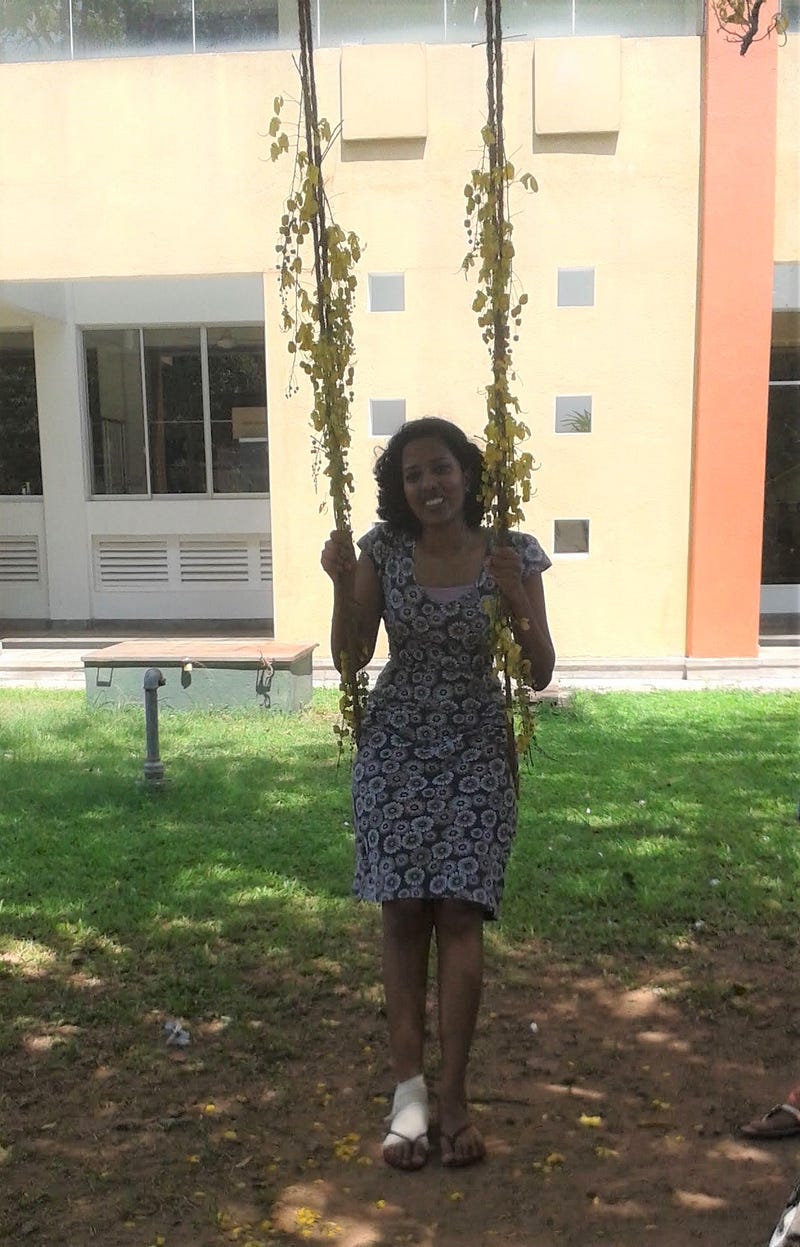
I’m not the only one who says this.
In 1975, the American musician Keith Jarrett stood utterly frustrated in front of the Cologne Opera House piano. He was tired. He hadn’t had enough sleep. To top it all, the piano was a glorious mess. The high notes shrieked. The low notes didn’t have enough volume and the pedals didn’t work at all.
“Oh snap! I can’t do this”
“But please Mr. Jarrett, 1400 people will be here to watch you.”
And a few hours later, Jarrett sat at that unplayable piano and went on to make the best use of the keys that were a little bit better than the rest. The recording turned out to be the best-selling piano album in history and the best-selling solo jazz album in history.
Being surrounded by a glorious mess made Jarrett more creative.
As the artist Flash Rosenberg says,
“Feeling frustrated is an essential part of the creative process. Before we can find the answer — before we can even know the question — we must be immersed in disappointment, convinced that a solution is beyond our reach”
The only question is, to be more creative,
Are you willing to work your way around that injury which landed you on the ground?
To play that unplayable piano?
To solve that problem which drives you nuts?
Because it might just be the way to turn your “oh snap!” to an “Oh wow!”
I had this story in my archive but didn’t think it would be good to be published. Thanks to Alexandru Văsâi for mentioning in a comment that we could “have fun and learn from your experience in martial arts”. This one is for you!


