
Creating Space for Women in a World of Bullies
Why we must create space for others as well as for ourselves
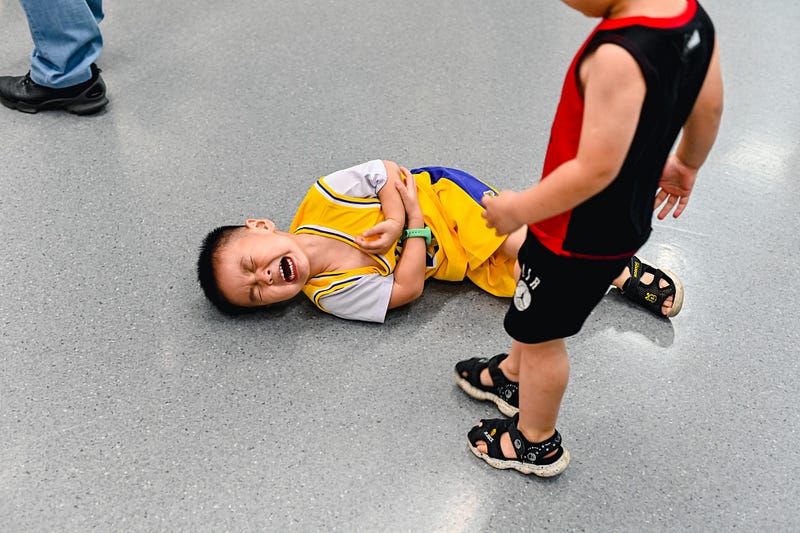
In sixth grade I defended a boy. At the time, I thought it was a big mistake, but maybe it wasn’t.
He was a scrawny boy with a perpetual cowlick, and he had long been the victim of endless, cruel and sometimes violent bullying. The attacks were brazen, constant, and to me, horrifying.
I, too, was a victim of bullying. But the practical jokes and name calling, the unpopularity I experienced as a result of being a shy, chubby child, paled in comparison to the unrelenting physical assaults and abuse heaped on this boy. Day after day, I wondered how he could bear coming to school.
Back then, teachers frequently took breaks from the classroom. I remember our teacher, Mr. Wilson, assigning us a worksheet and telling us to remain in our seats while he stepped out. But as soon as he left, four or five boys seized the opportunity to gang up on the boy I will call J.H.
This time the bullying seemed especially harsh, escalating quickly to a frenzied pitch. It was as if some unquenchable fire burned in the feverish souls of those bullies.
First, they dragged J.H. from his desk and flung him to the floor. Then someone snatched his glasses, crushing them underfoot. He stared at his tormentors through fearful, myopic eyes, whimpering pitifully as they pummeled and kicked him.
The rest of us, 19 or 20 kids, looked on. Some snickered; others were quiet.
I am not now nor was I then a hero, but I hated unfairness and had a strong dislike of the bossy boys who ruled our class. Springing from my seat, heart hammering, I amazed my classmates and myself by stomping into the fray. This was an unexpected twist, and the room grew suddenly quiet. I shattered that quiet by shouting, “Stop it! Quit picking on him!”
Fists stopped in mid swing and heads swiveled my way. The surprise was palpable. Then J.H., still on the floor, shot me a look filled with hatred. “Shut up, you stupid fat pig,” he said. “Leave us alone.”
Embarrassed, mortified, I slipped back to my desk. I had redirected the attention from J.H. and the beating stopped, but I had drawn the contempt of my classmates. The reaction churned up a novel revelation: being defended by a girl was more humiliating than anything the boys were doing to J.H.
The inferiority of girls
This was my first inkling that sixth grade boys considered sixth grade girls to be an inferior species. Far better to suffer brutal bullying than to have a girl come to your rescue.
This was in the sixties, and there were other signs that girls were inferior. When we played basketball, we were not allowed to use the full court. I was on the basketball team and wanted to run, but “Girls aren’t strong and you might get exhausted,” said Mrs. Hobgood, our basketball coach. I realize this sounds absurd now, but that was the way things were back then.
Boys were invited to be acolytes in church, but girls were not. My parents thought it was a great honor to see my brother dressed in his little robe, assisting with the religious services at my father’s church. I didn’t especially want to be an acolyte, but I brooded and resented the fact that I was considered unworthy because I was a girl.
We were second-class citizens, and this was constantly reinforced by rules and attitudes.
I got my revenge later, by growing up to be pretty. It gave me pleasure to refuse dates with those same bullies who had dominated sixth grade. But this newfound weapon was dependent on the response and approval of men. It was a transient and unreliable power, bound to erode with time, since there is always someone prettier and age is the enemy of beauty.
Being young and pretty had another downside. One afternoon, newly married, I planned to meet my partner in the city after work. Arriving early, I took a detour to the art museum. I even remember what I wore that day: a white, knee-length sundress with red embroidery, more girlish than seductive.
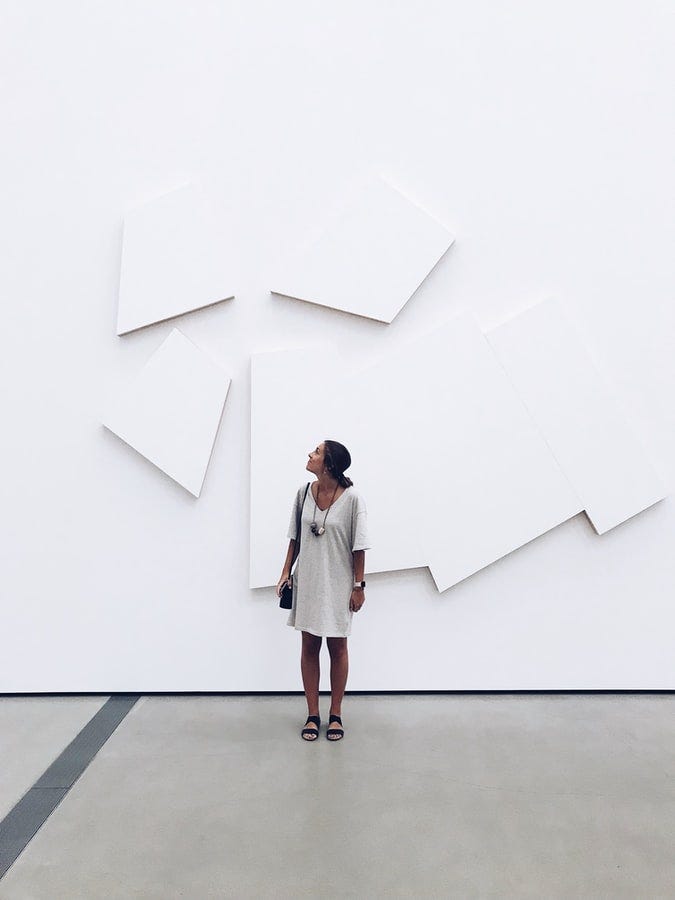
As I drifted through the museum, enthralled to be doing something on my own in the city, I became aware of a man following me. I ignored him, but he kept drawing closer, invading the boundaries of my safe, happy bubble. Finally he barged into my space and invited me for a drink.
“I’m married and not interested,” I said. He brazenly persisted, ignoring my wedding ring and protests. Irritation turned to fear when he followed me from the museum. I picked up my pace, he picked up his, and I was relieved the streets were crowded as I threaded my way to the safety of my partner’s office. But my illusion of safe spaces was shattered by this rude and unwanted intrusion.
The progress of women and girls
These things happened a long time ago, and although bullying and harassment will never be fully eradicated, women and girls have made headway. Space for women has expanded in the workforce, in politics, and even in religion.
The Me Too movement brought exposure of widespread sexual-abuse and allegations.
Scholarships are available to encourage women to enter traditionally male-dominated fields like engineering and computer science.
Women are wielding political power, and many men, including my partner, respect, encourage and support women.
Our freedoms are fragile
Our spaces are no longer circumscribed by unreasonable and arbitrary barriers. Yet the spaces we create, areas of progress, freedom and opportunity, are never a given. There are always bullies, and they make progress a fragile thing to be guarded and cherished.
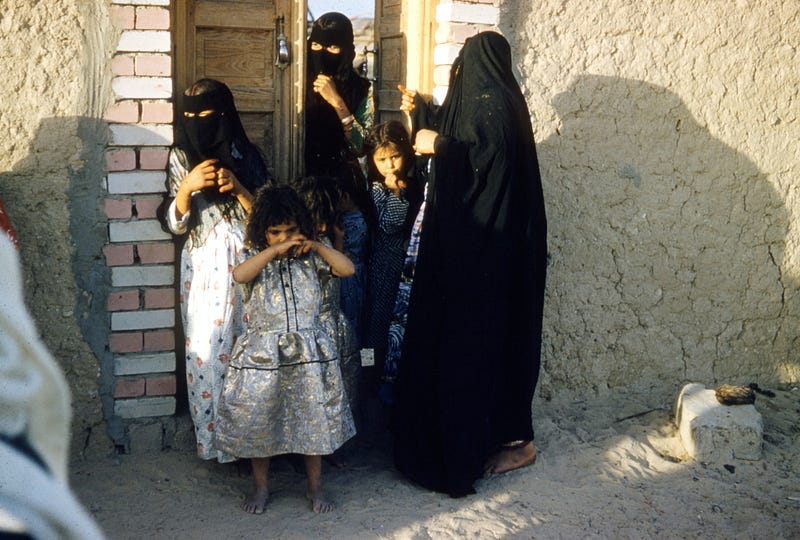
When I think of my own space, a place of opportunity forged through decades of activism and perseverance, I think of the women of Afghanistan. They emerged from oppression to attend school, to work, to travel freely through their streets, but now, once again, are at the mercy of bullies. Their space, always precarious, could soon become the most limited space imaginable; a place without access to education, books, music, or even the ability to leave their homes or cast off their burqas.
“They made me invisible, shrouded and non-being A shadow, no existence, made silent and unseeing Denied of freedom, confined to my cage Tell me how to handle my anger and my rage?” — Zieba Shorish-Shamley, from “Look into my World” published on the 50th anniversary of the United Nations Universal Declaration of Human Rights
In an interview with CNN, Khaled Hosseini, author of “The Kite Runner,” said, “One of my grave concerns is that the voices that are going to be overlooked are those of women. When the Taliban were in charge in Afghanistan back in the 1990s, the Taliban essentially barred women from any meaningful participation in Afghan societal life. It was maybe the worst place on the planet to be a woman.”

The bullies in my sixth grade class grew up. They are lawyers, doctors, businessmen, husbands and fathers. Nurtured in the soil of affluence, liberty, and cultural constraints, they seem to have abandoned their bullying ways. If not, their wives and daughters at least have some recourse, some of the time.
The Taliban boys, nurtured in the soil of radicalism, poverty, hatred and extremism, grew into dangerous men, forever bullies, and their country allows no recourse for women and girls. Abdul Waheed Ahmad, in an opinion piece titled “Fixing Afghanistan will require ending its bully culture,” said “The bullies ruling over us were illiterate, oppressive, and preyed upon even our few small moments of joy.”
Women in Afghanistan could be reduced to a joyless life, watching their hard-won freedoms disappear, their hopes obliterated as they descend to a dark space almost unimaginable to the rest of us. But how does that affect us, safe and prosperous in the spaces we have forged? I can’t help but think it affects us a lot. In “The Wasted Vigil,” Nadeem Aslam said, “Pull any thread here and you’ll find it’s attached to the rest of the world.”
When we tolerate evil and oppression in the hope of preserving our own safe space, we find there is no safe space. We do not create a place of opportunity and freedom to dwell in it alone, removed from the outside world. Our freedoms are meant to enlarge us beyond our own personal success and comfort.
I can’t stomp into this fray, as I did in sixth grade, and demand justice against bullies. But I can continue to advocate, using whatever means are at my disposal, and to pray. If we turn a blind eye to women and girls who have no space in this world, we lose a bit of our own soul. As Martin Luther King, Jr. said, “Whatever affects one directly affects all indirectly.”