Free AI web copilot to create summaries, insights and extended knowledge, download it at here
2494
Abstract
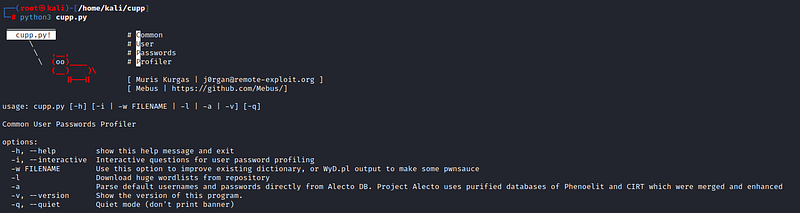
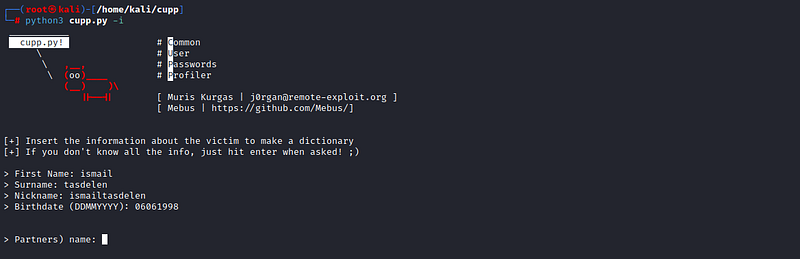
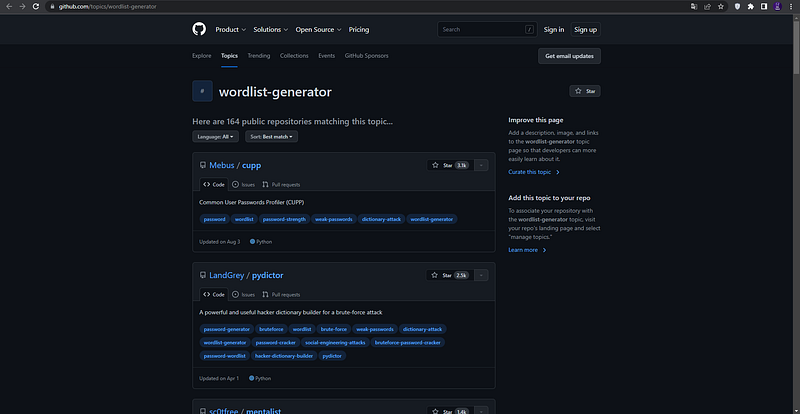
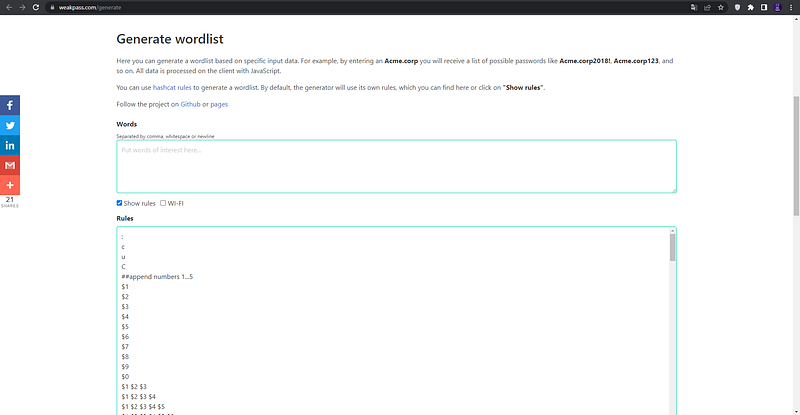
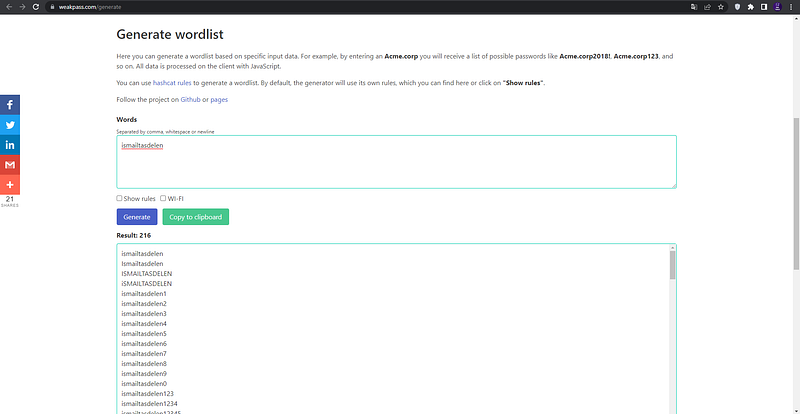
s-1.readmedium.com/v2/resize:fit:800/1*nuCsw5l2O8rnh1eK2C0cTg.png"><figcaption></figcaption></figure><figure id="1db1"><img src="https://cdn-images-1.readmedium.com/v2/resize:fit:800/1*tgQKCF3tRHcyqPLvlga3Zw.png"><figcaption></figcaption></figure><p id="b44a">In this article, I have only explained the CUPP tool. But you can find many alternative tools on github.</p><figure id="42c5"><img src="https://cdn-images-1.readmedium.com/v2/resize:fit:800/1*BBu5b1Y7TmMMazHNIHwYag.png"><figcaption></figcaption></figure><p id="2d52">As a bonus for this article, I would like to tell you about an online tool. The name of this tool is WeakPass, this tool can create a password list according to some password rule set.</p><p id="6324">Url : <a href="https://weakpass.com/generate">https://weakpass.com/generate</a></p><div id="9665" class="link-block">
<a href="https://zzzteph.github.io/weakpass/">
<div>
<div>
<h2>Weakpass password generator</h2>
<div><h3>Here you can generate a wordlist based on specific input data. For example, by entering an you will receive a list of…</h3></div>
<div><p>zzzteph.github.io</p></div>
</div>
<div>
<div style="background-image: url(https://miro.readmedium.com/v2/resize:fit:320/)"></div>
</div>
</div>
</a>
</div><figure id="dcc2"><img src="https://cdn-images-1.readmedium.com/v2/resize:fit:800/1*rGH9QJ6Y67IcyJI-9dZzxw.png"><figcaption></figcaption></figure><p id="daae">If you want to create password creation rules yourself, you can refer to the site below and use it.</p><div id="f90a" class="link-block">
<a href="https://hashcat.net/wiki/doku.php?id=rule_based_attack">
<div>
<div>
<h2>rule_based_attack [hashcat wiki]</h2>
<div><h3>The rule-based attack is one of the most complicated of all the attack modes. The reason for this is very simple. The…</h3></div>
<div><p>hashcat.net</p></div>
</div>
<div>
<div style="background-image: url(https://miro.readmedium.com/v2/resize:fit:320/)"></div>
</div>
</div>
</a>
</div><p id="d507">Now let’s create a list of passwords if you want.</p><figure id="6214"><img src="https://cdn-images-1.readmedium.com/v2/resize:fit:800/1*AvcppkUnmTWjaSwtEkTMbw.png"><figcaption><
Options
/figcaption></figure><p id="228c">As you can see, it created 216 passwords according to password rules.</p><figure id="d207"><img src="https://cdn-images-1.readmedium.com/v2/resize:fit:800/1*i2i6JI_RbpF557C7UgmXKQ.gif"><figcaption></figcaption></figure><p id="4252">Thank you for taking the time to read this article. See you in my next post, take care.</p><p id="6db1"><b>For more interesting articles</b></p><div id="af20" class="link-block">
<a href="https://medium.com/databulls/web-uygulama-g%C3%BCvenli%C4%9Fi-konusunda-kendinizi-nas%C4%B1l-geli%C5%9Ftirebilirsiniz-70967012b645">
<div>
<div>
<h2>Web Uygulama Güvenliği Konusunda Kendinizi Nasıl Geliştirebilirsiniz</h2>
<div><h3>Bana gelen en çok sorulardan biri ise “Kendimi web uygulama güvenliği tarafında nasıl geliştirebilirim nasıl bir yol…</h3></div>
<div><p>medium.com</p></div>
</div>
<div>
<div style="background-image: url(https://miro.readmedium.com/v2/resize:fit:320/0*XjAGO3RDxwoU-g5R)"></div>
</div>
</div>
</a>
</div><div id="e112" class="link-block">
<a href="https://readmedium.com/how-can-you-improve-yourself-on-web-application-security-e0d65f441e8f">
<div>
<div>
<h2>How Can You Improve Yourself on Web Application Security?</h2>
<div><h3>One of the most common questions I get is “How can I improve myself on web application security, what kind of path do I…</h3></div>
<div><p>medium.com</p></div>
</div>
<div>
<div style="background-image: url(https://miro.readmedium.com/v2/resize:fit:320/0*OdTnVRwqGuZ3HPyM)"></div>
</div>
</div>
</a>
</div><div id="2ec7" class="link-block">
<a href="https://readmedium.com/how-to-pass-the-microsoft-certification-sc-900-a823f4a24db0">
<div>
<div>
<h2>How to Pass the Microsoft Certification SC-900</h2>
<div><h3>Let's take a look at how I passed…</h3></div>
<div><p>medium.com</p></div>
</div>
<div>
<div style="background-image: url(https://miro.readmedium.com/v2/resize:fit:320/1*6UrtjS-zOuIGf9NZDhAYYg.png)"></div>
</div>
</div>
</a>
</div></article></body>