avatarThe Mars Girl

Free AI web copilot to create summaries, insights and extended knowledge, download it at here

3619

Abstract

Shigeo (on left) Source: <a href="https://en.wikipedia.org/wiki/Hiroo_Onoda#/media/File:Hiroo_and_shigeo_onoda_1944.jpg">Wiki</a></figcaption></figure><p id="79bc">They discovered him living in self-made bamboo shelters, obtaining his rice from nearby villages, and hunting his own meat on island animals (though his meat occasionally consisted of unsuspecting military and non-military individuals that he had shot, mistaking them to be enemy soldiers).</p><p id="e85d">He had fought a lone war for 30 years and in the process had ended up shooting at and killing thirty people that he assumed were enemies.</p><h1 id="18f9">A Man in a Time Capsule</h1><p id="d5a8">The<b> 52-year-old</b> soldier returned home after decades of a lonesome battle and was welcomed as a national hero. During these <b>30 years</b> after the war, Japan had transformed significantly, going from a conservative society to a democratic and rather westernized country.</p><p id="8190">For many, Hiroo Onada’s story was a reminder of old Japan and its beliefs and systems. Onada was celebrated as a figure of bravery, adamancy, determination, and most importantly of Japan’s history. He had become a hero and the nation sure was proud to have him back.</p><figure id="e6ee"><img src="https://cdn-images-1.readmedium.com/v2/resize:fit:800/0*QKgdRqxWVGv73zWe.jpg"><figcaption>Source: <a href="https://en.wikipedia.org/wiki/Post-occupation_Japan#/media/File:Signing_of_the_Peace_Treaty_8Yen_stamp.jpg">Wiki</a></figcaption></figure><p id="bc49">However, it must be noted that in all this time it wasn’t just Japan’s governance system that had changed. The entire country had completely transformed from quiet rural villages to a futuristic urban center of science, skyscrapers, and jet planes.</p><figure id="ba9f"><img src="https://cdn-images-1.readmedium.com/v2/resize:fit:800/0*4mSk00Ex-lxPyapQ.jpg"><figcaption>Tokyo’s business district after the war in 1946. Source: <a href="https://en.wikipedia.org/wiki/Occupation_of_Japan#/media/File:Sto1001.jpg">Wiki</a></figcaption></figure><p id="cb51">Unable to get accustomed to this new fast-paced world, Onada retreated to Brazil in 1975 to work as a farmer and ended up marrying a Japanese tea-ceremony teacher. He then returned to Japan in 1984 to set up a survival skills youth camp and to publish a ghostwritten memoir; “<b>No Surrender: My Thirty-year War</b>”.</p><h1 id="a863">The Toughest Soldier Ever Lived Or A Man Who Wasted His Life?</h1><p id="2c5a">This question is very well answered by Mark Manson in his book <i>The Subtle Art of Not Giving a F*CK. </i>The gist of which follows that Onoda opted to suffer for the sake of loyalty. To him, this struggle and suffering meant everything which made him feel fulfilled.</p><p id="ea88">When he was first examined by doctors upon his return to Japan, Onada’s physical health was found in a surprising picture-perfect condition. His uniform was neatly sewn and patched up and his service rifle was in working condition.</p><p id="e9ef">It truly is a wonder that even after all these years undoubtedly spent in misery and in a perpetual state of alertness; Onada still managed to take care of himself and kept himself well-prepared for attacks or battles.</p><p id="585b">He appeared in his formal surrender in front of the then President of the Philippines Ferdinand Marcos all decked out in his <b>30-year-old </b>imperial army uniform, cap and sword. President Marcos pardoned him for his 30 murders and returned to him the sword that Onada had laid before the president as an act of surrender.</p><figure id="8b3d"><img src="https://

Options

cdn-images-1.readmedium.com/v2/resize:fit:800/0*-3V7G0JnO6Ti7LRb.jpg"><figcaption>Onoda(at right) during his surrender ceremony can be seen handing over the sword to the Philippine President when he returned. Source: <a href="https://en.wikipedia.org/wiki/Hiroo_Onoda#/media/File:President_Marcos_and_Hiroo_Onoda.jpg">Wiki</a></figcaption></figure><p id="5cb1">It is reported that when Onada’s former commander arrived to formally relieve him of duty, Onada saluted him and wept away his 30 years of battle. He had seen his colleagues fall and remain fallen; he had watched as the decades wore him out and yet he had remained steadfast and became a one-man depiction of Japan’s will to fight to the death than to surrender unconditionally, all to protect the homeland.</p><p id="45f3">Want to follow up more from me and other amazing writers on Medium?</p><p id="0952"><i>Hop on the chance to join:</i></p><div id="72ce" class="link-block"> <a href="https://medium.com/@themarsgirl80/membership"> <div> <div> <h2>Join Medium with my referral link - The Mars Girl</h2> <div><h3>Read every story from The Mars Girl (and thousands of other writers on Medium). Your membership fee directly supports…</h3></div> <div><p>medium.com</p></div> </div> <div> <div style="background-image: url(https://miro.readmedium.com/v2/resize:fit:320/0*oH8g5209OA4hkKv5)"></div> </div> </div> </a> </div><h1 id="444d">More From Author:</h1><div id="0af8" class="link-block"> <a href="https://readmedium.com/sad-shocking-story-behind-real-life-barbie-her-boyfriend-d8330220b694"> <div> <div> <h2>Sad Shocking Story Behind Real-Life Barbie & Her Boyfriend</h2> <div><h3>Pressing unrealistic beauty standards of Human Barbie.</h3></div> <div><p>medium.com</p></div> </div> <div> <div style="background-image: url(https://miro.readmedium.com/v2/resize:fit:320/1*Rv8MfRGVC3Mle9TVtlNlGA.png)"></div> </div> </div> </a> </div><div id="bffe" class="link-block"> <a href="https://readmedium.com/5-largely-misunderstood-facts-about-abortion-e6d0ad3306b4"> <div> <div> <h2>5 Largely Misunderstood Facts About Abortion</h2> <div><h3>100,000 women admit to having attempted self-induced abortion but Still a taboo topic all over the world</h3></div> <div><p>medium.com</p></div> </div> <div> <div style="background-image: url(https://miro.readmedium.com/v2/resize:fit:320/1*faOice34wlkXAXF7pg92LA.png)"></div> </div> </div> </a> </div><div id="48ba" class="link-block"> <a href="https://readmedium.com/5-disturbing-secrets-about-bmws-quandt-family-83187dd2a31d"> <div> <div> <h2>5 Disturbing Secrets About BMW’s Quandt Family</h2> <div><h3>Little-known dark and dirty facts are hidden behind this fame and relevancy — that possibly hints at ties with the…</h3></div> <div><p>medium.com</p></div> </div> <div> <div style="background-image: url(https://miro.readmedium.com/v2/resize:fit:320/0*OWrU2AALh1JkyXfg.jpg)"></div> </div> </div> </a> </div></article></body>

Crazy Tale of a Soldier Who Took 30 Years To Realize WWII Was Over.

Hiroo Onoda hid in the jungle to not surrender to the enemies- set new bars of patriotism and loyalty for Japanese.
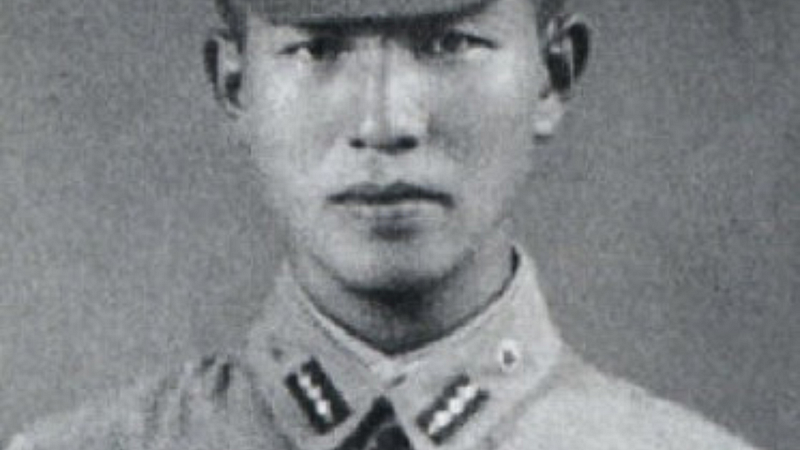
Young Onada in 1944. Source: Wiki

WWII left its impact on the world in the shape of the ruins of Hiroshima and Nagasaki, the countless stories and experiences of trauma told by citizens for decades to come, and a soldier who held his ground against the Allied on an island to the south of Manila Bay. This is the story of Hiroo Onada; a dedicated Japanese soldier that surpassed all bounds of loyalty and dedication and became a true hero of the war for Japan.

A Tale of Unwavering Loyalty and Support

Japan’s surrender to America in September 1945 left Japanese soldiers scattered all over China, Southeast Asia, and the US in gigantic numbers. Many of them suffered terrible fates having been captured by the enemies and put on trial or having attempted suicide or died of starvation and lack of shelter.

Some, however, remained true to their then-Japanese Emperor to the utmost and refused to believe the news of the war ending unless it was from their own fellow military officers, repeatedly dismissing any such information delivered by the Allied as false news and propaganda.

Among these soldiers was a small group of four Japanese soldiers led by intelligence officer Lieutenant Hiroo Onada. Onada had trained in guerilla warfare and martial arts in the Japanese military for two years before being sent to a strategic island in the Philippines in 1944 with clear orders to “stand and fight”.

The three major orders which bound this diligent solder included:

  • Never Get Caught
  • Do not commit suicide.
  • Do your best struggle to stop enemy advances.

And that is exactly what he did for no less than 30 years; following orders and becoming a symbol of stoic heroism and scarily resolute dedication to what he had taken an oath to do.

Death before Surrender

Hiroo Onada was abandoned by all three of his companions very soon, two were shot to death by island police officers, and the other succumbed to the Filipino forces. By 1972 about 27 years after the war ended, Onada was left all alone. Unbeknownst to himself, Onada had actually been pronounced dead back on the mainland a long time ago and he was not being looked for any more.

That is until in 1959 a young student Norio Suzuki who refused to believe that the Japanese officer could have disappeared without a trace came looking for him.

Suzuki tried to convince Onada that the war was over and begged him to return to Japan but Onada still refused to believe the students’ words and remained at his military hideout.

It wasn’t until Norio Suzuki went back home alone and showed photographs of the long-forgotten officer that a delegation consisting of Onada’s former commander and his brother was sent to the island to finally relieve him of duty once and for all.
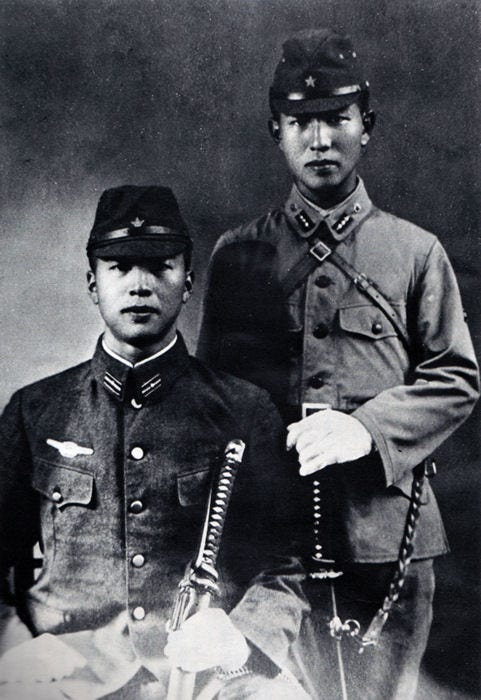
Onoda’s picture with his brother Shigeo (on left) Source: Wiki

They discovered him living in self-made bamboo shelters, obtaining his rice from nearby villages, and hunting his own meat on island animals (though his meat occasionally consisted of unsuspecting military and non-military individuals that he had shot, mistaking them to be enemy soldiers).

He had fought a lone war for 30 years and in the process had ended up shooting at and killing thirty people that he assumed were enemies.

A Man in a Time Capsule

The 52-year-old soldier returned home after decades of a lonesome battle and was welcomed as a national hero. During these 30 years after the war, Japan had transformed significantly, going from a conservative society to a democratic and rather westernized country.

For many, Hiroo Onada’s story was a reminder of old Japan and its beliefs and systems. Onada was celebrated as a figure of bravery, adamancy, determination, and most importantly of Japan’s history. He had become a hero and the nation sure was proud to have him back.
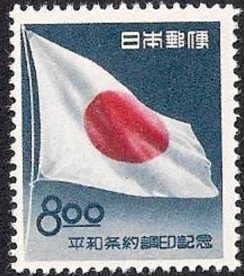
Source: Wiki

However, it must be noted that in all this time it wasn’t just Japan’s governance system that had changed. The entire country had completely transformed from quiet rural villages to a futuristic urban center of science, skyscrapers, and jet planes.
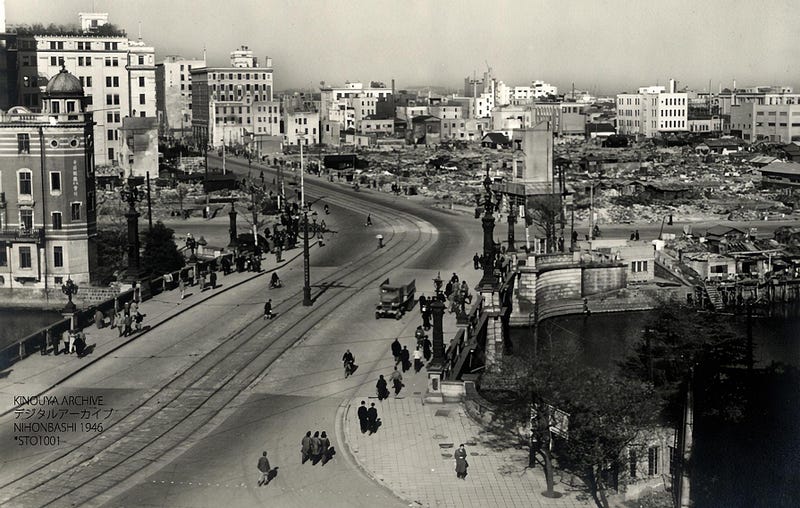
Tokyo’s business district after the war in 1946. Source: Wiki

Unable to get accustomed to this new fast-paced world, Onada retreated to Brazil in 1975 to work as a farmer and ended up marrying a Japanese tea-ceremony teacher. He then returned to Japan in 1984 to set up a survival skills youth camp and to publish a ghostwritten memoir; “No Surrender: My Thirty-year War”.

The Toughest Soldier Ever Lived Or A Man Who Wasted His Life?

This question is very well answered by Mark Manson in his book The Subtle Art of Not Giving a F*CK. The gist of which follows that Onoda opted to suffer for the sake of loyalty. To him, this struggle and suffering meant everything which made him feel fulfilled.

When he was first examined by doctors upon his return to Japan, Onada’s physical health was found in a surprising picture-perfect condition. His uniform was neatly sewn and patched up and his service rifle was in working condition.

It truly is a wonder that even after all these years undoubtedly spent in misery and in a perpetual state of alertness; Onada still managed to take care of himself and kept himself well-prepared for attacks or battles.

He appeared in his formal surrender in front of the then President of the Philippines Ferdinand Marcos all decked out in his 30-year-old imperial army uniform, cap and sword. President Marcos pardoned him for his 30 murders and returned to him the sword that Onada had laid before the president as an act of surrender.
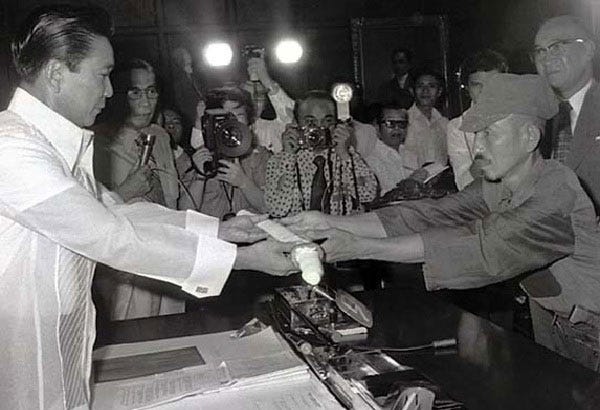
Onoda(at right) during his surrender ceremony can be seen handing over the sword to the Philippine President when he returned. Source: Wiki

It is reported that when Onada’s former commander arrived to formally relieve him of duty, Onada saluted him and wept away his 30 years of battle. He had seen his colleagues fall and remain fallen; he had watched as the decades wore him out and yet he had remained steadfast and became a one-man depiction of Japan’s will to fight to the death than to surrender unconditionally, all to protect the homeland.

Want to follow up more from me and other amazing writers on Medium?

Hop on the chance to join:

More From Author:

Culture
History
Life
Education
Politics
Recommended from ReadMedium