
COVID Ruined Your Child and the Lives of Young Adults
And, the solution is still to be determined.
Have you noticed how your kid has changed over the past three years? Well, studies show that children and young adults were severely impacted by the pandemic.
According to the CDC:
- ⅓ or 37% of students reported feeling poor mental health
- 44% of students said they felt sad or hopeless
- 11% experienced physical abuse from a parent or someone else in the house
These are all silent cries for help.
The CDC Acting Principal Deputy Director Debra Houry, M.D., M.P.H. said:
“These data echo a cry for help. The COVID-19 pandemic has created traumatic stressors that have the potential to further erode students’ mental well-being.
Our research shows that surrounding youth with the proper support can reverse these trends and help our youth now and in the future.”
And, these other people in society felt a greater level of poor mental health — lesbian, gay, and bisexual youth and female youth.
Then racists were coming out as students felt more threatened than before COVID. It was reported the highest levels were among Asian students (64%) and African Americans and students of multiple races (55%).
For a good percentage of students, their grades suffered. In addition to receiving low grades, many of the students likely had sex, used drugs, missed school, and felt hopeless.
As adults, you had to deal with chatting with colleagues over Zoom unless you worked at a facility wearing a mask and/or gloves besides using hand sanitizer. If you thought life was hard, it was 10 times harder for kids.
Schools were hand-offs during this time period
As many witnessed, during COVID school became virtual. Teachers were live talking to their students over a computer monitor or smartphone. They were no longer standing in front of their class teaching school. All the students were online attending class. So there was less physical interaction between teacher to student and student to student.
Then not only did some high school students miss a normal graduation during COVID, but this also affected many seniors the following year as most of their classes were virtual.
Along the way, students were online more for school as well as conversing with their friends when class was over. Then social media came into play as more were chatting with their friends over these platforms.
As a parent, I know I was not hands-on with my kids as they were online. They were either in school dealing with their teacher or had homework afterward. Then I allowed them to get on a Zoom session with their friends. So their dependence on technology increased almost 10-fold over this time period.
But the problems don’t end there…
For female students, the rate of suicide increased from the summer of 2019 to the summer of 2020. A study reported girls aged 12 to 17 saw an increase in suicide to 26%.
A report released by UNICEF states adolescents and young adults between the ages of 13 to 29, felt more stress. Among the group in the survey, 27% felt anxiety and 15% felt depression over the seven-day reporting period. About a third felt depressed over the economic uncertainty of their environment.
The effects of COVID are still unclear and only future analysis will provide a better conclusion.
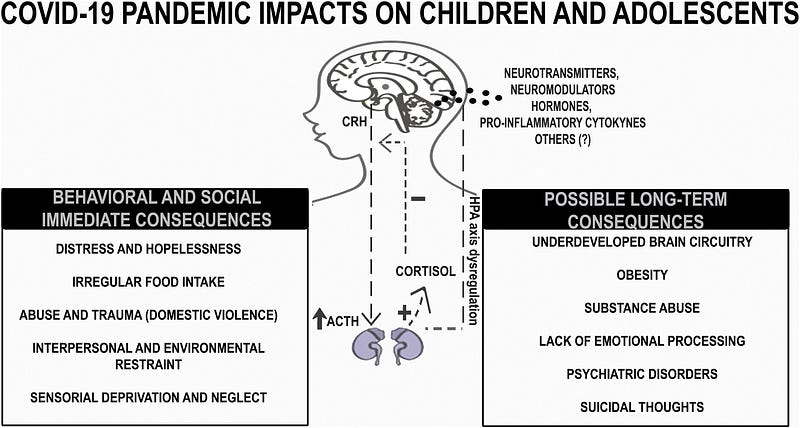
Then there was a big drop off among people who felt less desire to do some things that they did before. Among young people, 46% responded they had less motivation to do activities they enjoyed. And, 36% felt less motivated to do regular chores.
This could be a growing problem as 3 out of 4 people felt the desire to ask for help regarding their physical and mental health. Yet, 40% did not seek help.
Some people sought specialized hospitals, religion, and online services to help them.
There isn’t one answer but people found their individual outlets to help them cope.