

Covid-19 / Medicine / Health
Covid-19 Vaccine Approved for Phase-2 Trials
Phase 2 clinical trials of the mRNA-1273 are set to begin, signaling hope that the vaccine could be available later this year
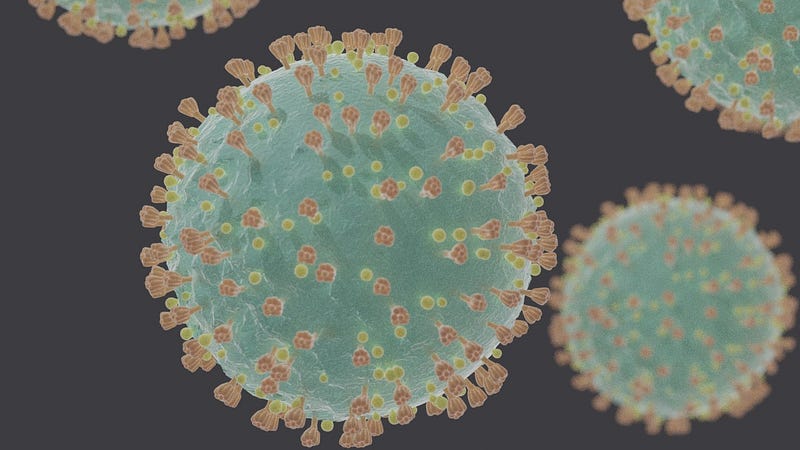

The experimental vaccine mRNA-1273 appears to be leading the race for the first available vaccine against Covid-19. The vaccine, developed by Moderna Biotech has advanced beyond phase 1 trials into a larger phase 2 clinical trials. The firm seems confident that phase 3 trials to determine the efficacy of the vaccine will begin in early summer indicating that the vaccine may have a chance of reaching the market by late 2020 or early 2021.
mRNA-1273 is an experimental vaccine using RNA technology to express viral antigens in the body. The antigen used in these formulations is the S-protein or spike protein found on the outer surface of the virus SARS-Cov-2 — the strain of coronavirus that causes Covid-19. During an infection, coronaviruses use spike proteins to adhere to host cell receptors. Prior to binding, spike proteins undergo an enzymatic activation by the cell surface protease TMPRSS2, which facilitates the binding of the spike to the angiotensin-converting enzyme 2 (ACE2) receptor. Once there, coronavirus is able to gain access into host cells where its replication cycle begins.
During this infectious process, the host immune system comes in contact with the spike protein, which stimulates the production and release of antibodies. Unfortunately, during an initial infection the immune system is slow to respond, but when antibodies are present — as in the case of a second exposure — the body is able to generate a far more vigorous immune response. If this response is successful, a person is considered to be immune to the pathogen. The slow response during primary infection is what leads to the clinical presentation and negative health outcomes of Covid-19.
Vaccines seek to bypass this infectious process and go straight to immunity.
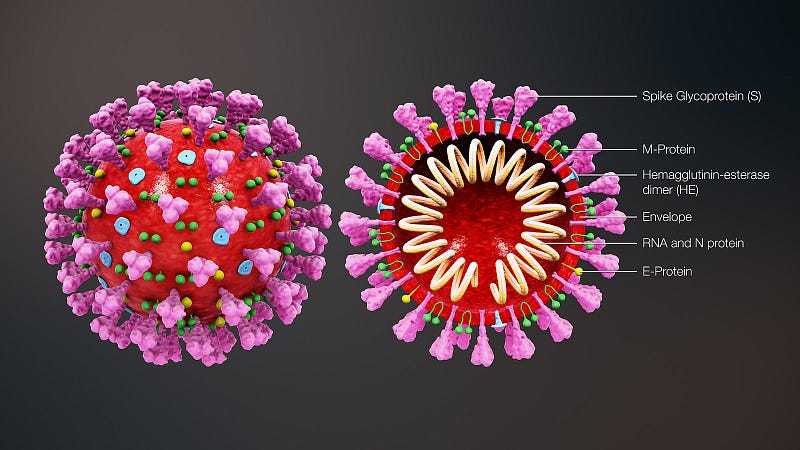
mRNA-1273 works by introducing a short mRNA transcript into the host cell, which serves as a blueprint for the cell to begin producing spike proteins. Once generated, these viral antigens can go on to generate antibody release, but the person is spared infection because the vaccine does not contain whole or active viruses.
RNA-based vaccines are a modern and innovative vaccine approach. Clinical trials seek to determine their effectiveness in generating lasting immunity. Not all vaccines that introduce viral antigens are successful. Many require the administration of live-attenuated viruses — fully active viruses that have been weakened such that they are unable to cause infection — to stimulate a vigorous immune response. As mRNA-1273 moves forward in clinical trials, it signals hope that the vaccine is effective in generating immunity to Covid-19.
Moderna earlier reported that mRNA-1273 could be available as early as this fall to select, high-need populations such as health care workers. Reports that the vaccine has been approved for further trial is a positive sign. The vaccine will be tested on a group of 600 participants. Phase 3 trials are already being developed and should begin in early summer. Officials feel that this timeline makes it likely that the vaccine could be available by early 2021.
Even with the release of a vaccine, many questions still remain. Will the vaccine provide lasting immunity, or will it need to be updated year after year — as in the case of influenza? Coronavirus was originally thought to have a relatively stable genome, keeping it from rapidly mutating and making targeting it with vaccines far more difficult. Reports came out this week indicating that SARS-CoV-2 has mutated since the onset of the pandemic in late 2019, raising concerns that multiple strains might be causing Covid-19 infections.
A successful vaccine against Covid-19 would be a monumental achievement in the fight against this disease. Many feel that a vaccine is a key component to the reopening of countries and a return to a near-normal way of life. Results of Moderna’s clinical trials will be available in late summer or early fall.