
COVID-19 Shut Down My Gym For Good
How to stay on top of our fitness goals in a gym-less world
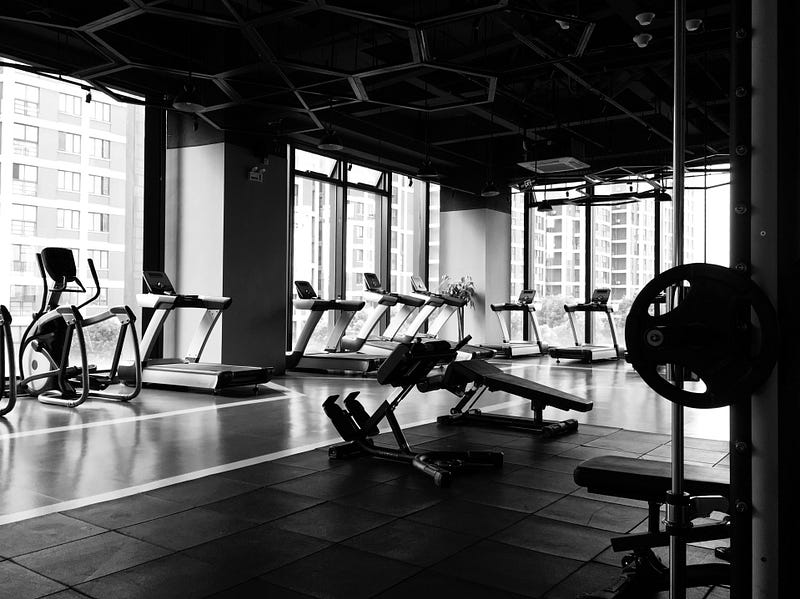
In June, I panicked about the thought of a second COVID-19 wave. My gym had finally reopened, and I was back to my usual routine. However, I didn’t love going back to a packed workout space. Masks were required in and out, but I still saw people neglecting to wear them. I saw trainers wearing masks over their mouths but not their noses. I saw older gym members coughing and touching equipment.
I panicked and bought $700 of gym equipment for my parent’s garage.
Then, last night, I received an email from my gym:
“It is with a heavy heart that I write to you today. We have decided to close down operations.”
I’m still in shock. I kept my membership active for those long three months during the first COVID-19 wave. I wanted to make sure my gym was still standing after the dust settled. I was willing the pay the monthly fee to return to a place I’d called home for the last seven years.
So what now? All the gyms are closed, at least in California. Even when they open I don’t want to find a new gym in the middle of a pandemic. To sign up at a generic 24-Hour Fitness is to dive headfirst into a cesspool of unfamiliarity.
How do we approach this changing fitness landscape?
As we learned during the first wave: home workouts just don’t hit the same, so what can we do differently?
Health vs. Fitness
I love working out, but my general health comes first and foremost. It’s important to recognize that even though the gyms are closed, many of us are healthy enough to exercise one way or another. We may not have access to all the equipment we want, but count the gym closures as a blessing. You are now that much less likely to contract COVID-19. We are all doing our part to make our homes safer for the people around us.
Health must come first while fitness is secondary. That isn’t to say that fitness doesn’t play a major role on our mental and physical health. For many of us, exercise is a necessary part of our day. It helps us unwind after stressful work shifts. It helps us feel accomplished. It’s an excellent way to spend a portion of our day.
What should you buy?
We no longer have access to all our gym’s equipment. You may be thinking of buying some equipment for your home. I spent $700 on equipment, and I’ll definitely buy more. Here’s what I’ve purchased so far:
- An adjustable bench
- A squat rack
- A pair of 45 pound plates
- Floor padding
I still expect to buy a set of bands — for chest, arm, and shoulder exercises — and dumbbells. Weights are just so damn expensive right now. Thankfully, my friend has additional weights for us to use, and I’m purchasing some weights from my recently closed gym.
I’ve been lifting weights consistently since college, so I need a certain amount of equipment to sustain me. Everyone’s different, so I don’t expect everyone to to need what I need. However, I think that if one is serious about their fitness, there are a few items that everyone should have in their home gym.
Barbell with adjustable weights
Other than dumbbells, barbells are the most functional pieces of equipment you can find. You only need one bar, and as long as you have small weight plates to attach to each side, you’re set. Barbells are good for more than just bicep curls. You can utilize them for every muscle group including shoulders, triceps, and legs.
Dumbbells
Dumbbells are another essential piece of workout equipment. Like barbells, you can do a wide variety of exercises. The caveat is the price for a set of dumbbells. Unless you have thousands of dollars to blow on a full range of dumbbells, you might have to stick to a pair of 25 pound ones.
To my fellow gym rats who require sets of 60+ pound dumbbells, you might be out of luck, and would be better off getting a resistance band set to replicate your incline chest flies.
Resistance Bands
Search the internet and you’ll find a plethora of options. While barbells and dumbbells serve as push-oriented weightlifting equipment, resistance bands duplicate pull-oriented lifts. The gym is closed, so no more cable machines.
Home Gym Set up
I’m the exception for sure. I live at my parent’s house rent free. They are incredible, and are willing to support me through the pandemic. I work from home too, so I don’t have anywhere to go besides my desk and the garage where the equipment is.
If you have a garage, that’s awesome. That should become your designated workout space. You’ve probably meant to sort through your belongings and clean it out anyway, so building a home gym is a good excuse to do so.
If you don’t have a garage, or some space that you can beat up a little with weights, then you need to find space outside or in your house or apartment. Try exercising outside. Try working out next to your bed. Try a variety of locations. Find your go-to happy workout space.
Try Running
I got in my best running shape since high school during the first wave. How did I do it? I sure didn't do it by running everyday. I spiced up my running workouts, and I did them on non-lifting days.
Here’s what my routine looked like April-June:
- Monday: Weight training (chest)
- Tuesday: Treadmill run
- Wednesday: Weight Training (Back)
- Thursday: HIIT cardio/abs
- Friday: Weight Training (Legs)
- Saturday: Weight Training (Arms)
- Sunday: Outdoor run
I’m not a runner. I worked up to this schedule over time. Start small. If you can’t run a mile, walk two miles. Strengthen those little muscles you don’t think about. When you can walk two miles, try jogging a half mile. Take your time. Take breaks if you have to. No one is timing you. You’re not training for a marathon, you’re doing this for you. Take a few days off and let your muscles recover between runs. Then do it again. Work up to your first mile, and you’ll gain a sense of what your body can do.
Running consistently is easier when you switch up your routine. Running on a treadmill is monotonous. That’s why I do three different types of running workouts. I like the treadmill because it’s easy on the body. It’s the most boring running exercise for sure, but it’s a nice way to warm up your legs for the week. HIIT cardio is quick and exciting. It’s hard too, and you can choose to do it on a treadmill or outside. I sprint for 1 minute and then briskly walk for another minute. I do this for 8–10 rounds. Then, if I’m feeling up for it later in the week, I run to the beach and back from my house.
In total, I spend about 70 minutes running for 7–8 total miles per week. I’m not a marathon runner, and these are numbers I’ve had to work up to. I don’t make any one run harder than it needs to be, though I challenge myself with an extra mile or two on occasion.
Consistency is key. I know you’ve heard this before, but it’s not about doing on thing over and over again. Consistency lets you tune in to your body. It lets you work out the bumps and tweaks. It allows you to figure out what you can and can't do.
Walk more often
“I take at least 10,000 steps a day.” Have you ever heard anyone say this? It’s a subtle reminder that there’s always going to be someone more obsessed with fitness than you. They have a point though. Walking is a great way to burn calories, but 10,000 steps seems like overkill.
I’m not one for counting my steps even though I have an Apple Watch, but I am for moving as much as I can. For example, while I’m lifting, I tend not to sit down. I usually try to walk around in an effort to burn more calories. I spend much of my day sitting at my desk, so I try and either walk my dog, or at least walk around my house as much as I can.
Your steps really do add up. If you’re trying to lose weight, consider increasing your step count.
Take a Hike
Hiking is my favorite form of alternative exercise. Hiking is like walking, except there is a goal in mind. It’s an opportunity to chat with friends, eat snacks, and get a fantastic workout in.
If you don’t like hikes, don’t do them for enjoyment. Take a hike purely for the workout. If you doubt me, go ahead and take a 1,000+ foot elevation gain hike, and you’ll thank me later. There isn’t a better way to burn calories than to hike up a mountain.
You might gain a little weight. So what?
We’re in a pandemic. The gyms are closed, at least in California. Most of us don’t want a sequel to the home workout routine. It’s bland and it’s boring. It’s difficult because our home isn’t a fitness environment. It’s home. It’s a place to rest and nurture ourselves after a hard day out in the world.
Now that we’re locked in again, we’re more susceptible to eating more and moving less. Snacks whisper to us from the pantry. The sourdough starter kit calls to us from the fridge. That cereal isn’t going to eat itself.
Don’t worry about what the scale says. The fact that you are able to stay active right now is a blessing. We are dealing with a modern pandemic. The grocery stores are still open, and there is no shortage of food. You’re alive and healthy. A few pounds here or there are moot compared to the rest of the world’s struggles.
The bottom line is that if you want to maintain your current fitness level then you need to move more. The gyms are closed, so it’s up to you to find out what routine works for you. You can spend money on a home gym, start running, walk more often, or take a hike. Your routine isn’t limited to these activities either. These are just the exercises I’ve integrated into my routine, and I’m in better shape now than when I solely lifted at the gym.
Building your routine is a process. Don’t put any unnecessary pressure on yourself. This is your fitness journey. This pandemic is just a bump in the road. Our fitness journey isn’t defined by the obstacles that slow us down, but about how we adapt to them and move forward.