avatarVicki Larson

Free AI web copilot to create summaries, insights and extended knowledge, download it at here

2374

Abstract

though because women make less than men do, they may not be making enough to support themselves on their own let alone any children they may have. Still, Social Security, which helps alleviate poverty for women widowed after the age of 65, <a href="https://www.ssa.gov/policy/docs/ssb/v65n3/v65n3p31.html">rarely helps</a> women widowed in their 50s because they are far from the age of eligibility.</p><p id="d72f">But suddenly becoming a widow doesn’t just impact women financially—it impacts them emotionally and socially, or so sociology professor Regina Kenen discovered when her husband died and she felt abandoned by her husband’s academic colleagues. Eager to see if what she experienced was what other widows were experiencing, she <a href="https://thesocietypages.org/specials/suddenly-single-a-widows-challenge/">interviewed</a> 20 widows, aged 55 to 80. Dealing with financial stuff felt overwhelming, they told her, but just as important, many felt alone, invisible, marginalized and forgotten in a world that favors couples.</p><p id="43cd">As Kenen <a href="https://journals.sagepub.com/doi/full/10.1177/0891241621996801#bibr48-0891241621996801">notes</a>:</p><blockquote id="6c11"><p>“Just as with other minority groups, widows need to renegotiate their identity in different situations, which produces a great deal of uncertainty. These new situations and roles require fresh reconstructions, but previous constructions related to their married lives are often held tenaciously. This is particularly challenging for a widow to renegotiate her identity in a new social milieu because it involves a transition from being part of a couple, a familiar status, to being a single woman, an unfamiliar one.”</p></blockquote><p id="bf65">Despite that, many widows told her that they weren’t eager to marry again. Some didn’t want to risk losing another partner, some wanted to keep their newfound freedom and independence, some had no desire to care-take again, and some — bless them — said they just don’t “find older men, in general, to be very interesting or attractive. They found women to be better companions.”</p><p id="a57a">What are we to do with all these widows whose “until death do we part” stories ended much earlier and more traumatically than they expected? There’s no reason that women who are suddenly uncoupled should feel alone, invisible, margin

Options

alized and forgotten, especially since there are more single people — never-married, divorced and widowed — than ever before.</p><p id="972b">Since COVID-19 is rapidly creating more widows and radically shifting the age of widowhood, it seems way past the time that society removes the stigma around widowhood and starts viewing and treating people who are single, whether by choice or chance, as whole people deserving of all the status, perks and privileges we bestow upon the coupled.</p><p id="71e2">As Kenen writes:</p><blockquote id="ea27"><p>“Long-accepted norms such as the legacy of ‘twosomes’ as an ideal remain particularly hurtful. A new, universal norm that equally values being single as well as partnered would go a long way in alleviating chronic uncertainty.”</p></blockquote><p id="ace3"><i>Hey, I’ve written on a book on changing the narrative about middle-aged and older women, “Not Too Old For That: How Women Are Changing the Story of Aging” (April 2022). Pre-order it <a href="https://www.amazon.com/Not-Too-Old-That-Changing/dp/1538155613">here</a> and follow me on <a href="https://medium.com/@OMGchronicles">Medium</a>, <a href="https://twitter.com/OMGchronicles">Twitter</a>, <a href="https://www.facebook.com/vlarson">Facebook</a> and <a href="https://www.instagram.com/omgchronicles/">Instagram</a>. If you want to support my work and have unlimited access to my writing and the writing of all Medium writers, please become a member <a href="https://omgchronicles.medium.com/membership">here</a>. And if you’re interested in individualizing your marriage, please check out the book I co-authored, <a href="http://thenewidobook.com/">The New I Do: Reshaping Marriage for Skeptics, Realists and Rebels</a>. You can support your local indie bookstore (please do) or order it on <a href="http://www.amazon.com/The-New-Do-Reshaping-Marriage/dp/1580055451">Amazon</a></i>. <i>We’re also on <a href="https://www.audible.com/pd/The-New-I-Do-Audiobook/1549152815">Audible</a>.</i></p><p id="bba4"><i>For more of the good stuff, follow <a href="https://medium.com/fourth-wave">Fourth Wave</a>, where we’re changing the world for the better, one story at a time. Got one of your own? <a href="https://readmedium.com/submit-to-the-wave-7c92f095e86f?source=friends_link&amp;sk=c6df1d6e65509aab783bdc7ea7332ab8">Submit to the Wave</a>.</i></p></article></body>

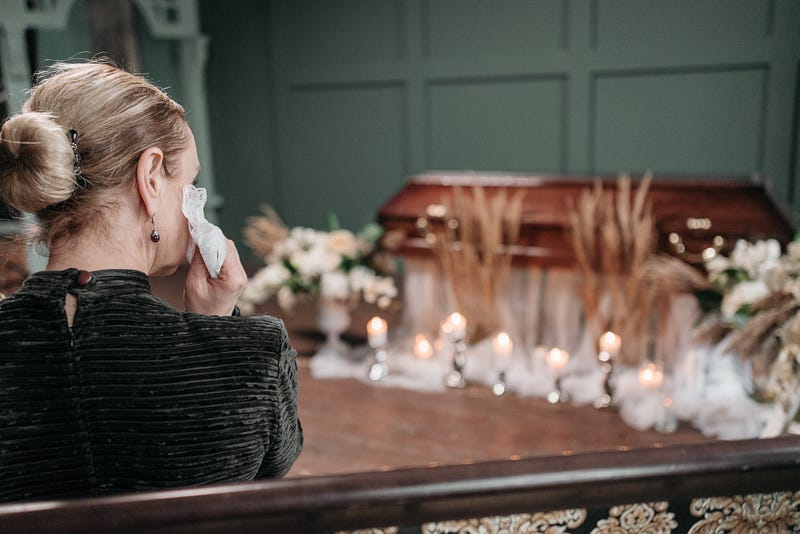
Pavel Danilyuk/Pexels

COVID-19 is Creating a New Generation of Young Widows

They shouldn’t have to endure the stigma of being suddenly single in a world that favors couples

Despite the belief that widowhood hits older women, the average age that a wife becomes a widow in the United States is 59, according to the census bureau — an age that seems awfully young although perhaps not all that surprising given that most women marry men older than they are.

In 2019, there were 8.9 million widows compared with 2.6 million widowers. That number is about to grow exponentially thanks to COVID-19, which has killed some 65,000 more men than women. And since it’s hitting men between the ages of 45 and 64 the hardest, we can expect many more widows at an even younger age than 59 as long as this pandemic continues. Which is why the nonprofit Global Fund for Widows has called the coronavirus pandemic a “widow-making machine.”

This has huge ramifications for women.

For 70-year-old Pam Morell, whose husband died from COVID 10 days away from their 25th wedding anniversary, her household income dropped to a fourth of what it was, and the retiree had to go back to work.

"I want people to understand what COVID has done to seniors. I don’t want people to feel sorry for Pam Morell, I want them to be concerned for people like me that are even less fortunate.”

Younger widows may still be in the workplace so they may not experience quite that kind of financial hit although because women make less than men do, they may not be making enough to support themselves on their own let alone any children they may have. Still, Social Security, which helps alleviate poverty for women widowed after the age of 65, rarely helps women widowed in their 50s because they are far from the age of eligibility.

But suddenly becoming a widow doesn’t just impact women financially—it impacts them emotionally and socially, or so sociology professor Regina Kenen discovered when her husband died and she felt abandoned by her husband’s academic colleagues. Eager to see if what she experienced was what other widows were experiencing, she interviewed 20 widows, aged 55 to 80. Dealing with financial stuff felt overwhelming, they told her, but just as important, many felt alone, invisible, marginalized and forgotten in a world that favors couples.

As Kenen notes:

“Just as with other minority groups, widows need to renegotiate their identity in different situations, which produces a great deal of uncertainty. These new situations and roles require fresh reconstructions, but previous constructions related to their married lives are often held tenaciously. This is particularly challenging for a widow to renegotiate her identity in a new social milieu because it involves a transition from being part of a couple, a familiar status, to being a single woman, an unfamiliar one.”

Despite that, many widows told her that they weren’t eager to marry again. Some didn’t want to risk losing another partner, some wanted to keep their newfound freedom and independence, some had no desire to care-take again, and some — bless them — said they just don’t “find older men, in general, to be very interesting or attractive. They found women to be better companions.”

What are we to do with all these widows whose “until death do we part” stories ended much earlier and more traumatically than they expected? There’s no reason that women who are suddenly uncoupled should feel alone, invisible, marginalized and forgotten, especially since there are more single people — never-married, divorced and widowed — than ever before.

Since COVID-19 is rapidly creating more widows and radically shifting the age of widowhood, it seems way past the time that society removes the stigma around widowhood and starts viewing and treating people who are single, whether by choice or chance, as whole people deserving of all the status, perks and privileges we bestow upon the coupled.

As Kenen writes:

“Long-accepted norms such as the legacy of ‘twosomes’ as an ideal remain particularly hurtful. A new, universal norm that equally values being single as well as partnered would go a long way in alleviating chronic uncertainty.”

Hey, I’ve written on a book on changing the narrative about middle-aged and older women, “Not Too Old For That: How Women Are Changing the Story of Aging” (April 2022). Pre-order it here and follow me on Medium, Twitter, Facebook and Instagram. If you want to support my work and have unlimited access to my writing and the writing of all Medium writers, please become a member here. And if you’re interested in individualizing your marriage, please check out the book I co-authored, The New I Do: Reshaping Marriage for Skeptics, Realists and Rebels. You can support your local indie bookstore (please do) or order it on Amazon. We’re also on Audible.

For more of the good stuff, follow Fourth Wave, where we’re changing the world for the better, one story at a time. Got one of your own? Submit to the Wave.

Coronavirus
Widow
Relationships
Singles
Couples
Recommended from ReadMedium