
Could You Live in a World Where Money Didn’t Exist?
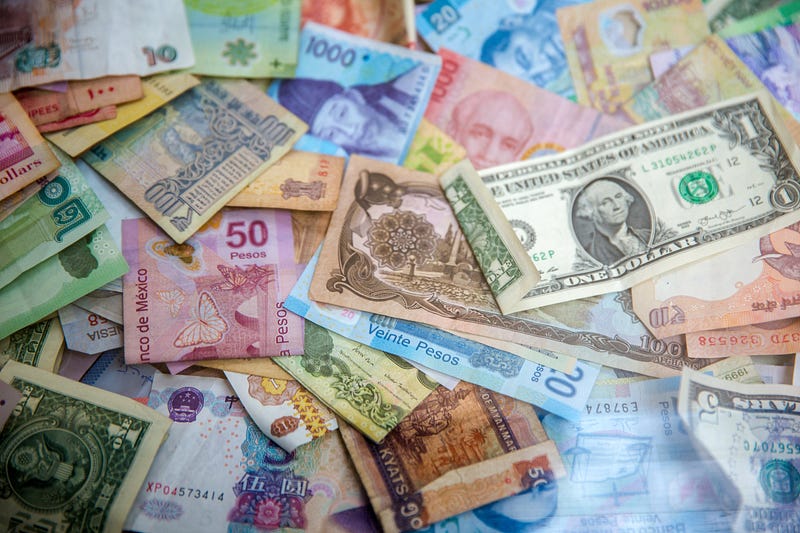
There would be many benefits to a society without money — no crime, no competition, and no scarcity. Could a world like this ever be possible?
In today’s society, we are far from it. Everything seems to revolve around money.
“Money makes the world go round.”
- People often say that money can’t buy happiness, but it can certainly make life a lot easier.
- Most of us need money to pay for our basic needs like food, clothing, and shelter.
- Money is often seen as a status symbol. People with a lot of money are often seen as being successful.
- We live in a world where everything costs money.
People choose careers because of money.
Many people even choose their careers based on money. What type of career is in demand and has the greatest future potential? With the speed of technological change these days, they say that many jobs will be obsolete before a student even finishes getting their university degree.
I will almost ashamedly admit that I got an MBA in Finance because when I went to college, this degree offered the greatest potential for high-paying jobs. And what was the result? I spent 25 years in a banking career that I didn’t really enjoy, but it paid well.
Money worries are one of the biggest causes of stress.
Money is a massive cause of stress and anxiety according to “26 Fascinating Financial Stress Statistics”:
- 75% of Millennials and 76% of Gen Xers said that money is a significant source of stress.
- Years of research continue to identify money as the top stressor in the US, with 90% of individuals linking money to their stress levels.
Money issues can be a significant source of stress and anxiety for several reasons:
- People may feel anxious about their financial future and whether they will have enough money to meet their needs.
- They may feel pressure to make more money or keep up with the Joneses.
- They may feel like they’re not good with money.
- They may have a lot of debt and feel like they’ll never be able to get out from under it.
All of these things can lead to stress and anxiety about money.
But what if we didn’t use money? What if there was a different way?
It’s interesting to look at what some countries are doing. For example, in Cuba, they’ve been using a form of bartering called the “Talleres” system since the 1990s. This system allows people to exchange goods and services without using money.
There are other ancient cultures that did not use money. The Iroquois Confederacy was a group of six Native American nations who lived in what is now the northeastern United States and southeastern Canada. The Iroquois did not use money but instead relied on a gift-giving system. This system allowed them to share resources and create a strong sense of community.
A society without money is also the idea behind Ubuntu Contributionism. Ubuntu Contributionism is based on the principle of ubuntu, which is a southern African ethic or humanist philosophy that emphasizes the interconnectedness of all humanity. “Ubuntu” comes from the Zulu and Xhosa languages and means “humanity.”
Under this system, people would contribute their time and energy to the community instead of working for money. They would be paid in goods and services instead of cash.
For example, someone good at gardening could contribute their time to a community garden. Someone good at carpentry could build shelves for a community center. In exchange, they would receive food, housing and everything they needed to live.
This system would allow people to use their talents and skills to benefit the community. It would also create a sense of interdependence and cooperation instead of competition.
What is an economy of abundance?
An economy of abundance is characterized by three things:
1. Abundance: An economy in which there is enough for everyone. There is enough food, water, and shelter for everyone.
2. Cooperation: People work together to create a society where everyone has what they need.
3. Redistribution of resources: Resources are redistributed so that everyone has what they need.
Would you like to live in a world like this?
There are many benefits to living in a society without money:
- For one, there would be no more poverty. Everyone would have what they need to live a comfortable life.
- There would also be no more crime because there would be no reason to steal if everything is freely given.
- There would be no competition because everyone would be working together for the common good.
- And finally, we would all be happier because we would be living in a world where we’re not defined by our possessions or the need to worry about money.
It sounds like Utopia and it’s certainly a world that I’d like to live in.
If you enjoy reading stories like these and want to support me as a writer, consider signing up to become a Medium member. It’s $5 a month, giving you unlimited access to stories on Medium. If you sign up using my link, I’ll earn a small commission.


