avatarBreana Wallace

Free AI web copilot to create summaries, insights and extended knowledge, download it at here

3940

Abstract

whatever it’s valued at when you sell it. They do depreciate like cars, but if you buy used at the 3–5 year mark, you’ll dodge most of the depreciation and get a good chunk of money back when you sell it.</p><p id="3128">You can actually start finding good depreciated RV’s for the price of a used car, which means you might be able to avoid the loan altogether and purchase it outright. Here’s a great example:</p><figure id="cfd0"><img src="https://cdn-images-1.readmedium.com/v2/resize:fit:800/1*JJN6ijPrt02Eacn5YZ-OlA.png"><figcaption></figcaption></figure><h1 id="0541">Where do you put it?</h1><p id="4036">Not everyone travels full-time in their RV’s. It’s pretty common for people to pick an RV they like and have it dropped off at a local RV park where they stay seasonally or year-round much like an apartment setup.</p><p id="a5ad">Rent varies depending on where you want to be and how long you want to be there. You can sign an annual lease if you want (just like an apartment) which is the cheapest option. We’ve seen around 350 — 700 per month for that depending on where you’re at.</p><p id="c83f">1 year for the site = ~4,200 — 8,400</p><p id="3f8a">Some of these have nicely updated community centers, pool tables, a pool, spas, tennis courts, mini-golf, and on-site trails with waterfalls! It varies by location, but they can actually be quite luxurious depending on the park you choose.</p><p id="72c9">Here’s a cool example in Houston Texas:</p><figure id="c8b1"><img src="https://cdn-images-1.readmedium.com/v2/resize:fit:800/1*1bvPqPS6f6EZ_hKb5-qI2Q.png"><figcaption><a href="https://www.ericandjaysrvresort.com/">Eric & Jay’s RV Resort</a> in Houston Texas</figcaption></figure><h2 id="ff69">What did we spend?</h2><p id="188d">Our rent was admittedly higher than the median apartment rent. We were paying about 1,600 per month for a 1/1 in South Florida, which was actually a steal compared to many of our neighbors.</p><p id="a822">We move every 2–4 weeks since we work remotely and I wanted to travel. We bought a camping membership for a lump sum that we put on a 0% credit card and paid off over the year that gives us access to almost 200 parks all around the US. We stay free while we’re in one of those parks, Utilities included. <i>It’s been a game-changer.</i></p><p id="f1b2"><b>Our rent:</b> 6,500 one time fee, and then ~500 each year for maintenance fees.</p><blockquote id="f87b"><p>Can you imagine <i>500 </i>a year on rent?!</p></blockquote><p id="3ac5">Because of how cheap RV’s are, this is what we were able to purchase.<b> We own our home outright now:</b></p><figure id="20e2"><img src="https://cdn-images-1.readmedium.com/v2/resize:fit:800/1*PaREfeizmJ2MXZ4mBnO7YQ.png"><figcaption></figcaption></figure><h1 id="6636">2.) A Competitive Labor Market</h1><p id="2d06">Location greatly affects the opportunities that you’re willing to take on. Even if you’re willing to relocate, many companies won’t even consider candidates that don’t already live nearby.</p><p id="068d">Turns out, job-hopping is actually the #1 thing <a href="https://www.thebalancecareers.com/how-long-should-an-employee-stay-at-a-job-2059796">experts recommend</a> for increasing your salary and your overall lifetime earnings. When you move companies you can see jumps of <a href="https://www.payscale.com/career-news/2018/08/how-to-job-hop-the-right-way-and-make">8–10% on average</a> or even 20% at the high end. That’s a pretty good incentive to increase your pool of options!</p><p id="5041">Aside from that, being able to pick up and go somewhere new with more opportunity is an invaluable relief. If you want to move to a new city or state, you’ve got a few options:</p><p id="de86"><b>In an apartment</b> you can break a lease (usually for a fee).</p><p id="d10f"><b>In a home </b>you’ve bought you can sell or rent it.</p><p id="1d29"><b>With an RV</b> you can just pull in the slides, hitch it up (or h

Options

ire someone to tow it), and be on the way to new opportunities without much thought at all. An RV offers amazing flexibility on this one, and it’s comforting to always be in the same home no matter where you find yourself relocating to.</p><figure id="246b"><img src="https://cdn-images-1.readmedium.com/v2/resize:fit:800/0*T-vilhg-GiQUCtHt"><figcaption>Photo by <a href="https://unsplash.com/@iakashdeepgill?utm_source=medium&amp;utm_medium=referral">AD Gill Photography</a> on <a href="https://unsplash.com?utm_source=medium&amp;utm_medium=referral">Unsplash</a></figcaption></figure><h1 id="5d97">3.) Natural Disasters</h1><p id="44f2">This year, <b>the West coast was on fire.</b> We had an intense hurricane season with images of roofs covered in tarps while the second monster storm of the season rolled through to destroy already battered communities. Droughts continued to wreak havoc on entire states for months.</p><p id="f91a"><a href="https://weather.com/news/climate/news/2020-09-11-extreme-weather-climate-change-disasters-wildfires-flooding-hurricanes">According to scientists, this isn’t going to get any better.</a></p><p id="af58">When your home is mobile, you can leave to a place with better conditions as necessary. Many Rv’ers follow good weather, and get a 60–70 degree year, all year-round. If you need to stay put for work, you won’t get to reap this benefit as much, but you will be able to evacuate your entire home and all of your belongings in the case that you need to.</p><p id="2cce">This might become more important over the next few decades as well.</p><figure id="753b"><img src="https://cdn-images-1.readmedium.com/v2/resize:fit:800/0*0YCUGbXX8-nbYFKs"><figcaption>Photo by <a href="https://unsplash.com/@giorgiotrovato?utm_source=medium&amp;utm_medium=referral">Giorgio Trovato</a> on <a href="https://unsplash.com?utm_source=medium&amp;utm_medium=referral">Unsplash</a></figcaption></figure><h1 id="c774">Final Thoughts</h1><p id="429e">RV living offers a lot of solutions to the problems facing us today, and plenty of people are already catching onto the trend. It’s estimated that <a href="https://www.washingtonpost.com/business/2018/11/12/million-americans-live-rvs-meet-modern-nomads/">over a million of us live in our RV’s</a> traveling full-time, and even more live stationary treating them more like condo’s.</p><p id="cfcc">Using an RV as your primary source of housing could be a means to address the issues that I mentioned above. It’s a great option temporarily for saving up a downpayment for a home at an astonishing rate due to how cheap it can be. There’s also a case to be made for using it as your only form of housing depending on your specific wants and long-term goals.</p><p id="4e32">COVID has invigorated interest in RV’s in general for travel, and I’m sure even more people will question whether they too can live in it full-time to reap the benefits. On top of that, <a href="https://news.stanford.edu/2020/06/29/snapshot-new-working-home-economy/">42% of the US workforce is now working remotely</a> after everything that’s happened this year, and we’re starting to see a new wave of digital nomads take to the roads in their new home-on-wheels.</p><p id="d1c7">In my mind, a starter home should make your life more comfortable and easy, not spread you thin. With that, RV’s really might be the perfect starter home for the times we live in.</p><figure id="43f6"><img src="https://cdn-images-1.readmedium.com/v2/resize:fit:800/0*GQtQRzq47BGyFOu3"><figcaption>Photo by <a href="https://unsplash.com/@matthewosborn?utm_source=medium&amp;utm_medium=referral">Matthew Osborn</a> on <a href="https://unsplash.com?utm_source=medium&amp;utm_medium=referral">Unsplash</a></figcaption></figure><p id="6d33">Thanks for reading!</p><p id="52ee">You can follow along on our adventures over on <a href="https://www.instagram.com/always.chasing.freedom/">Instagram</a></p></article></body>

3 Reasons RV’s Could Be the Perfect Starter-Home

A housing solution built for the needs of our time
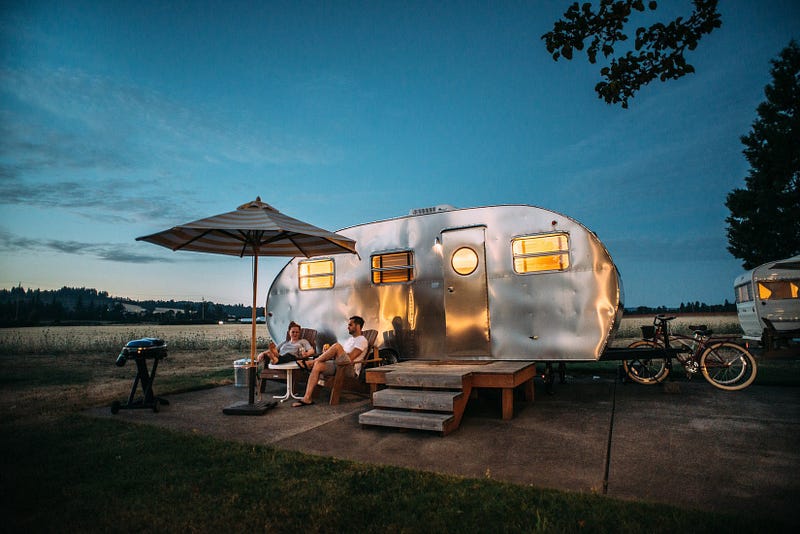
Unsplash by Blake Wisz

Last year, we sold everything and moved into an RV so that we could travel more. I quickly realized that it solved far more than just the urge to travel.

RV living doesn’t have to be some quirky lifestyle or an Instagram trend. It’s actually a very viable solution to many of the systemic problems that our generation is facing today.

Issues it addresses

  1. Expensive housing that takes up a huge portion of our incomes (37.5%on average). It’s been increasingly difficult to get a foot on the ladder of homeownership, in a country where owning a home is the single biggest factor of an individual’s net worth.
  2. Competitive labor markets require increased flexibility of location in order to establish a successful career and allow for optimal job-hopping (which is the best strategy for increasing your overall lifetime earnings).
  3. Natural Disasters are increasingly driving us out of our homes and communities. The projections are only showing that this trend will continue to get worse over time.

Getting creative and deciding to live in an RV full-time can actually help out with all of these, and you don’t have to travel full-time if you don’t want to or can’t for a job. It’s very flexible!

I’ll also share how much we spent on our home on wheels and share pictures of it.

Let’s dig in.

1.) Expensive Housing

It’s fitting that we start here because this is where RV’s shine the most obviously.

Millennials are spending on average 35.7% of our incomes on housing, so it’s fair to say that it’s our single biggest expense. Standard advice will tell you to keep housing costs at 30% or below. We aren’t hitting that mark.

With renting, you get the benefit of more flexibility if you want to move, and you don’t have to pay for or worry about maintenance. You won’t be seeing any of that money back though besides (hopefully) the security deposit.

With owning your place, you’ll have a bit of savings built up in equity each time you make a payment that you can access if you ever sell it. Generally, there is a 3–5% increase in the value as well. However, a portion will also go towards things that you won’t ever see again: the interest you’re paying the bank for the loan, property taxes, insurance and possibly PMI. If you do sell, there is a fairly hefty price that you’ll pay to do so.

How does this compare to RV living expenses?

With an RV you can make very small monthly payments compared to either of these options (our monthly payment was $246) and aside from interest on the loan, you’ll get whatever it’s valued at when you sell it. They do depreciate like cars, but if you buy used at the 3–5 year mark, you’ll dodge most of the depreciation and get a good chunk of money back when you sell it.

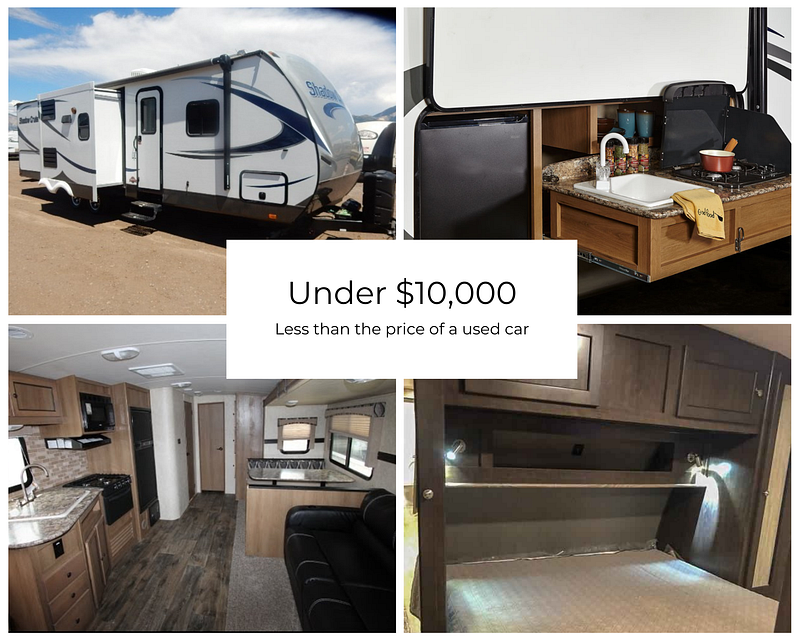
You can actually start finding good depreciated RV’s for the price of a used car, which means you might be able to avoid the loan altogether and purchase it outright. Here’s a great example:
Where do you put it?

Not everyone travels full-time in their RV’s. It’s pretty common for people to pick an RV they like and have it dropped off at a local RV park where they stay seasonally or year-round much like an apartment setup.

Rent varies depending on where you want to be and how long you want to be there. You can sign an annual lease if you want (just like an apartment) which is the cheapest option. We’ve seen around $350 — $700 per month for that depending on where you’re at.

1 year for the site = ~$4,200 — $8,400

Some of these have nicely updated community centers, pool tables, a pool, spas, tennis courts, mini-golf, and on-site trails with waterfalls! It varies by location, but they can actually be quite luxurious depending on the park you choose.

Here’s a cool example in Houston Texas:

Eric & Jay’s RV Resort in Houston Texas

What did we spend?

Our rent was admittedly higher than the median apartment rent. We were paying about $1,600 per month for a 1/1 in South Florida, which was actually a steal compared to many of our neighbors.

We move every 2–4 weeks since we work remotely and I wanted to travel. We bought a camping membership for a lump sum that we put on a 0% credit card and paid off over the year that gives us access to almost 200 parks all around the US. We stay free while we’re in one of those parks, Utilities included. It’s been a game-changer.

Our rent: $6,500 one time fee, and then ~$500 each year for maintenance fees.

Can you imagine $500 a year on rent?!

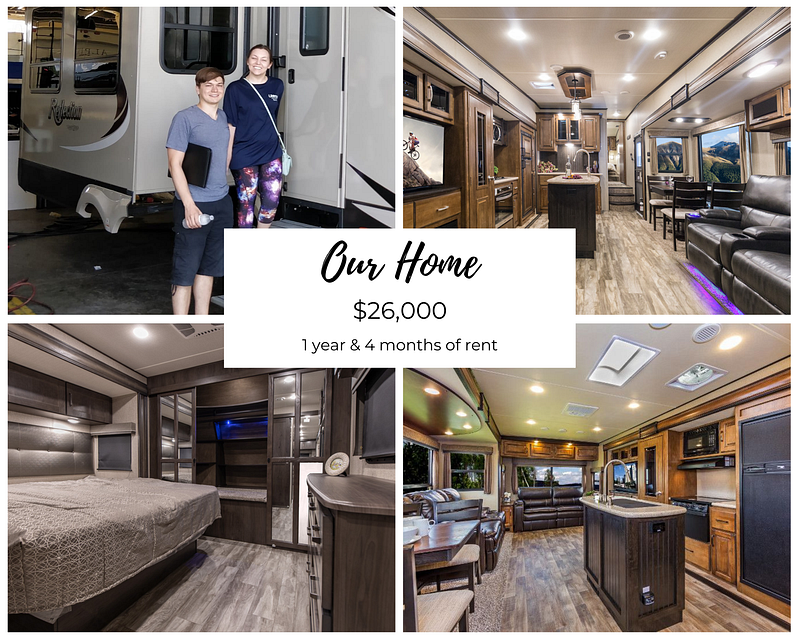
Because of how cheap RV’s are, this is what we were able to purchase. We own our home outright now:
2.) A Competitive Labor Market

Location greatly affects the opportunities that you’re willing to take on. Even if you’re willing to relocate, many companies won’t even consider candidates that don’t already live nearby.

Turns out, job-hopping is actually the #1 thing experts recommend for increasing your salary and your overall lifetime earnings. When you move companies you can see jumps of 8–10% on average or even 20% at the high end. That’s a pretty good incentive to increase your pool of options!

Aside from that, being able to pick up and go somewhere new with more opportunity is an invaluable relief. If you want to move to a new city or state, you’ve got a few options:

In an apartment you can break a lease (usually for a fee).

In a home you’ve bought you can sell or rent it.

With an RV you can just pull in the slides, hitch it up (or hire someone to tow it), and be on the way to new opportunities without much thought at all. An RV offers amazing flexibility on this one, and it’s comforting to always be in the same home no matter where you find yourself relocating to.
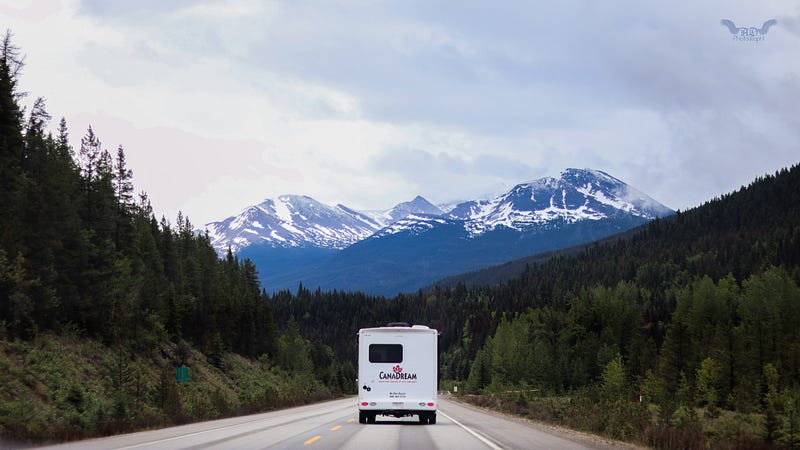
Photo by AD Gill Photography on Unsplash

3.) Natural Disasters

This year, the West coast was on fire. We had an intense hurricane season with images of roofs covered in tarps while the second monster storm of the season rolled through to destroy already battered communities. Droughts continued to wreak havoc on entire states for months.

According to scientists, this isn’t going to get any better.

When your home is mobile, you can leave to a place with better conditions as necessary. Many Rv’ers follow good weather, and get a 60–70 degree year, all year-round. If you need to stay put for work, you won’t get to reap this benefit as much, but you will be able to evacuate your entire home and all of your belongings in the case that you need to.

This might become more important over the next few decades as well.

Photo by Giorgio Trovato on Unsplash

Final Thoughts

RV living offers a lot of solutions to the problems facing us today, and plenty of people are already catching onto the trend. It’s estimated that over a million of us live in our RV’s traveling full-time, and even more live stationary treating them more like condo’s.

Using an RV as your primary source of housing could be a means to address the issues that I mentioned above. It’s a great option temporarily for saving up a downpayment for a home at an astonishing rate due to how cheap it can be. There’s also a case to be made for using it as your only form of housing depending on your specific wants and long-term goals.

COVID has invigorated interest in RV’s in general for travel, and I’m sure even more people will question whether they too can live in it full-time to reap the benefits. On top of that, 42% of the US workforce is now working remotely after everything that’s happened this year, and we’re starting to see a new wave of digital nomads take to the roads in their new home-on-wheels.

In my mind, a starter home should make your life more comfortable and easy, not spread you thin. With that, RV’s really might be the perfect starter home for the times we live in.
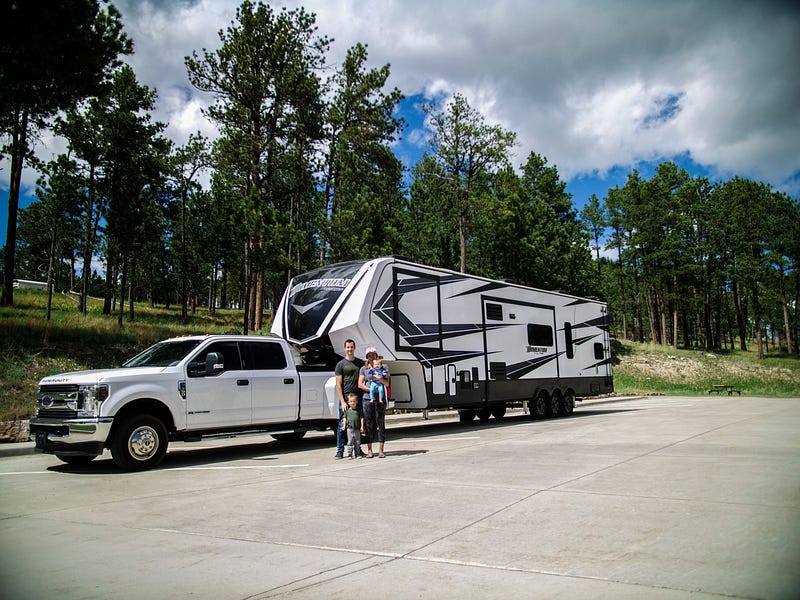
Photo by Matthew Osborn on Unsplash

Thanks for reading!

You can follow along on our adventures over on Instagram

Future
Society
Home
Digital Nomads
Personal Finance
Recommended from ReadMedium