
Could Food Emulsifiers Be Responsible For The Increase In Inflammatory Diseases?
Although considered safe by the FDA, natural and artificial food emulsifiers are now being examined as one reason inflammatory diseases are becoming more common.
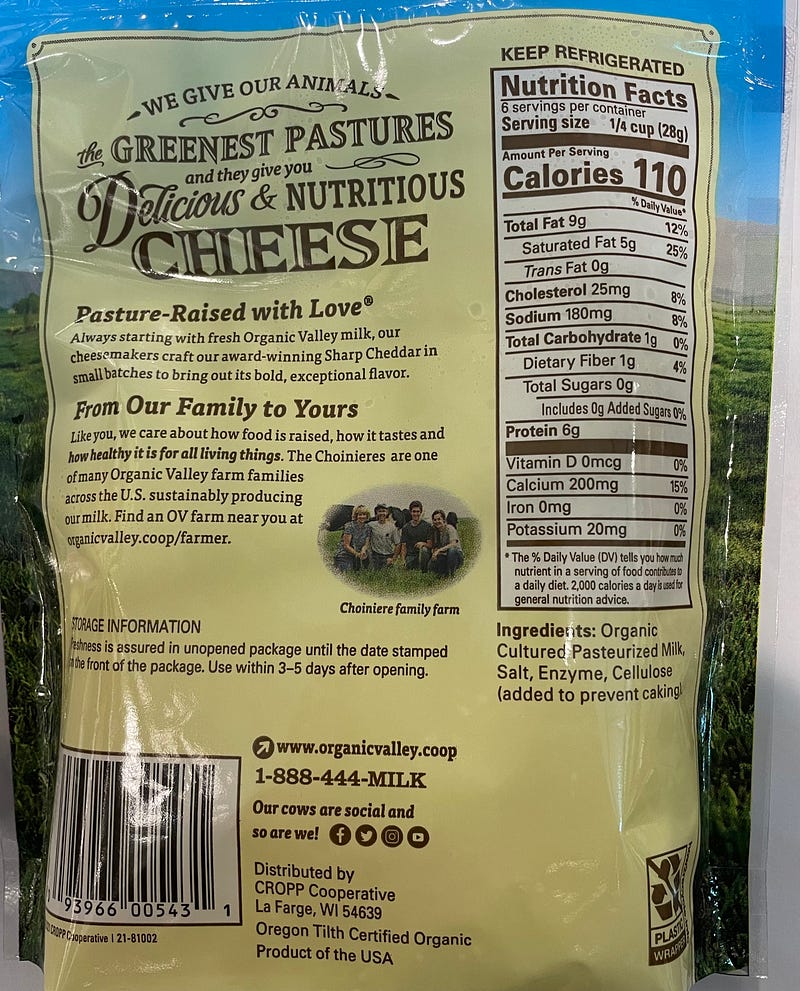
My family spent three years in Tuscany in 2008. We learned much about Italian culture and food. Although this was eight years before I was diagnosed with Inflammatory Bowel Disease (IBD), I had had symptoms for many years. They all disappeared during those three weeks. I was convinced that it had something to do with the food.
Although we ate in some restaurants there, we cooked most of our meals in our villa. And we bought food as most Italians do by shopping for what was fresh almost daily. We were used to the long shelf life of products in the States. The above photograph shows a package of cheese offered for sale locally on 6/26/23. Thanks to an “enzyme” and an emulsifier (cellulose), you can still eat it in three months. We Americans like this convenience. Buy now and eat later. Much later.
We would buy cheeses and dairy products locally in Italy and be surprised that they would spoil after one week. Bread would harden in three days. The reason is that, unlike the American varieties, they had no chemicals other than salt. My wife thought the lack of preservatives made us look and feel better. I suspected it was something even more. She commented that our young daughters’ complexions improved, and despite eating lots of pasta, pizza, and gelato, we only gained 1–2 pounds. Yes, we walked a lot, but this does not fully explain the paradox.
Are Emulsifiers the Culprit?
Recent studies suggest that food emulsifiers contribute to inflammatory diseases like arthritis, diabetes, heart disease, and IBD. It has also been implicated in obesity and metabolic syndrome. Nor is it surprising that unhealthy “ultra-processed foods” (UPF) are loaded with emulsifiers. And the eating of UPF has increased too. More than half of our youths’ calorie intake is now from UPF.
These added food compounds (some natural and others not) aid in keeping foods stable and the textures consistent. And although they may extend the “shelf-life” of the foods they are added to, they may not extend the lives of people who consume them.
Preservatives, emulsifiers, and additives are three hallmarks of UPF, and their addition to our foods has increased. And so has the incidence of IBD. Now, correlation does not prove causation. However, research has shown that emulsifiers alter and harm our gut lining. They also adversely affect the gut microbiome, those millions of bacteria that keep our gut and body healthy. An unhealthy gut microbiome is now linked to many diseases, from IBD to diabetes, obesity, and depression.
What are Food Emulsifiers?
An emulsion is a mixture of two or more liquids that are usually not mixable but mix under specific circumstances — generally using substances that help them mix. These substances are called emulsifiers. In an emulsion, one liquid is dispersed in the other.
Food emulsifiers are from three sources: vegetable, animal, and artificial.
Vegetable emulsifiers:
- Mono- and diglycerides
- Agar-agar
- Guar gum
- Xanthan gum
- Cellulose and methyl-cellulose
- Caraganeen
- Pectin
- Gellan gum
- Soy lecithin
Animal emulsifiers:
- Egg yok lecithin
- Meat protein
- Casin from milk protein
Synthetic or Artificial Emulsifiers:
- Polysorbate 20 and 80
- Sodium lauryl sulfate
- Sorbitanlaurate
Since the food industry can use more than 100 compounds as emulsifiers, the above list is far from complete.
The food companies would like us to believe that these compounds are harmless. After all, they are “approved” by the FDA. As noted in the above discussions, I am no longer convinced this is true. Yogurts, for example, use a lot of emulsifiers to make the product smooth and more palatable. However, it is not necessary. I eat Greek Fage Yogurt (non-flavored), and other than some mild separation of water and whey, it is perfectly fine after a quick stir. It contains no emulsifiers.
I decided to look at some other foods I eat. Whenever possible, I try to eat home-cooked unprocessed or minimally processed foods. (These categories can be confusing. This reference might help you understand them better.)
My breakfast usually consists of fresh fruit, Greek yogurt, homemade granola, a few drops of agave nectar, and black coffee. I might have tuna, salad, homemade dressing, or leftovers from the night before for lunch.
Snacks include edamame, hummus, guacamole, roasted chickpeas, smoothies, peanut butter, and nuts. On rare occasions, I will indulge in a few sourdough pretzels that have no preservatives or emulsifiers (uniquesnacks.com). The peanut butter I use (Trader Joe’s Valencia creamy) has no added sugar or emulsifiers. I used to eat Trader Joe’s cinnamon graham crackers, but they also have emulsifiers. Sometimes I will have a few dark chocolate almonds, but sadly, these also have emulsifiers.
Emulsifiers are Everywhere, and it’s Not Only in Foods.
TRIDENT Original Gum: SORBITOL, GUM BASE, XYLITOL, GLYCERIN, NATURAL AND ARTIFICIAL FLAVOR; LESS THAN 2% OF: ACESULFAME POTASSIUM, ASPARTAME, BHT (TO MAINTAIN FRESHNESS), MANNITOL, SOY LECITHIN, SUCRALOSE.
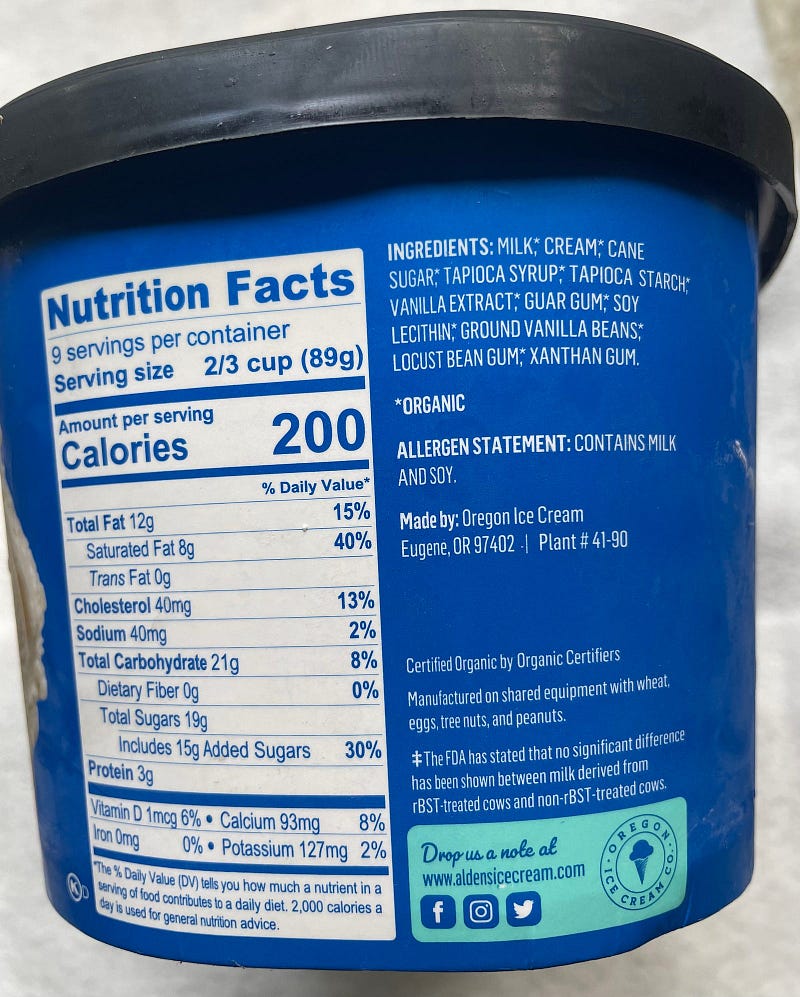
I enjoy sugarless gum but am stopping that as I found out most have emulsifiers and other chemicals. Desserts after dinner are mostly homemade, but even “all-natural” or organic ice creams have emulsifiers, as this photo shows.
Even store-baked bread contains uncertain chemicals, enzymes, preservatives, and emulsifiers. This is the reason I usually bake my bread. I know what is in it, and if we can’t eat it after three days, we slice and freeze it.
Everywhere I searched in my home, emulsifiers appeared. There was no escape. Toothpaste and deodorants have them. Mouthwashes too. Soaps? Yes. Sunscreens, body wash, shampoos, conditioners, and skin creams. The list is endless. And although we don’t eat them, who is to say they can’t be absorbed through the skin?
Conclusions
To be clear, the data is far from definitive for two reasons. Some were done in animals and not humans. And the particular emulsifier(s) examined varies from study to study. Furthermore, no data suggest that unprocessed foods, like honey or other processed foods (not highly processed), like mustard, are harmful emulsifiers.
You only need to read food labels if you want to eliminate emulsifiers, preservatives, and other additives in ultra-processed foods. The easiest way to identify them is to see if there are any ingredients you wouldn’t normally have in your kitchen. If the answer is yes, then you are ingesting UPF.
Since I have struggled to regulate my Crohn’s disease, and my blood inflammatory markers remain high despite powerful biologic medications, I am taking no chances. For me, foods with common emulsifiers are now off the menu.
I am a retired MD passionate about culture, health, sports, and food. Get an email whenever I publish by clicking this link:https://davidmokotoff.medium.com/subscribe
I will never spam you or give out your address.


