avatarLaura Peek

Free AI web copilot to create summaries, insights and extended knowledge, download it at here

2588

Abstract

of staff trying to buy masks from DIY stores in desperation because they are not being provided with it by their employers,” said <a href="https://www.thetimes.co.uk/article/coronavirus-nhs-doctors-fear-they-will-die-for-lack-of-safety-equipment-mdmkbzq99">Dr Chaand Nagpaul</a>, the BMA chair of council.</p><p id="04e5">“The Government must find a reliable way to increase the production and distribution of PPE [personal protective equipment].”</p><figure id="1662"><img src="https://cdn-images-1.readmedium.com/v2/resize:fit:800/1*7L3P_njwZhaPp3kqdZfo7Q.png"><figcaption>3M’s 1962 patent says the heat-moulding technology used to make bra cups could also make masks</figcaption></figure><p id="4b5c">“For some reason — some cite a more accessible market while others point to the decade’s trend for bra burning — the moulded cups were reborn as face masks with little need to alter the product’s design,” according to a 2009 article in Chemical and Engineering News.</p><p id="de76">3M’s patent outlines a bra as the principal product for its method of heat-moulding polyester fibers into three-dimensional forms, complete with a drawing. The patent makes mention of other possible items that could be manufactured using the same process, including shoulder pads and “porous breath-filtering face masks used by surgeons, physicians, dentists, nurses, and by industrial workers subjected to dusty or contaminated atmospheres”.</p><p id="c1de">There is precedent for using the same methods to make bras and masks. In 2009 the head of Chicago’s Trauma Risk Management Research Institute Dr Elena Bodnar, who helped evacuate and treat children from Chernobyl, won the IG Nobel Prize in Public Health for inventing the <a href="https://www.theguardian.com/education/2010/mar/09/ignobel-tour-winner-emergency-bra">Emergency Bra</a>, which transforms into two masks.</p><p id="2f20">I came across the 3M patent because my mother, who is a retired NHS doctor, and I (along with many other people) have been researching mask designs and making prototypes. We discovered quite quickly that it is difficult to make a close-fitting mask.</p><figure id="59e9"><img src="https://cdn-images-1.readmedium.com/v2/resize:fit:800/1*1FR_rjkdTRnn7KipTYEUCQ.jpeg"><figcaption>Our third attempt has a tape slot for flat wire over the nose for a closer fit.</figcaption></figure><p id="f5c3">Bra makers, like mask maskers, are set up to heat-mould polyester into the optimal shape and may be able to produce washable versions at scale. These won’t be as effective as medical respirators but research does seem

Options

to show that, with the right design, they could offer around 50 per cent more protection from droplet contamination than wearing nothing.</p><p id="ec5b"><a href="https://www.researchgate.net/publication/258525804_Testing_the_Efficacy_of_Homemade_Masks_Would_They_Protect_in_an_Influenza_Pandemic">Scientists</a> from the University of Cambridge tested the efficacy of home-made masks after the H1N1 flu pandemic. They concluded that homemade masks should only be considered as a last resort to prevent droplet transmission from infected individuals in a pandemic but would be better than no protection.</p><figure id="4fba"><img src="https://cdn-images-1.readmedium.com/v2/resize:fit:800/1*5_k5C1aCYxRuqN-5gZ3iCQ.jpeg"><figcaption>Testing the Efficacy of Homemade Masks: Would They Protect in an Influenza Pandemic?. Disaster Medicine and Public Health Preparedness. 7. 413–418. 10.1017/dmp.2013.43.</figcaption></figure><p id="cad8">There are three main types of mask: surgical mask, disposable respirator and reusable respirator. A surgical mask is a physical barrier that protects the patient from droplets of saliva when the clinician exhales. They are also worn by contagious patients. They do not provide a tight seal to the wearer’s face and smaller particles may penetrate the mask’s layers.</p><figure id="1b49"><img src="https://cdn-images-1.readmedium.com/v2/resize:fit:800/1*xLD_sHD5btFp4ezQxn_Gkw.jpeg"><figcaption>A standard surgical mask</figcaption></figure><p id="4876">Respirators provide a higher level of protection from viruses. Many have filters to protect the wearer from tiny airborne particles and some have exhalation valves to reduce condensation. The US-standard N95 mask filters 95 per cent of airborne particles that are 0.3 microns in diameter or larger whilst the equivalent European-standard FFP2 mask filters 94 per cent and the FFP3 filters 99%.</p><figure id="0bbb"><img src="https://cdn-images-1.readmedium.com/v2/resize:fit:800/1*7x-vcIXF50d2qXzprWxFQQ.jpeg"><figcaption>An FFP3 respirator</figcaption></figure><p id="9925">Reusable respirators with replaceable filters are the ones that make the wearer look like a big-eyed bug. They are commonly used to protect workers from industrial gases or vapours. Respirators and surgical masks only provide full protection when worn and handled correctly.</p><p id="5ec3">Should mask-wearing become the norm in the UK as it is in Asia demand will be even greater. Could mask manufacturers provide lingerie makers (and home sewers) with a pattern to help them produce a reliable design?</p></article></body>

Could bra makers manufacture masks?

3M’s masks were conceived as bra cups so could bra makers manufacture masks just as gin distilleries are making hand sanitizer?
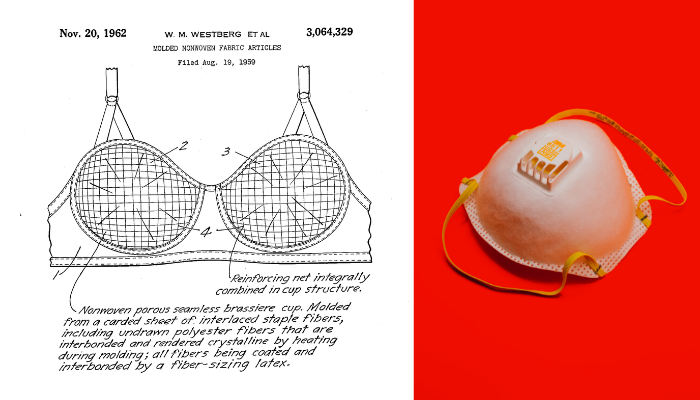
3M’s masks were conceived as bra cups in a 1962 patent ? Photo: Visuals on Unsplash

The world’s leading manufacturer of respirator masks may have originally intended them to be bras. So could bra makers help address desperate clinical shortages?

3M patented a bra design in the 1960s but then — possibly due to the bra-burning 1970s — is said to have reinvented the moulded cups as masks.

“Legend has it, 3M’s protective breathing devices were originally conceived in the 1960s as molded, non-woven brasserie cups,” according to a 2009 article in Chemical and Engineering News. The story may be apocryphal but the patent (US Patent №3,064,329) does seem to suggest that bras and masks can be made using the same production process.

This raises the possibility that bra makers — particularly those that make moulded bras — could already be partially tooled to manufacture masks (just as gin distilleries are able to produce hand sanitizer).

Masks to protect doctors and nurses are in desperately short supply. In the US, hospital workers are already making them using parts from craft stores and have been warned they may even have to improvise with bandanas. Some are asking the public to sew CDC-compliant face masks. Meanwhile, frontline doctors in the UK have resorted to buying masks from DIY stores (although these now seem to have sold out).

Most of the world’s masks are manufactured in China which has restricted exports. NHS doctors are calling for the government to convert British factories to manufacture masks and other protective equipment in addition to ventilators.

“We are hearing of staff trying to buy masks from DIY stores in desperation because they are not being provided with it by their employers,” said Dr Chaand Nagpaul, the BMA chair of council.

“The Government must find a reliable way to increase the production and distribution of PPE [personal protective equipment].”
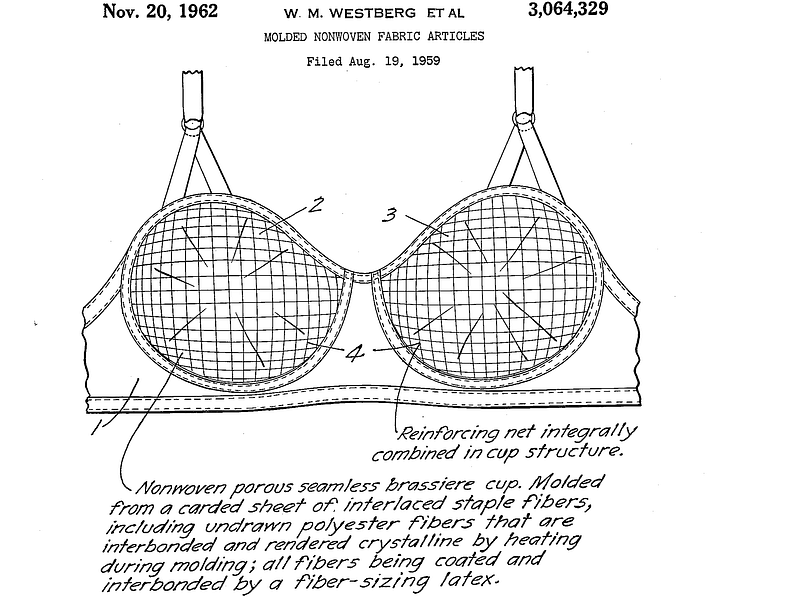
3M’s 1962 patent says the heat-moulding technology used to make bra cups could also make masks

“For some reason — some cite a more accessible market while others point to the decade’s trend for bra burning — the moulded cups were reborn as face masks with little need to alter the product’s design,” according to a 2009 article in Chemical and Engineering News.

3M’s patent outlines a bra as the principal product for its method of heat-moulding polyester fibers into three-dimensional forms, complete with a drawing. The patent makes mention of other possible items that could be manufactured using the same process, including shoulder pads and “porous breath-filtering face masks used by surgeons, physicians, dentists, nurses, and by industrial workers subjected to dusty or contaminated atmospheres”.

There is precedent for using the same methods to make bras and masks. In 2009 the head of Chicago’s Trauma Risk Management Research Institute Dr Elena Bodnar, who helped evacuate and treat children from Chernobyl, won the IG Nobel Prize in Public Health for inventing the Emergency Bra, which transforms into two masks.

I came across the 3M patent because my mother, who is a retired NHS doctor, and I (along with many other people) have been researching mask designs and making prototypes. We discovered quite quickly that it is difficult to make a close-fitting mask.
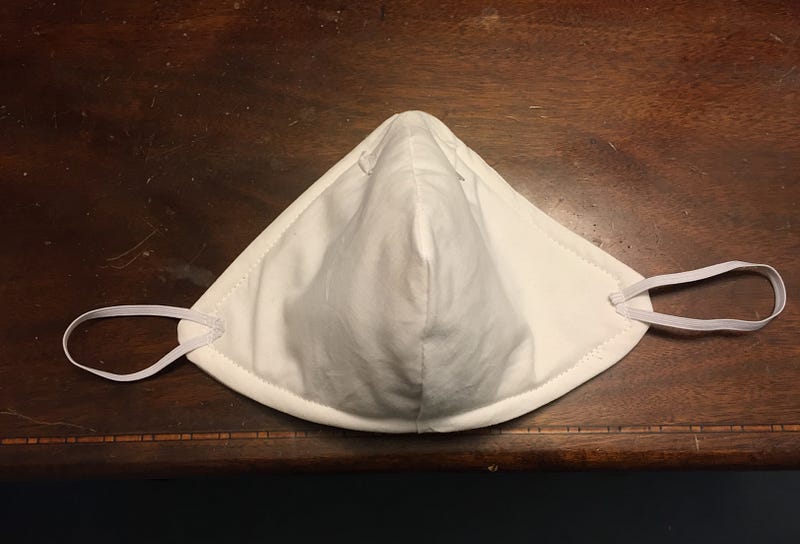
Our third attempt has a tape slot for flat wire over the nose for a closer fit.

Bra makers, like mask maskers, are set up to heat-mould polyester into the optimal shape and may be able to produce washable versions at scale. These won’t be as effective as medical respirators but research does seem to show that, with the right design, they could offer around 50 per cent more protection from droplet contamination than wearing nothing.

Scientists from the University of Cambridge tested the efficacy of home-made masks after the H1N1 flu pandemic. They concluded that homemade masks should only be considered as a last resort to prevent droplet transmission from infected individuals in a pandemic but would be better than no protection.
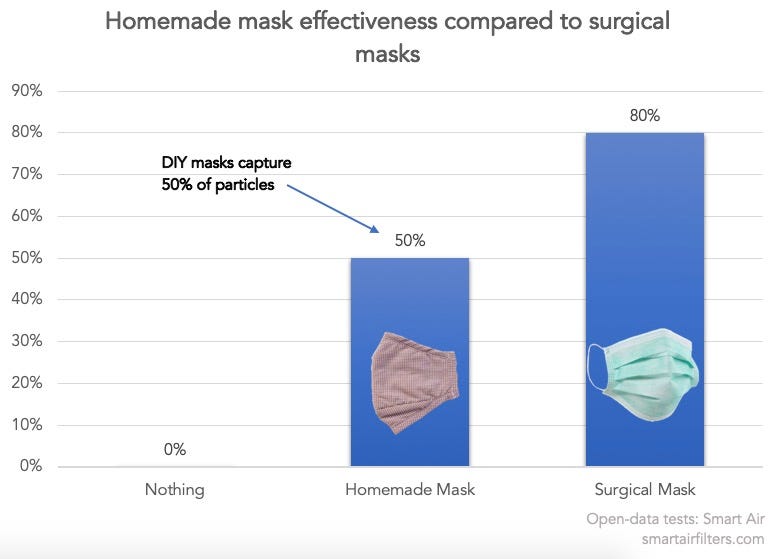
Testing the Efficacy of Homemade Masks: Would They Protect in an Influenza Pandemic?. Disaster Medicine and Public Health Preparedness. 7. 413–418. 10.1017/dmp.2013.43.

There are three main types of mask: surgical mask, disposable respirator and reusable respirator. A surgical mask is a physical barrier that protects the patient from droplets of saliva when the clinician exhales. They are also worn by contagious patients. They do not provide a tight seal to the wearer’s face and smaller particles may penetrate the mask’s layers.
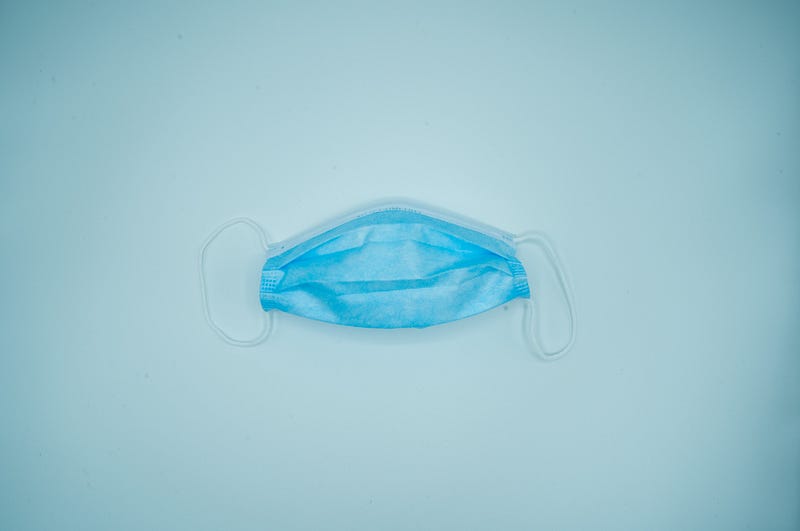
A standard surgical mask

Respirators provide a higher level of protection from viruses. Many have filters to protect the wearer from tiny airborne particles and some have exhalation valves to reduce condensation. The US-standard N95 mask filters 95 per cent of airborne particles that are 0.3 microns in diameter or larger whilst the equivalent European-standard FFP2 mask filters 94 per cent and the FFP3 filters 99%.
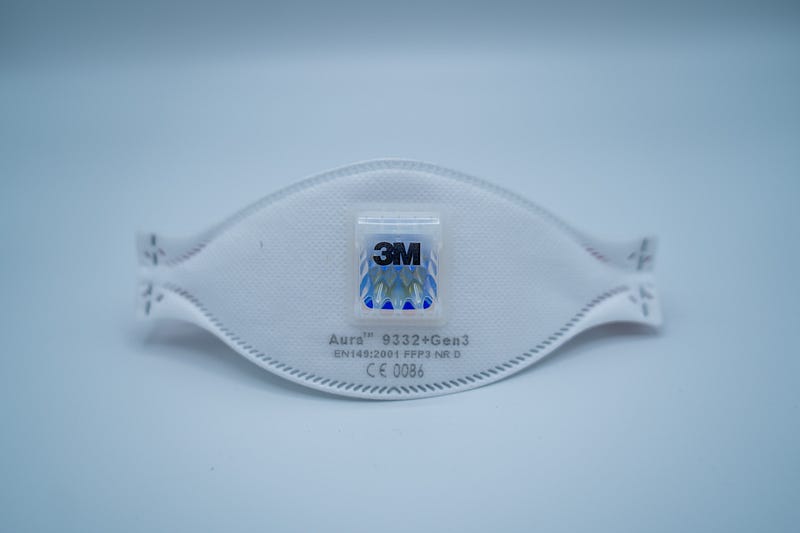
An FFP3 respirator

Reusable respirators with replaceable filters are the ones that make the wearer look like a big-eyed bug. They are commonly used to protect workers from industrial gases or vapours. Respirators and surgical masks only provide full protection when worn and handled correctly.

Should mask-wearing become the norm in the UK as it is in Asia demand will be even greater. Could mask manufacturers provide lingerie makers (and home sewers) with a pattern to help them produce a reliable design?

Coronavirus
3M
Maskshortages
Recommended from ReadMedium