Could Australia and the UK have open borders with each other?
It’s a good idea — but a tough one to sell.
To judge by their stereotypes, Australia and the UK are extremely different places.
Australia: a vast, sunny land filled with carefree surfers, scorpions, and crocodile-hunting tough guys.
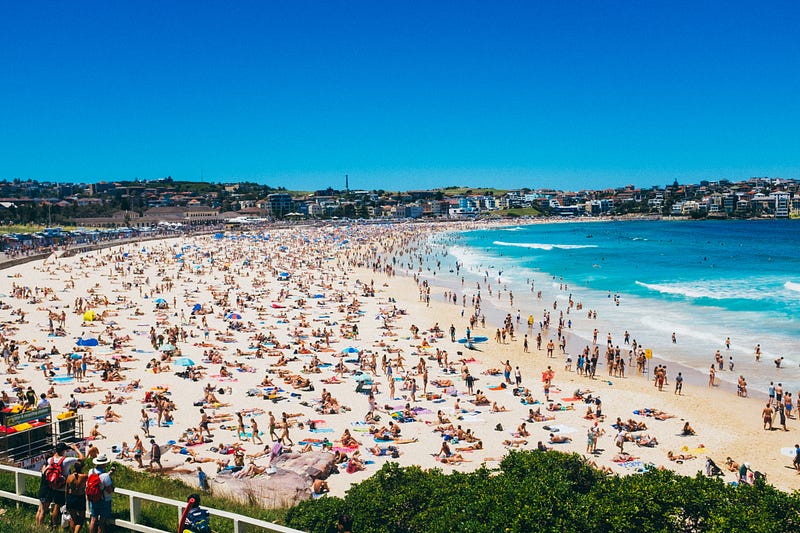
Britain: a rainy little island filled with genteel, repressed aristocrats who spend their days sipping tea and reading Jane Austen.

Yet beyond the clichés, these two islands share a close affinity. Some of that is clear from their similarities — the love of cricket and rugby, the shared language, the fondness for getting piss drunk and starting fights in neighbours like Magaluf and Bali.
But the most obvious sign of the link between these two countries is the vast number of people living, traveling and working between them. Over 160,000 Australians were in the UK in 2020, while migration in the opposite direction is even more astonishing — roughly 1.2 million Brits live in Australia.
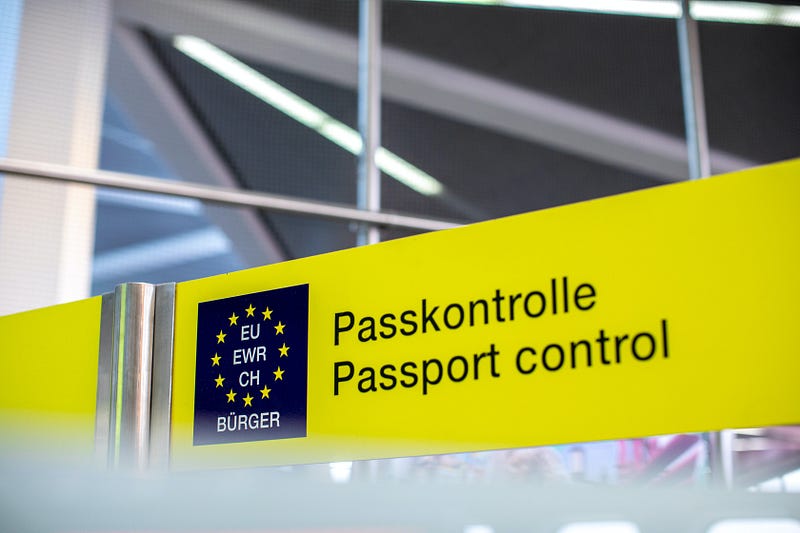
Most of those moving are attracted by the differences. In the UK, Australians see a less isolated place, with more cultural attractions, and with more professional work opportunities — many of Australia’s political and corporate elite spent their early professional years in London. Meanwhile, Brits are obviously attracted by Australia’s climate and nature.
It has never been easy. Expensive flights, distance from family, and visa requirements have all added to the complexity of movement between the two countries. Yet in recent years, some of these barriers have been falling.

Historically, the differences have mostly been imposed by Australia, with the most notorious being the agricultural work requirement for people renewing working holiday visas. If you want to spend a second year in Koala country, you have to do 3 months of unpopular manual labour that generally involves picking fruit — and then another 6 months in your second year to get a 3rd-year visa.
But recently, Australia has announced the abolition of this requirement for young Brits. Under-35s from the UK can now spend up to 3 years in The Land Down Under without any requirement to pick watermelons or bananas, traveling and working more or less as they please.

It’s a culmination of several years of visa relaxations between the two nations, with earlier examples including an agreement to allow British lawyers to work in Australia without requalifying. Similar simplifications have been made for doctors, teachers, architects and engineers.
It raises an important question: how far will this process go?
Both countries had more or less unrestricted migration with each other in the past as members of the British Empire, and still have what amounts to open borders with their neighbours — Britain with Ireland, Australia with New Zealand. Could we once again live in a world where Brits, Aussies and Kiwis can move freely around the “White Commonwealth”?
The British government would certainly like to see it happen. Resentment over lost work and travel opportunities has bubbled up amongst young Brits since Brexit. With the difficulty of living and working in Spain or Italy, Australia has become even more important as one of the few countries where Brits can move easily and enjoy a more idyllic life.

Australia is less keen. Over time, its stance towards migration has become tougher, with a greater focus on work sponsors and a points-based system. Even for New Zealanders, entry is slightly more restricted now than in the 1980s. Scott Morrison, Australian prime minister until 2022, has said that “the New Zealand arrangement is quite unique and it’s not one we would probably ever contemplate extending”. So why has Australia been making it easier for Brits in recent years?
A driving factor is that Britain, which has a much bigger population and market than Australia, is willing to offer access to that market in return for migration concessions. For example, a 2021 free trade agreement was widely seen as giving Australian beef farmers much greater access to the lucrative UK market for relatively little in return.

Big, sweeping changes in immigration policy are unlikely, in no small part because this is a politically polarizing topic. The idea of offering an easier migration process because of shared history, culture and values has been criticized as a racist endeavour to resurrect the majority-White nations of the British Empire (except Ireland). I think that’s unfair, but this perception makes it harder to sell closer ties to the political left.
But I think there’s a definite trend towards easing travel and migration between the two nations. It probably won’t be done through highly publicized, landmark deals, but rather through a steady stream of minor tweaks and bureaucratic trimming. It mightn’t be a glamorous process — but it will make sense.