
Could a Knight’s Code Empower and Improve Modern-day Life?
A Response to KTHT prompt — Sacred Code
Growing up I had a love for legends and myths. I still do.
I remember my love of the knights of the round table. I couldn’t connect with female characters in the majority of stories, and now in hindsight, it’s easy to see why. I never was one to need rescuing. Thank goodness for the retellings that are being published in abundance now!
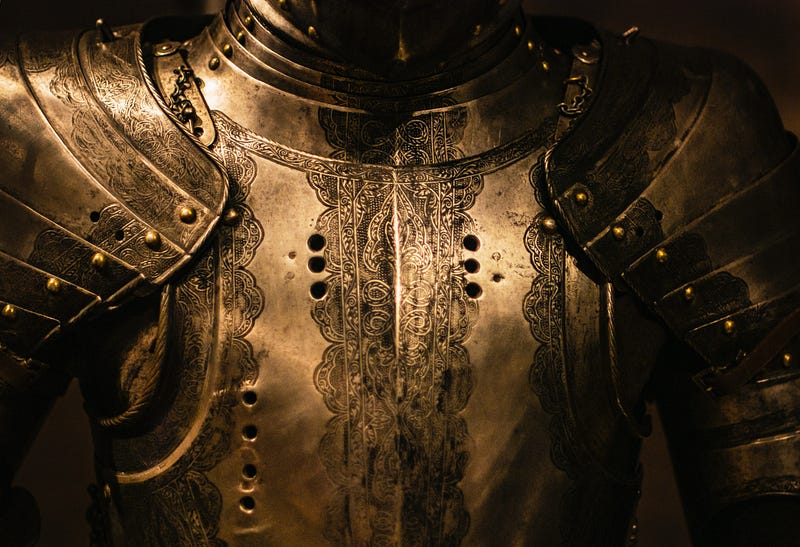
For me, the days of Arthur, were days I longed to be a part of. A time of honor, loyalty, and righteousness born of doing the right thing. I remember so clearly the sensation of disappointment when I compared their world to mine. It wasn’t just the swords, horses, and armor that was missing, it was the feeling of a group of people unified by a code. A code they would uphold with their lives.
I could see that reflected in the people I knew. Neither adults nor children seemed connected in that way. Perhaps it was the city that separated and created a culture of keeping to yourself. Perhaps I was longing for a smaller more rural existence, but I believed then and still do, that it was something much more than that.
The knight’s code is known as the code of chivalry, and whatever that word may have once meant, it has been permanently tied to an old fashion dynamic between the sexes which the feminist movement highlighted as belittling and demeaning to women. Its undertones portraying women as fragile, delicate, and in need of protection and inevitable saving.
The thing is, while I agree that chivalry has outstayed its time and place. I believe it speaks to a dynamic that was misconstrued from the beginning. The knights of the stories I lost myself in growing up were in the fellowship of King Arthur. They represented him and fought for him and in that role, they took on a code of what a true king should be.
A king is not a man with ‘power over’ his subjects, he is a man ‘in service to his people’, and in that there is a huge difference.
As people of the modern world, the majority of us are Kings and Queens of our own lives. We create the rules for how we conduct ourselves, our ethics, and our own micro-cultures. We have people we care for, circles of friends, colleagues, and acquaintances who we are interdependent on.
The true Knight’s code is that of service to others. The oath to stand for others when they need us, to fight for them when they are attacked, to support them when we can, and to respect them, always.
Whereas once, we may have needed a title bestowed on us by royalty, now we are born sovereign, and the responsibility for our actions falls solely on us. Taking a sacred oath is a deeply personal thing, one that many wouldn’t even consider, and it doesn’t have to be as serious or as binding, as it may sound. Perhaps just the simple intention to think about what service means to us now? Does it raise the feeling of being a servant, in a negative, put upon way? Or could it be reframed to be like that of what true royalty should stand for?
In serving others, whether that be through random acts of kindness, or by using our voice against injustice, by helping others directly, we also serve and help ourselves by reminding ourselves of the innate good that lies within each of us, just waiting to be called on.
“Life’s more persistent and urgent question is, what are you doing for others?’ Martin Luther King
If you are new to this platform, you can Join Medium here to read more stories


