
FREE VERSE POETRY
Corridor
A journey to the yesteryears
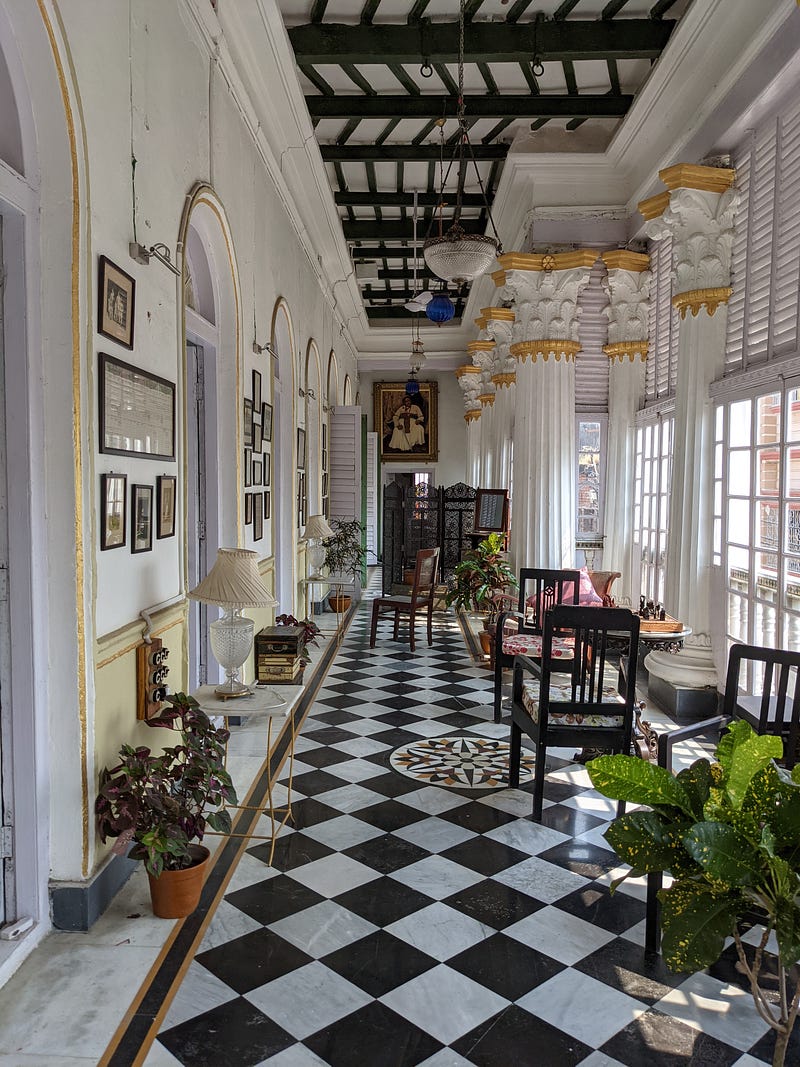
I opened my eyes, the minute rays of sunlight peeping through the hole in the window, rays of sunlight with minuscule dust particles floating, I opened the half-closed door as the eyes took time to familiarise with the buzzing world, as the brain still tried to remember what it dreamt last night, those little intricacies, I step out into this corridor, and my feet were stunned.
Where was I, did I time travel hundreds of years, and popped up in the era of zamindars? somehow breaking the space-time continuum and falling into the lap of this place, a place oozing an old-world charm with those chequered floors, high ceilings, wooden chairs, antique switchboards, the lengthy verandah where the sun-light plays peekaboo, or maybe the gold-carved pillars supporting the roof?
My inquisitive face kept walking the corridor, my eyes trying to figure it all out, my soul wished the vast expanse of the dreamy corridor to never end, and I keep walking and walking, seeping in all the sights and sounds the place had to offer.
The above picture is from a heritage property and hotel called “Bari Kothi” that I had the opportunity to visit for a day.
Here’s a little bit of history on the place that I read and collected which should definitely interest everyone:-
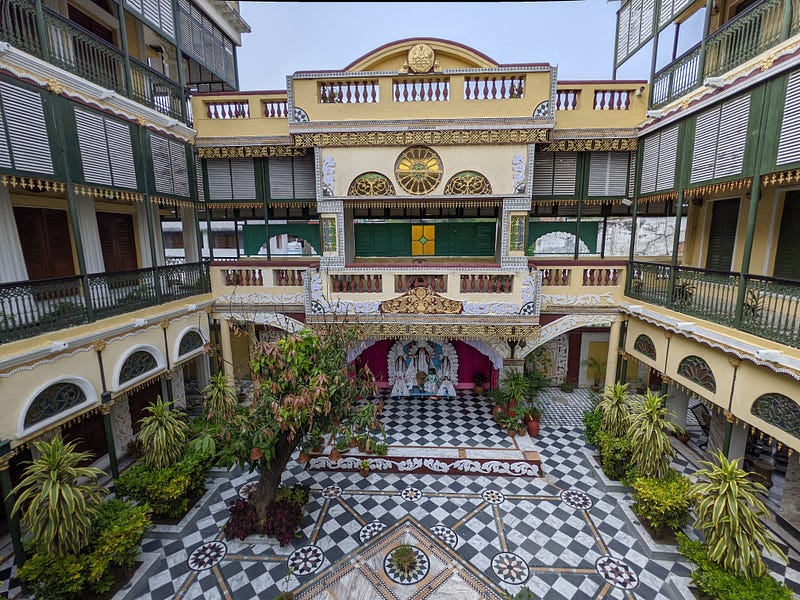
The Bari Kothi was built in the late 1700s. The name of the house, Bari Kothi (literally meaning the Palace of the Elder), was coined in the late 1800s since it was the house of the elder (bari) brother, Rai Bahadur Budh Sing Dudhoria. Bari Kothi is known across Murshidabad as one of the most architecturally significant houses in the region showcasing Greek, Roman, and French architecture. The Bari Kothi is spread across three-fourth acres of Land and houses a Sheesh Mahal, Library, Music Room, Durbar Hall, Janana Chowk, Gaddi Ghar, Halwai Khana, Gulabi Chawara amongst other parts of the house.
Bari Kothi, like similar other palaces of the region, was abandoned for more than half a century. With the decline of Murshidabad and Azimganj, most of the families moved to Kolkata looking for better opportunities and a stable environment. It was only in the year 2015 when a Canadian Architect and restoration specialist was invited to Bari Kothi to bring the palace to its former glory. Events that transpired thereafter were history in the making; with a team larger than 100 personnel restoring Bari Kothi to make it into the first self-sustaining rustic luxury heritage hotel. The project was nicknamed “Project Priceless”. The intent of the project, as the name suggests, was not merely to convert the palace into a heritage hotel but was to create Bari Kothi into a self-sustaining ecosystem. An eco-system that could restore and save the sole of Bari Kothi i.e. make Bari Kothi generate its own income, make Bari Kothi improve the local economy, make Bari Kothi better the lives of the local community, and most importantly, make Bari Kothi proud of itself and carry forward its legacy. Bari Kothi is remembered fondly in history as being more than just a house belonging to noblemen; it was considered to be an institution. The local community was proud to have Zamindars such as Rai Bahadur Budh Sing Dudhoria. Project Priceless is a tribute to that piece of history.