avatarJesse Smith, MD

Free AI web copilot to create summaries, insights and extended knowledge, download it at here

923

Abstract

1A.png"><figcaption>Source: <a href="https://commons.wikimedia.org/wiki/File:3D_medical_animation_coronavirus_structure.jpg">https://commons.wikimedia.org/wiki/File:3D_medical_animation_coronavirus_structure.jpg</a></figcaption></figure><p id="7756">The experiemental vaccine mRNA-1273 seeks to accomplish this by injecting people with the precursor mRNA that encodes the <i>spike</i> protein in coronavirus. Essentially, upon injection this will allow the body to translate those mRNA molecules into free floating <i>spike</i> proteins, which researchers hope is sufficient to trigger the body’s natural adaptive immune response against COVID-19.</p><p id="2543">Vaccines must strike a delicate balance between being potent enough to trigger a strong immune response, while not being so potent to cause adverse effects. This vaccine, being that it only introduces the spike protein into the body and not the entire virus it

Options

self, holds no risk for participants becoming infected by the vaccine.</p><p id="aa79">Participants will wait 28 days before receiving their second dose of the experimental vaccine. Once the second dose has been administered, they will be monitored for up to a year <a href="https://www.nih.gov/news-events/news-releases/nih-clinical-trial-investigational-vaccine-covid-19-begins">according to the NIH</a>. According to experts involved in this trial, a viable vaccine is at best 12 to 18 months away.</p><p id="349b">Reference:</p><p id="871d">Source:</p><p id="9195"><a href="https://www.nih.gov/news-events/news-releases/nih-clinical-trial-investigational-vaccine-covid-19-begins">https://www.nih.gov/news-events/news-releases/nih-clinical-trial-investigational-vaccine-covid-19-begins</a></p><p id="f56d"><a href="https://corona.kpwashingtonresearch.org">https://corona.kpwashingtonresearch.org</a></p></article></body>

Coronavirus Vaccine Goes Into Phase 1 Trial
The first patients in Seattle, WA have been injected with a novel vaccine aimed at curbing COVID-19 infections in humans. The vaccine was introduced to a cohort of patients yesterday in hopes that it will trigger immunity to the rapidly developing virus.

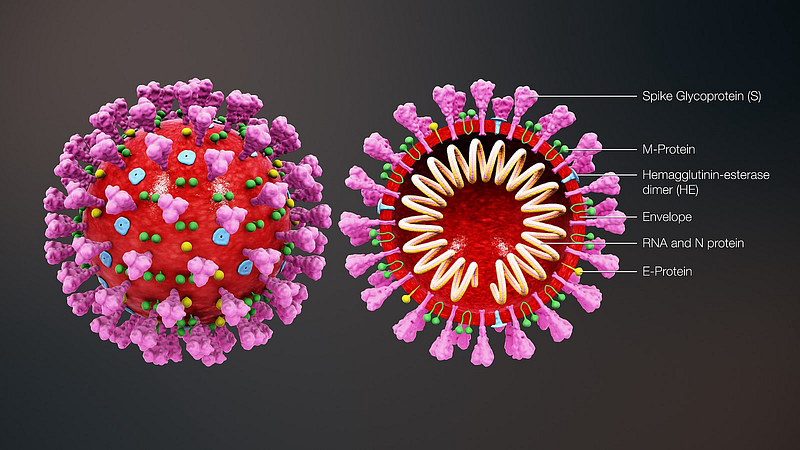
Volunteers between 18 and 55 years old at the Kaiser Permanente Washington Health Research Institute were given the first of two doses of the vaccine, now being called mRNA-1273. This vaccine aims to alert the body’s immune system to a surface protein expressed on the 2019 coronavirus known as Spike.

Source: https://commons.wikimedia.org/wiki/File:3D_medical_animation_coronavirus_structure.jpg

The experiemental vaccine mRNA-1273 seeks to accomplish this by injecting people with the precursor mRNA that encodes the spike protein in coronavirus. Essentially, upon injection this will allow the body to translate those mRNA molecules into free floating spike proteins, which researchers hope is sufficient to trigger the body’s natural adaptive immune response against COVID-19.

Vaccines must strike a delicate balance between being potent enough to trigger a strong immune response, while not being so potent to cause adverse effects. This vaccine, being that it only introduces the spike protein into the body and not the entire virus it self, holds no risk for participants becoming infected by the vaccine.

Participants will wait 28 days before receiving their second dose of the experimental vaccine. Once the second dose has been administered, they will be monitored for up to a year according to the NIH. According to experts involved in this trial, a viable vaccine is at best 12 to 18 months away.

Reference:

Source:

https://www.nih.gov/news-events/news-releases/nih-clinical-trial-investigational-vaccine-covid-19-begins

https://corona.kpwashingtonresearch.org

Coronavirus
Vaccines
Medicine
Health
Wellness
Recommended from ReadMedium