
Can My College Really Ditch My Class?
Coronavirus Scare Causes Higher Education Powerhouses to Close Campuses in Favor of e-Learning
Five Things to Help You Transition to Virtual Classes
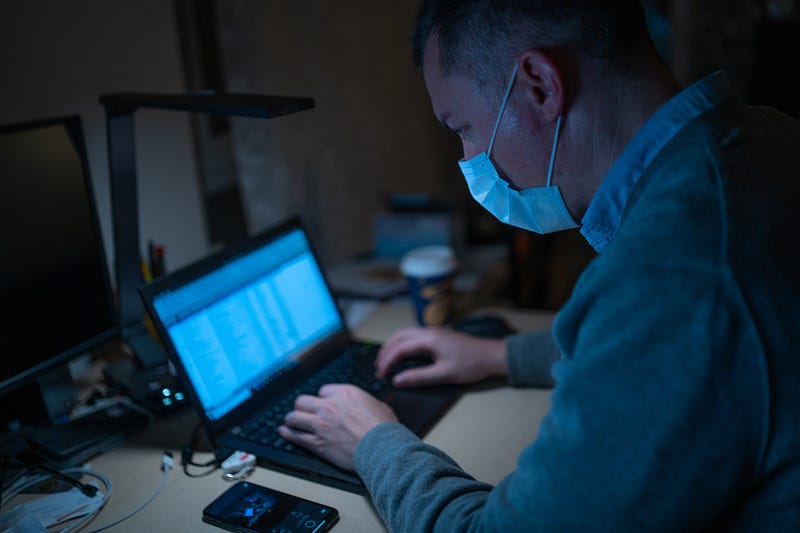
Today, higher education powerhouses, like MIT, Harvard, “the” Ohio State University, Duke and UCLA, announced campus closings for both graduate and undergraduate face-to-face classes. Instead of attending a physical class on these college campuses, students are now expected to transition to virtual learning environments. Some institutions are moving to e-Learning temporarily, while others are doing so for the duration of the Spring semester.
One college even directed its students to vacate the campus until Fall 2020. It provided a deadline for students to be moved entirely out of their dorms, fraternity and sorority houses before leaving for spring break.
So, why the extreme measures?
Several university administrators say closing campus and moving to virtual learning is a coordinated effort to protect their students’ from exposure to the Coronavirus Disease 2019 (COVID-10).
What about the rest of the folks on these university campuses?
Harvard’s President, Larry Bacow, claims his decision to close the campus and move to virtual learning was not rash. He explained his decision in a letter to students and staff today, “The goal of these changes is to minimize the need to gather in large groups and spend prolonged time in close proximity with each other in spaces such as classrooms, dining halls, and residential buildings.”
Just when did it get so crazy?
The college campus scare started on the west coast of the United States last Friday. Patient cases were confirmed in Washington and California. And soon after that, the number of official cases fueled the media fire and lit up social media platforms. As of this writing, more than 1,009 cases have been confirmed in the U.S., with 30 of those cases resulting in death. And, sadly, the statistics literally seem to increase by the minute.
Total Coronavirus Cases in the United States = 1009
Total Coronavirus Deaths in the United States =30
On Friday, in response to the number of confirmed cases, several higher education institutions like the University of Washington and Stanford University set the bar for campus safety by declaring they would temporarily moving brick-and-mortar classes to an online format.
Today, several higher education flagship institutions, like Harvard and Princeton, joined the movement. These colleges and universities are still finalizing plans to transition traditional classes to e-Learning platforms: UCLA, Duke, Indiana University, and Kent State University. Most of the transition will be completed by March 23, 2020, according to a multitude of campus officials.
Besides, many of these college campus closings are temporary. In contrast, several others predict long term closings. A few colleges have not only granted early release for Spring Break, which most kids welcome but have also advised students not to return to campus for the duration of the Spring semester. These colleges encourage students to check their email regularly for updates on campus closings, virtual class launches, and even a potential return to campus estimate.
The Ohio State University President Michael Drake, M.D., said, “we are suspending face-to-face instruction in lectures, discussion sections, seminars, and other similar classroom settings and moving to virtual instruction.” OSU is also making arrangements with faculty and staff to work from home, plus Drake has issued a travel ban for all university-sponsored international travel through the end of April 2020.
Many of these college administrators agree the goal of closing campuses is to ensure the safety of the entire college community’s health, not just students. Further, they believe their actions to close the universities are parallel with the advice given by leading health officials in terms of keeping one’s surroundings safe and free from exposure to the disease.
Now how will this transition to e-Learning happen? Well, just like the answer in most grad school questions: “it depends.” Colleges with robust learning management systems (LMS) like Canvas, D2L, and Blackboard will have the most natural time transitioning. Canvas is the gold-standard in LMS and is the most-user friendly for student use as well. Others who do not have a robust LMS or instructional design support will, without question, struggle to move physical classes to virtual ones. Also, it may be a challenge to ensure the course content and rigor remains the same as the face-to-face version of the class. If faculty and staff are expected to create their own virtual class, there may be significant issues. Teaching online is still somewhat new in the U.S., and not all higher education institutions have embraced its validity. As a result, many faculty and staff have no idea where to even start when creating an online course.
What does the campus closing mean to me as a student?
Again, as noted above, the graduate school answer is “it depends.” Traditional students likely will feel at ease with the virtual technologies given their daily participation in communication and social media. Unfortunately, non-traditional students who are not as well-versed with technology may struggle. Many have the misconception that online classes are “easy” and are less “time-consuming.” In reality, the opposite is true. Students must be prepared to invest more time in an online class then they do in a physical classroom. And, they must also master the in’s and out’s of the LMS to be successful in the course.
Five Things You’ll Want to Do to Stay Informed
Closing college campuses is new to professors and students alike. So be
- patient with your professors and with yourself. Learning and working online are entirely two different activities with take time and practice,
- prepared to spend time learning how to navigate the Learning Management System that hosts your online course, plus how to submit assignments, access discussion forums, and post information in assignment areas,
- open to making mistakes. Remember, no one or no element in a course are perfect. This includes you, your professor and the course design itself. Transitioning from a physical classroom to a virtual one will take time, patience and dedication. All of which must come from you and from your class professor,
- willing to ask for help. It’s not a weakness to ask for help. In fact, it’s more of a strength because you are both recognizing a knowledge gap and asking for help to close that gap,
- willing to accept this semester may not go as smoothly as you or your professor anticipated. And, that’s okay. Simply make an effort to work with your professor in the new virtual classroom. As a result, you will both learn together; from mistakes and wins.
Stay Tuned for More Information
Many unanswered questions remain. And, for those who are being asked to move out of campus housing, there will be many more. So, stay tuned to my articles and follow me on Medium for the latest updates. And, don’t forget to check your campus email frequently for further directions from your college and your professors.
Have a Specific Question?
If you have specific questions about your college campus closing or about transitioning to virtual classes, please list them in the comment area below. I’ll do my best to help find the answers for you, Doing so may help ensure you stay informed and continue to be successful in your college journey.