
How I’m Managing Credit Card Debt During the Coronavirus Pandemic
2020 Will the Be Year of Achieving My Financial Goals
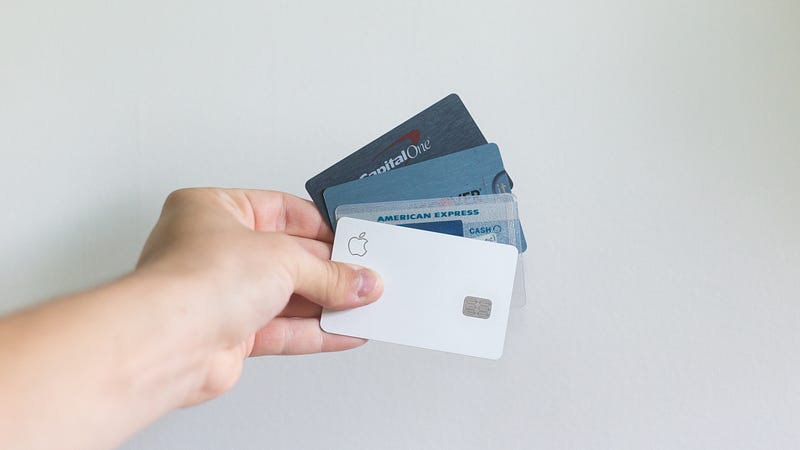
With the coronavirus ravaging much of the United States and the world at large, what’s been immediately apparent is how it’s affected the economy. Though it varies by state, most major cities still cannot offer indoor dining options, while movie theaters remain shuttered in many places. New York City is now in “Phase 4.” Gyms and movie theaters (including film and on Broadway) have remained closed, and many stores are unable to accept a wide swath of customers, using limited capacity directives that will stunt revenue growth for many months, if not years, to come.
All of this means that people are simply unable to spend money like they were used to before the COVID-19 panic set in.
Then I started to wonder what other areas I could save.
I’ve been hovering around the national average in terms of credit card debt. Depending on where you look, you may see more than a few figures over how much the average American carries in terms of credit card debt. Googling articles for average credit card debt in America, most estimates appear to have it around the $6,000-$8,000 range. Though depending on the criteria used, these numbers can vary wildly. Some figures reach into the tens or even hundreds of thousands of dollars once you consider assets like mortgages. (I do not own property simply because it’s way out of my financial range to do so, especially living in NYC, though it’s fun to dream sometimes).
Once the Coronavirus panic set in, however, I noticed an immediate change in my finances. I just wasn’t spending that much anymore. For example, because of the fears of smoking tobacco and the known effect on the lungs from catching COVID-19, I immediately quit cold turkey.
My bank account thanks me every day since making that decision. As do my lungs.
Though I’m not a heavy smoker by any means, it’s a well-known fact that cigarettes are taxed heavily in NYC, hence, saving the $10-$14 per pack is something I noticed on my credit card and bank account monthly statements. Instead of wondering where my funds were disappearing, I started seeing the net positives from limited purchases.
Then I started to wonder what other areas I could save.
Some things were obvious from the start. If the city’s in lockdown, then that means traveling would be altogether limited. No money spent getting drinks after work. No money spent on the subway to visit friends or late-night cabs after a late night at the bar. Even vacations have been on hold; no cash spent on plane tickets back home or to visit friends in other states. And if I’m not going out as much, certainly there’s no need to spend money on clothes and shoes I’m not going to have many chances to wear. (Admittedly, I’m tempted to take advantage of some of the more exciting deals I’ve seen because of this; some clothes outlets appear to be offering upwards of 70% off in what I imagine are gambits to try and recoup some lost revenue.)
Of course, some things are somewhat harder to control. Since the grocery store nearest me had the occasional run on particular items, I found myself ordering out. Part of the reasoning for this was because I knew most restaurants in NYC were hurting during this time, not being able to remain open. If I ordered out I wanted to try and help out drivers who are putting their lives on the line to make food deliveries. In effect, I found myself tipping generously (think north of 40%) per order. Then there’s the fact that some items are getting significant upcharges. A 2lb package of premium ground beef has gone from $7-$8 to a whopping $25 per package at the grocery store. These things definitely can add up if I’m not careful.
Thankfully I’ve been lucky to have steady employment during this time. I think knowing that regular paychecks are something I can rely on has given me relative ease in paying down some of the debt. I figure that if I pay off a massive chunk in one month, I can always try to pay less during the next to shore up my savings a bit. In general, I like to keep a certain amount on hand in my checking account. Holding on to that emergency fund gives me hope just in case an emergency like an unforeseen trip to the doctor or dentist arises.
Finally, there are the net positives of being able to pay down credit card debt. Much of the stress I had from my earlier years in the city have dissipated with knowing that I had a better handle of what I can pay down month to month. Once that overall debt dollar figure begins to increase, my confidence began to build as I saw the proverbial light at the end of the tunnel. No longer does the debt seem like a chained rock I’m dragging, but rather something that can and will be chipped away at until it’s completely gone.
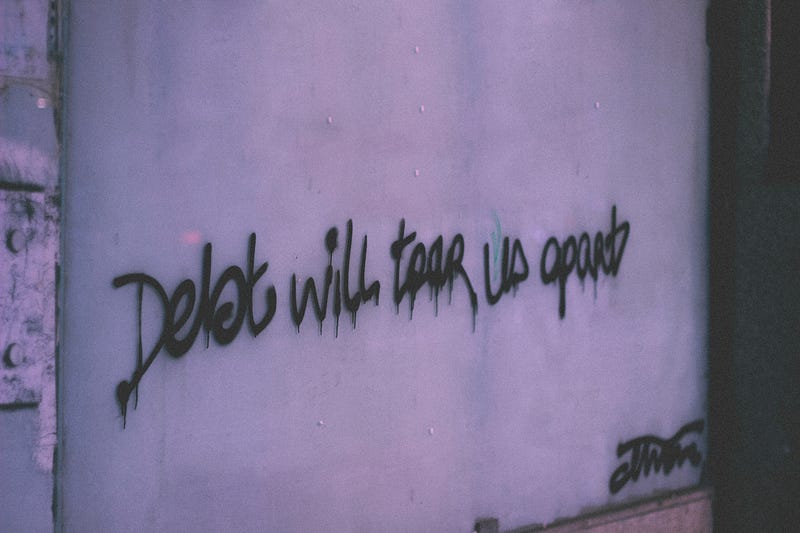
Once upon a time, the concept of a budget seemed so distant from my financial knowledge that I was willing just to spend freely, thinking that by the end of the month, I’d always have a way to pay it back. That’s still somewhat true, but just by taking a few precautionary measures, I’m more able to envision a future self that isn’t accruing interest with every month that I keep a credit card balance in the thousands. And now that the coronavirus is in full effect, I’m keeping a more watchful eye on that monthly statement. By the end of 2020, if not before, I plan to have a balance that will be much lower than the national average.
Who knows what the future will bring once NYC begins to open back in a fuller sense. Though with some careful planning and budgeting, I can envision a sound financial future that allows for more savings and investment with less time for frivolous purchases.