
Coronavirus; A- to Panic; Z between the lines
Chronology of frequent global pandemics
The topics around Coronavirus; more precisely, COVID-19 has almost occupied the entire headlines of the news forecast- not only within the United States but also out there. The virus has become the world’s biggest demon of the century to the extent that Angela Merkel, the chancellor of Germany, calls it the most significant problem the country has faced since WWII. Whether the current perception is the upshot of more robust media, increasing expectation of the millennial, misinformation, or all the above, the COVID-19 is making advancement in the frontline against humans. The tiny organism is not only winning as an infectious agent but also is taking over the entire economy, people’s sovereignty, and even sanity. Coronavirus has become biological warfare lone utilized in a way that also targets individual liberty.
The weapon of mass destruction is no longer being castoff conventionally through direct induction of morbidity and mortality. As an alternative, it is too- being used by way of creating panic, thus eliminating individual control over their own rights by rationalizing their utter dependence on the government and corporations. Using thousands of N95 face masks in 48hrs were used to be in tens or hundreds at most is a symptom by the aforementioned. Or fight over the last roll of toilet papers in the store amidst the implementation of social distancing and home quarantine represents a grim symptom, called “panic.”
Humanity has survived through wars, ruthless pandemics, and natural disasters far more brutal than what we are witnessing with reputes to COVID-19. But probably what we are facing is taken out of proportion. Weaponizing infectious epidemics or even pandemics is not only wrong but is an insult to civic dignity.
To elaborate on my thoughts, within the milieu of this discussion, I would like to attract every attentive reader’s devotion to a comparative look at four known viral infections. I correspondingly would like to go over the head to head comparison of their epidemics and pattern with their chronological evolution.
Epidemics of Pandemics
An epidemic is a state when an infectious disease disseminates rapidly amid a group of population in a short period. A pandemic, then again, is the global outbreak of a disease crossing the confines of geographic borders. We have witnessed a variety of “pandemics” throughout times gone by, including the most recent we are living through, the COVID-19 pandemic as declared by the World Health Organization (WHO) on March 12, 2020.
Pandemics typically jolt as epidemics. For instance, The Zika virus outbreak began in Brazil in 2014, making its way across the Caribbean and Latin America as a pandemic. Or as the Ebola outbreak in West Africa in 2014–2016. The United States has been experiencing an opioid-epidemics for some time since 2017. COVID-19 likewise began as an epidemic in Wuhan, China, before making its way across the world, becoming a pandemic.
Epidemics don’t always turn into pandemics, or if it does, it’s not inevitably a fast or precise transition. For instance, HIV has once deemed an epidemic in West Africa for decades before becoming a pandemic in the late 20th century.
Reviewing some of the most recent prominent pandemics
Most viral pandemics have been triggered by influenza (the common flu) viruses. The flu virus can cause verve through seasonal changes or mutations. While science and technology are advanced enough to predict how the virus structure will transform, sporadically, a new strain of the same flu virus pops up through a process called Antigenic shift and drift. As a result, the influenza virus doesn’t behave unsurprisingly. The latter is when a pandemic is most likely to occur, as most people typically lack the immunity to the new virus.
The Hong Kong influenza pandemic of 1968 killed over 1 million people worldwide (0.03% of the world’s population). It was caused by a distinct strain of the H3N2 virus that arose in Southeast Asia. Again, the mass pandemic earned a reputation from the origin of the outbreak news, not necessarily because of where the infection began. The Spanish flu of 1918 is an example of such a shift in antigenicity. Spanish flu had a 1% to 3% mortality rate. However, despite its prominent name, the virus didn’t originate in Spain. The after-mentioned infected about one-third of the world’s population, causing between 20 million and 50 million deaths. The country was the first nation to report on the pandemic; that is why the public began calling it the Spanish flu. Yet, the Spanish fathomed it started in France hence called it the “French flu.” Similarly, as we see the use of the Chinese Virus for COVID-19.
According to a study once published in “The Journal of Infectious Diseases’” another Influenza A virus (H2N2) strain caused the pandemic of 1957–1958. Later called the Asian flu that emerged in East Asia. The virus, too, killed about 1.1 million people worldwide, with a mortality rate of 0.019%.
The most recent H1N1 swine flu pandemic occurred during the flu season 2009–2010. It was caused by a new strain of the identical virus that caused the Spanish flu; the H1N1 virus. The swine flu seems to have infected between 700 million to 1.4 billion people, accounting for more in absolute terms compared to its Spanish flu cousin. Still, the mortality rate for Swine flu remained far less, at 0.01% to 0.08%, according to an analysis written in the journal of The Lancet.
Seasonal flu is a yearly disease prevalent across the globe. Even though the flu vaccine is useful, deaths from flu-related illnesses still exist. Seasonal Influenza is always a significant cause of annual deaths worldwide.
Other notable pandemics in history include:
- The Black Death refers to the global outbreak of bubonic plague between 1346 and 1353. The disease caused by the bacterium Yersinia pestis resulted in the death of about 30% and 60% of Europe during the mid-14th century.
- The Cholera pandemic of 1817 originated in Russia, where 1 million people died. The bacteria were transmitted to British soldiers, who eventually carried it into India and the rest of the world.
- The Russian flu of 1889 was the first significant flu pandemic. It is thought that it started in Siberia and Kazakhstan before making its way west to Europe and across the Atlantic Ocean to North America and Africa. Killing over 360,000 people.
Coronavirus pandemics
As of March 11, 2020, and post declaration of COVID-19 “pandemic” by the World Health Organization, 114 countries have reported that 118,000 have contracted Covid-19, killing Nearly 4,300 people. In the United States, just over 1,000 cases have been diagnosed, and 29 people have died, and numbers are still rising.
What makes Coronavirus different from a few other infections
Officials at the WHO Covid-19 are different from the others, with unique characteristics. The organization’s Director-General Tedros Adhanom Ghebreyesus states in an interview- “We don’t even talk about containment for seasonal flu — it’s just not possible.”
“But it is possible for Covid-19. Tedros then adds further- “We don’t do contact-tracing for seasonal flu — but countries should do it for Covid-19 because it will prevent infections and save lives. Containment is possible.”
Tedros believes- it is not common to find a respiratory pathogen merely capable of community transmission, and can concomitantly be contained with the right measures. According to him- If current coronavirus pandemics were caused by Influenza, we would have expected to see widespread community transmission across the globe by now, and efforts to slow it down or contain it would not be feasible.
People should try to protect themselves individually from flu strains, said Mike Ryan, the head of the WHO’s emergency program. But at a societal and global level, “we don’t necessarily attempt to contain or stop them because we fundamentally believe they will spread unabated.”
The burst of cases of the Coronavirus more than 90,000 around the world with more than 3,100 deaths has also earned it comparisons to flu.
People who infected with Influenza but are not yet showing symptoms drive a lot of the spread of that virus. WHO officials have alleged that, based on data from China’s outbreak, only a tiny fraction of infected people fail to show symptoms and that they do not seem to be accounting for many transmissions.
Covid-19 generally seems to cause severe disease than seasonal flu strains, in part because people have no immune protection against the novel virus. Flu infections typically kill “far fewer than 1% of those infected,” Tedros said, but as of now, about 3.4% of Covid-19 cases have been fatal.
A brief comparison between measles, Influenza, Ebola, and Coronavirus
The Types
Measles virus is a single-stranded, of the genus Morbillivirus within the family; Paramyxoviridae. It is a highly infectious organism that spreads through coughing and sneezing and closes personal interaction with secretions. Measles is the most contagious transmissible virus documented. It can live for up to two hours in that airspace or nearby surfaces. Measles transmissibility is 90% to nearby non-immune people.
The Influenza viruses are RNA viruses that makeup four of the seven genera of the family Orthomyxoviridae. ( Influenzavirus A, Influenzavirus B, Influenzavirus C, Influenza virus D) The latter strains are only distantly related to the human parainfluenza viruses, the common cause of respiratory infections in children such as croups.
The fourth family of influenza viruses identified in 2016 called Influenza D.
Influenza A virus requires close attention for which the wild aquatic birds serve as the natural hosts. Occasionally, viruses are transmitted to other species causing devastating epidemics and pandemics in domestic poultry or give rise to human outbreaks. The Influenza A virus can further be split into various serotypes under the antibody response to these viruses. The spectrum of serotypes; already confirmed in humans are; H1N1(Spanish flu in 1918, and Swine Flu in 2009), H2N2 (Asian Influenza in 1957), H3N2 (Hong Kong Flu in 1968), H5N1( Bird Flu in 2004), H7N7(unusual zoonotic potential), H1N2 (endemic in humans, pigs, and birds), H9N2, H7N2, H7N3, H10N7, H7N9 ( rated in 2018 as having the most significant pandemic potential among the type A subtypes), H6N1(only infected one person, who recovered)
Ebola viruses encompass single-stranded, non-infectious RNA genomes. Its genomes contain seven genes, including 3′-UTR-NP-VP35-VP40-GP-VP30-VP24-L-5′-UTR. The genomes of the five different ebolaviruses are BDBV, EBOV, RESTV, SUDV, and TAFV. The after-mentioned are differing in sequence, and the number and location of gene overlap.
Coronaviruses are large pleomorphic spherical particles with bulbous surface projections. The diameter of the virus particles is around 120 nm. The envelope of the virus in electron micrographs appears as a distinct pair of electron-dense shells.
Complications
Measles can be severe with common complications such as ear infections and diarrhea. Serious complications include pneumonia and encephalitis. Ear infections affect about one out of every 10 children with measles and may result in permanent hearing loss. Some people are at risk of suffering from severe complications, such as pneumonia and encephalitis (brain infection).
The seasonal flu affects about 8% of Americans every year, many of whom can fight flu symptoms with plenty of rest and fluids. However, certain high-risk groups may have dangerous and even life-threatening complications such as pneumonia and severe acute respiratory syndrome (SARS).
Ebola is a severe disease, and by far, the worst of all pandemics amongst described in this article. The signs and symptoms during the Initial stages of Ebola infection are subtle and nonspecific, which makes it hard to diagnose. There is a particular prerequisite for clinical suspicion of the disease to prompt diagnosis, treatment effort, and isolation. For that reason, it is imperative to consider Ebola under the circumstances. Management, however, is centered around supportive care and infection control, as there is no known effective treatment option. The probability of sexual transmission from male survivors may carry on for as long as 12 months.
Despite overwhelming worldwide publicity around the Coronavirus, pandemics complications are similar to Influenza. The latter typically include Pneumonia or SARS, Multiple organ failure, and death.
The mode of transmission
Measles is a highly contagious organism, as it is widely present in the respiratory tract of an affected individual. It has the propensity to spread to others through coughing and sneezing. The measles virus can survive for up to two hours in the air. Other people easily acquire the infection by breathing the contaminated air or touching the infected surface, then touch their eyes, noses, or mouths. The transmissibility of the measles virus is up to 90%. Infected people can disperse measles to others from four days in advance through four days after the disease manifestation.
People bearing the influenza virus has the propensity to transmit it to others up to about 6 feet away. Many scholars believe that influenza viruses spread mainly by droplets. Less often, a person might catch flu by touching a surface or something hosting the flu virus on it, then touching their own mouth, nose, or possibly their eyes.
Many scholars believe that people are initially infected with the Ebola virus through contact with an infected animal, such as a fruit bat, a phenomenon also referred to as spillover event. After that, the virus disperses from person to person, conceivably affecting a large number of people.

Ebola typically seems to spread through direct contacts such as through broken skin or mucous membranes with a sick patient’s blood or body fluids or has died from Ebola virus disease (EVD).
It also seems to be transmitted from contaminated objects such as clothes, bedding, needles, and medical equipment. Other potential means of transmission contact with Infected fruit bats, apes, and monkeys. Ebola can be potentially transmitted via sexual communication transmitted in Semen even after a man has recovered from EVD. However, Transmission of Ebola through sex or other types of contacts with vaginal fluids from a woman who has had Ebola is controversial.
Furthermore, the Ebola virus is not known to be transmitted through food. However, in certain parts of the world, the Ebola virus may spread through the handling and ingestion of wild animal meat infected with Ebola. The transmission via mosquito bite or other insects can transmit is debated
COVID-19 Spreads Person-to-person Between people who are in close contact with one another, i.e., within about 6 feet. Respiratory droplets from an infected person can be transmitted in the air. The most contagious people are when they are most symptomatic or sickest. But Some spread is possible before people display symptoms. A person indeed can acquire COVID-19 by touching a contaminated surface or object, then touching their own mouth, nose, or possibly their eyes. Although every virus is different, yet the virus that causes COVID-19 disease seems to be scattering quickly and persistently in some communities, but not all across the world.
The Virulence
Measles virus infection causes transient and intense immune suppression, which leads to increased susceptibility to opportunistic infections and increased youth mortality. The virus efficiently replicates in lymphoid tissues. Influenza virulence, on the other hand, is merely determined by the set of varying Amino acid substitutions that affect the binding preference of the virus to its host. The diverse virulence factors which also sets their strains are; HA, Polymerase Proteins, PB1-F2, PA-X, NS1, NA. Ebola virus (EBOV) as a member of the filoviridae family of viruses causes severe hemorrhagic fever during the outbreaks with no approved treatments. The multifunctional EBOV VP35 protein of the ebola promotes immune evasion by antagonizing antiviral signaling pathways.
Although there is little known about the virulence mechanism of COVID-19; however, there seem to be current scholarships ongoing as to the mechanisms by which the Severe Acute Respiratory Syndrome (SARS)-associated coronavirus causes acute lung injury. Some hypotheses are founded, at least in some way, by the expression of factors that interfere with the host response to viral lung injury. This theory is based on our combined observations that expression of surfactant protein-B and -C, which is essential for lung function, is decreased in the lungs of SARS patients. Additionally, Coronavirus seems to inhibit both virus- and interferon-dependent signaling. The non-structural protein of COVID-19 reappearances in isolation the inhibitions observed in infected cells and also inhibits cell proliferation, which is required for lung alveolar repair.
Laboratory Testing
Viral detection methods for measles infection include standard methods of culturing virus in appropriate cell lines and techniques, such as real-time RT-PCR to detect Measles viral RNA or RT-PCR.
Measles Testing captures IgM EIA (non-quantitative) that incorporates a recombinant measles nucleocapsid protein. A commercial, indirect EIA (non-quantitative) assay is also used for the detection of IgG.
Influenza Diagnostic tests are directed at spotting influenza viruses in molecular assays (including rapid molecular assays, reverse transcription-polymerase chain reaction (RT-PCR) respiratory specimens, and other nucleic acid amplification tests). Antigen detection assessments, including rapid influenza diagnostic tests and immunofluorescence assays, are also available.
Laboratory testing processes and guidelines are incredibly complex for Ebola. CDC recommendation on Ebola testing is only for persons who meet the guidelines for testing and have compatible clinical syndromes. Therefore, Clinical laboratories are asked to be prepared to provide sufficient testing to ensure patient care is not compromised while patients undergo assessment. The clinician should determine specific measures conferring to the patient’s presentation and travel history.
For the initial diagnosis of COVID-19, CDC recommends collecting and testing an upper respiratory nasopharyngeal swab (NP). The collection of sputum can also be obtained from subjects with productive coughs. CDC does not recommend induction of sputum for the collection of samples unless lower respiratory tract specimens are available. Specimens are thus collected immediately from a high-risk patient regardless of the time of symptom onset. Maintaining proper infection control during specimen collection is mandatory. COVID-19 diagnostic testing, authorized by the Food and Drug Administration under an Emergency Use Authorization (EUA), is becoming available in clinical laboratories.
The Vaccination
The Measles vaccine is safe and effective. Two doses of MMR vaccine are about 97% effective at preventing measles; one treatment is about 93% effective.
CDC recommends the use of the influenza vaccine during the influenza season, including inactivated influenza vaccine, recombinant influenza vaccine [RIV], or live attenuated influenza vaccine (LAIV). There are two subgroups of mass-produced Flu Vaccines. Trivalent (three-component) and quadrivalent (four-component) influenza vaccines are available for inoculation. A trivalent influenza shot made with adjuvant (Fluad), licensed for people 65 years and younger. A high-dose influenza vaccine (Fluzone High-Dose), licensed for people over 65 years. Quadrivalent flu vaccines include standard-dose quadrivalent influenza shots, manufactured using viruses grown in eggs. These include Afluria Quadrivalent, Fluarix Quadrivalent, FluLaval Quadrivalent, and Fluzone Quadrivalent. Different influenza shots are licensed for different age groups.

After a long battle to help find a vaccine solution for the Ebola virus, the first FDA only recently approved vaccines for the prevention of the Ebola virus in December 2019. The justification for the delay was the lack of opportunity to subject trial vaccines through meticulous tests. Likewise, they claim they had difficulty obtaining approval from Wyeth Pharmaceuticals to use its platform to make Ebola vaccines. The only attention was from a small firm, BioProtection Systems Corp. It appears that the consideration of developing an Ebola vaccine had little to do with the disease itself, or the platforms. Instead, the company was only searching for ways to improve its portfolio.”
Currently, there is no Coronavirus Vaccine in the market, however many countries are rushing to early clinical trials. Even FDA has lifted certain restrictions to enhance vaccine development.
Morbidity
The approximate numbers per 100,000 cases in immunocompetent persons were determined as 200 deaths, 100 encephalitides, 100 subacute sclerosing panencephalitis, and 12 post measles immune amnesia.
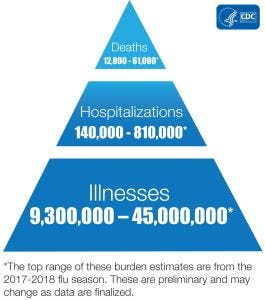
The burden of influenza disease in the United States fluctuates broadly and is defined by several elements. The latest depends on the characteristics of circulating viruses, the season, effectiveness of the vaccine, and the number of people vaccinated. While the impact differs, flu sets an extensive burden on the health of people annually. It is projected that Influenza has resulted in between 9 million — 45 million illnesses, between 140,000–810,000 hospitalizations and between 12,000–61,000 deaths annually since 2010.
Ebola virus disease (EVD), also referred to as Ebola hemorrhagic fever, is a severe, frequently fatal sickness in humans. Coronavirus so far is notorious for manifesting a spectrum of morbidity with the percentage of patients hospitalized give the impression to parallel increasing with age, ranging 2%–3% among persons aged ≤19 years, to ≥31% midst adults aged ≥85 years. Among 12% of patients known to have been hospitalized, 9% were aged ≥85 years, 36% were aged 65–84 years, 17% were aged 55–64 years, 18% were 45–54 years, and 20% were aged 20–44 years. Less than 1% of hospitalizations were among persons aged ≤19 years.
The Mortality
Before 1963 when the measles vaccine was introduced, there was a significant epidemic lasting approximately every 2–3 years. The measles outbreak caused an estimated 2.6 million deaths each year, with over 140 000 mortality from measles in 2018. The CDC estimates between 3,000 and 49,000 people in the United States die each year from the flu. Of said, the 2017–2018 flu season experiences an unprecedented high quantity of demises in the United States, estimated at 79,000. The World Health Organization Trusted Source rates that, globally, between 290,000 to 650,000 people expire from complications relating to Influenza each year.
Ebola Mortality percentages range from 25% to 90%, but the average rate is roughly 50% in most treatment centers, according to the 2014 outbreak in West Africa. Even Survivors often have prolonged yet significant residual disabilities.
As of March 20, 2020, the estimated total number of Coronavirus Cases worldwide is estimated at 272,063. Amongst those are 11,300 deaths; 90,618 Recoveries. Although the mortality rate seems to fluctuate between nations and regions, however, WHO has estimated (as of March 3, 2020) the rate to be around 3.4%.
Social Perception
According to a survey, only 30.2% of parents and 12.8% of adults considered measles to be potentially “serious” before disease onset. In another study, more than 88% of respondents reported having been encouraged to receive the influenza immunization, despite only 43.0% reported to actually receiving the inoculation. Amid students who didn’t receive the vaccine, 49.4% held it may give them the flu, 30.4% thought there may be dangerous side effects, and 28.9% supposed they were not at risk for contracting the flu.
According to a Fox News poll conducted, 31% of people were very concerned about Ebola Virus pandemics, and 37% somewhat worried that the Ebola virus would spread from West Africa to the United States. Just a month earlier, a Harvard School of Public Health poll had found that only 19% of students were very disturbed. 18% somewhat worried about a massive Ebola outbreak within the U.S. At that time, the public was not mostly troubled with their own personal risk either.
Media and publicity
In recent decades there has been an overwhelming surge in measles cases in the united states. The last rise in measles cases is related to Measles, anti-vaxxers, and the spread of medical misinformation on the internet.
Foreign Policy Journal stated once; the CDC maintains its recommendation on; the population of six months and older must get an annual flu shot because it is strongly suggested by science. Still, the mainstream media in conformity characterized the CDC position by misinforming the public about what the science positions. The article points to how the CDC Uses “Fear Marketing” to Increase Demand for Flu Vaccines. Concomitantly, A New York Times article tries to persuade readers to follow the CDC’s recommendation, by publishing reviews from the Cochrane Collaboration to support its characterization of the influenza vaccine as effective and safe. The Times similarly said; science showed similar backing.
On the contrary, according to foreign policy journal, what the Cochrane researchers indeed clinched was precisely the contrary. It gives the impression to discourage the utilization of vaccination against influenza in healthy adults as a routine public health measure. Furthermore, given the seriousness of the harms associated with specific flu vaccines, large-scale studies assessing important outcomes, and directly comparing vaccine types are urgently required. That includes the CDC’s recommendation for immunization of infants as young as six months and the alarming lack of safety studies for children under two.
The novel Coronavirus that originated in China, has dominated headlines across the globe since its first announcement. The all-pervasive attention of the COVID-19 has been bizarrely hefty. Coronavirus news reporting has even passed that of the more deadly Ebola outbreak in the Republic of the Congo that started in 2018 and endures to this day.
Throughout January 2020, the first full month of the COVID-19 outbreak, more than 41,000 English-language news articles cited the word “coronavirus.” Virtually 19,000 included the latter phrase in their headlines, (According to LexisNexis). Nonetheless, lone estimated 1,800 English-language print news articles published in August 2018, the first month of the outbreak, mentioned “Ebola,” whereas only 700 captions broadcast the disease.
Politics
Recently, the House Energy and Commerce Subcommittee on oversight and Investigations held a hearing that never got media courtesy. It coincided with on the same day that President Trump’s former personal lawyer Michael Cohen swore before another committee. The unheeded discussion fixated on, at the time, ongoing measles outbreaks in the United States. Coincidentally, 159 cases of measles were diagnosed in ten different states, encompassing the surge of more cases than there were in all of 2017. At the hearing stood Anthony S. Fauci (the head of the National Institute of Allergy and Infectious Diseases), along with Nancy Messonnier,( the director of the National Center for Immunization and Respiratory Diseases at the CDC).
Representative Jan Schakowsky, a Democrat from Illinois, asked Messonnier questioned about the primary culprit behind the outbreaks. Messonnier diplomatically seemed to retort that children who are not covered by health insurance are less likely to be vaccinated. Such a response merely suggested that parents’ antagonism, contrary to vaccination is not the only reason why fewer children are being immunized. In response to the latest question and answer, Representative Frank Pallone, a Democrat from New Jersey, Fauci decisively labeled it as deception and a critical problem. He also instantly cautioned against blaming parents who have the wrong information.
The Spanish flu happened to strike at a diabolical moment in the history of politics and propaganda. The prior spring of 1917, the United States had entered the First World War, when President Woodrow Wilson launched a dubious campaign to shore up popular support and suppress criticism, hoping to dodge claims that his movements infected thousands of U.S. soldiers.
As of today, West Africa is still paying the price for the inadequate response to Ebola. The first interposition could have prevented the vilest of the Ebola pandemics. The failures on all levels aided Ebola to blowout, exposing the divide between the population and political factions of the affected countries. The Ebola pandemic of 2014, fetched social order concerns in Guinea, Liberia, and Sierra Leone. Hence, the UN Security Council called the Ebola epidemic a threat to peace and security. Still, the lack of trust in the state, its institutions, and leaders was a significant factor.
The coronavirus crisis may be shoving towards political alliances. It has conceivably scattered the charm of severity that has dangled over political rhetoric. For instance, New Jersey Governor Called in the National Guard to Aid in Coronavirus Outbreak. Neoliberalism, despite partaking a preexisting health condition over it, current global pandemic adds another burden to its current challenges. The mounted global GDP that was once closer to that of historic 2008, with the coronavirus outbreak seems to have set direction downward again. For the moment, at least, Coronavirus has significantly curtailed the free movement of goods and people that is at the core ideology of the neoliberals.
In recent years, wardens of the neoliberalism have uttered their fury at the political factions that have bounced up in response to neoliberal disruptions such as populists, nationalists. Yet these politicians have gained a grip. Indeed, because of the tensions about heightened neoliberalism. Latest include the economic frustrations of a financialized economy, the disruptions of mass migration, the polarization flanked by the professional classes, and blue-collar workers, and so forth.
Around the world, the COVID-19 outbreak has signified some of the adoptions regarding the restatement of globalization. The risk of real shortages for medical supplies has done extra to convince lawmakers of the position of domestic industrial production. Besides, this outbreak has renewed the tensions between the United States and China. Donald Trump’s election signified a shift toward increased intimidation on the road to China. But this tendency has by now fast-tracked, motivating Chinese authority. The later have engaged in spreading the incorrect claim that the United States and not Wuhan, China, was the basis of COVID-19.
There is a possibility that the coronavirus pandemics turns out to be a minor disturbance to the geopolitical how things stand, an urgent glitch, after which the world returns, eventually, to business as usual. However, it could also help solidify some rectifications to the current archetypal of globalization. Countries might hold out a place for trade and migration while also placing a new accent on their internal social and economic substructures. The United States, for instance, could simultaneously engross in a more active form of industrial strategy while also trading with nations across the globe. A more robust struggle to recommence the American industrial base and working-class might in point of fact aid prevent a sweeping global belt-tightening; the United States, with a more robust internal infrastructure, could better meet its international obligations.
Economics of pandemics
In broad terms, the economic impact comes from two areas. On the supply side of the economy, the “pandemic” harms the stream of employment. With fewer workers and hours, the economy shrinks. The second area is condensed expenditure, thus a drop in demand. The prevalence of the disease leads people to “self-quarantine.” They stop going to movies, restaurants, malls, and other public places. This visualization outlines some of history’s most deadly pandemics, from the Antonine Plague to COVID-19.
The more civilized humans became utilizing larger cities, more exotic trade routes, and amplified contact with diverse populations of people, animals, and environments, the more likely pandemics would befall.
In history, epidemics and the fear they caused were fruitful grounds for public health advances. The plague epidemics of the Middle Age Europe served as the origin of public health administration. Flu pandemics point to the need for a comprehensive global health strategy.
The old Hippocrates oath “To cure sometimes, to relieve often, to comfort always” remains central to healthcare. There is no magic bullet to replace the competent care of dedicated nurses and physicians. In a pandemic, sustaining sufficient admission capacity for acute cases will be essential. Adequate function of critical care beds and reinforced health services can retort to all types of emergencies, not only an influenza pandemic. This holds even more for the weaker healthcare systems in developing countries.
Our annual enemy, winter flu, has killed far more people since the second world war than the number of defunct from the 1918 pandemic. We may well turn the panic for bird flu to better use by growing our capacity to produce vaccines and increasing immunization coverage.
A pandemic, even that of iatrogenic panic, needs global health governance and an institution with an international mandate in health to intercede. However, rather than increasing the fear, supporting wasteful investments in large stocks of drugs of no explicit use WHO ought to help world leaders to strengthen their health systems and improve their current capacity to deal with all kinds of emergencies, not just a hypothetical flu pandemic. That includes spotting the advice of disease experts with individual gains mindlessly. World Health Organization should back the prerequisite for lingering ability to develop vaccines and for the impartial and more practical healthcare system.
Panic in epidemics is a part of the human condition. It is the total reflection of the absent real attacks, making us over-react to possible dangers. We should use panic, with good reason or not, to tackle the broader agenda of preventable and curable diseases in the world. It starts with low vaccination rates in winter flu. International health policy should stay calm and avoid distraction by the newest health scare, in consort with its industry-sponsored quick fix. The humanist road leading to adequate healthcare services for all citizens of the world is still long.
A realistic look at the pandemics
Globalization is heading for the ICU. The realist’s approach to international politics and foreign dogma does not apply much if any courtesy to the subject of potential pandemics like the COVID-19 eruption. No theory explains everything, of course, and realism emphasizes principally on limiting the effects of lawlessness. This is the very reason why great powers contend for gain and the enduring hindrances to practical cooperation amongst states. It has little to say about epidemiology or public health best practices. So, one shouldn’t ask a realist to tell thee whether he or she should start working from home.
It is essential to recollect; the Coronavirus pandemic reminds us that governments are still the foremost artists in worldwide politics. Every few years, scholars and analysts suggest; nations are becoming less relevant in world affairs. And that other actors or social forces such as non-governmental organizations, multinational corporations, international terrorists, global markets are undermining the self-sovereignty and pushing the states toward the wastebasket of past.
When new perils get to your feet, the public first look to the governments for fortification. All over the world, citizens are beholding to public officials to make available authoritative information and to fashion an acceptable response. As the journalist, Derek Thompson wrote on Twitter once: “There are no libertarians in a pandemic.”
Realists have emphasized on the clatter of globalization and the statehood. At this point for decades, and the Coronavirus is providing yet added bright aide-mémoire.
The more structural versions of realism tend to tone down variances among states, yet, responses to the coronavirus outbreak are exposing the strengths and feebleness of different forms of administrations.
Scholars have latterly advised that rigid dictatorships are more vulnerable to famines, epidemics, and other disasters. It is primarily because they have a habit of overturning information, and topmost bureaucrats may not recognize the enormity of the state of affairs until it is too late to thwart it. This is precisely what gives the impression to have materialized in China and also Iran. People in those countries who tried to sound the alarm were shushed or disciplined, and top officers strained to hide what was in instead of activating on time to address the problem. Authoritarian governments can be good at rallying capitals and undertaking ambitious responses. For example, Beijing was able to quarantine entire towns and impose other aggressive measures, but only after that person at the topmost figured out and acknowledged what is happening.
Because media is independent and lower-level officials can sound the alarm without being punished, information flows more at liberty in democracies. Hence, they are a better position to identify when a problem is evolving.
For freedoms, however, difficulties may develop when trying to design and implement quick responses. This deficit may be severe in the United States, as the first responders and other agencies that do the actual work in an emergency are mostly under the control of a plethora of state or local governments. Unless there are adequate preceding preparation and effective harmonization from the central government. The said is something that is not easy to do well in the unsurpassed of circumstances, even accurate and timely warnings, may not produce effective emergency measures. Overruled and also confronted by the assessments of scientists, it still botched to organize an effective federal rejoinder.
In a competitive world, states dramatis personae a cautious judgment on what others are doing and have a big motivation to emulate victory. For instance, New military inventions incline to be swiftly espoused by others. Because failing to adapt can lead one to fall in arrears and become exposed. Over time, a set of global best practices will emerge, a process that will occur more speedily if states share exact information with one another and avoid politicizing it or using it to gain the lead.
Unfortunately, attaining practical international teamwork on the issue of a pandemic may not be secure, despite the apparent necessity for it. Collaboration ensures all the time and that rules and institutions can help states conjoin when it is in their interest. But universal cooperation is often brittle, either because countries fear that others will not stand by their pledges, where the partnership will benefit others more than paybacks them.
The between the lines
Foreign-policy pragmatism advocates that if the epidemic does not subside quickly and more or less permanently (as the 2003 SARS epidemic did), it will reinforce the upward trend toward deglobalization that is by now in progress. Back in the 1990s, apostles of globalization believed the world was becoming ever-more-tightly connected by trade, travel, global financial integration, the digital revolution.
The apparent superiority of liberal capitalist democracy determined that we will all get rich in a progressively plane and borderless world. The earlier decades show a steady contradiction from that vision, with more and more people willing to trade efficiency, progress, and honesty for the sake of sovereignty and the preservation of valued ways of life. As the Brexiteers of the United Kingdom conveyed, they want to “take back control.”
Pandemics will take its course whether we are in panic or not
It is every epidemic trend to show There is scientific support that moderate to extended social distancing will:
Run a new simulation
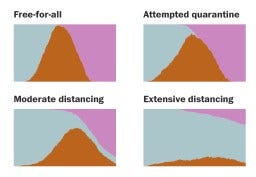
There are four simulations on how pandemics, such as Coronavirus, progress under various circumstances. That includes a free-for-all, an attempted quarantine, moderate social distancing, and extensive social distancing.
Even with different fallouts, moderate social distancing will usually outperform the attempted quarantine, and extensive social distancing usually works best of all.
In one crucial respect, though, said simulations are not the reality. COVID-19 can kill, Though the fatality rate is not precisely known, yet it is clear that the elderly members of our community are most at risk of dying from COVID-19.
In the weeks since Coronavirus exploded around the globe, it has become increasingly apparent that this freight train merely can’t be stopped.
Lockdowns, school closures, and flight bans will go some way to reducing pressure on hospitals, but these measures will not halt widespread transmission. Health authorities warn hundreds of millions will probably get infected, and the vast majority will survive. Some of the society most vulnerable will still bear the impact, however, and the death toll could be very from head to foot. On that basis, some difficult decisions must be made. Britain has made some tough calls, but its go-it-alone approach carries significant risk and is proving divisive.
In crude terms, Boris Johnson’s government has been mounting the argument that the outbreak is now so far gone that it is actually necessary for people to get disease-ridden. And a lot of people possibly up to 70% of the country’s population, or roughly 47 million.
Is Coronavirus a biologic weapon?
A study called Gain-of-function (GOF) research that involves experimentation with the aims to increase the transmissibility and virulence of pathogens was recently funded by the government. The ultimate goal of the study respites on a restored understanding of public health and preparedness efforts and the development of medical countermeasures. Despite these essential potential benefits, GOF research (GOFR) can pose perils about biosecurity and biosafety.
A study published on February 10, 2020, in the journal Antiviral Research, conducted by three scientists from France and one from Montreal. The research specified the characteristics of the Wuhan coronavirus as GOF induced. The manipulation rendered it efficient to transmit in the human population compared to other coronaviruses.
Conferring to one more publication in the Science magazine, U.S. officials turn out to be anxious after the release of new GOF publications and the following number of accidents in U.S. biocontainment labs. Despite White House’s presumptuous efforts to halt funding in 2015 with the adoption of a Federal policy regarding gain-of-function studies, Still, In December of 2017, the National Institutes of Health (NIH) lifted the ban on GOF research.
Francis A. Boyle, the University of Illinois College professor of international law and the author of the book Biowarfare and Terrorism, says gain-of-function suggests the virus DNA is engineered to be more lethal and more infectious. The latter type of GOF research is so hazardous it can only be conducted in Biosafety level, BSL-3 or BSL-4 laboratories.
Wuhan is home to the only declared BSL-4 laboratory in China, the designated World Health Organization (WHO) research lab. Boyle believes that the WHO acknowledges COVID-19 as a bio-weapon. Wuhan lab is said to have opened in 2017, located 20 miles from the fish market claimed to be the source of COVID-19. The Wuhan Center for Disease Control & Prevention is close to the after-mentioned fish market. The center hosted various animals in laboratories for research, including 600 bats captured for pathogen collection and identification.
Conferring to Boyle, Coronavirus is, in fact, SARS. It is a weaponized coronavirus that has leaked out of the laboratory twice in a short period apart. The virus was given Gain-Of-Function properties with the ability not only to travel in the air for over six feet. It also was rendered more transmittable and lethal. It is actively assumed that China has funded the University of North Carolina to help their researcher in this very deadly type of biological warfare. So was sold to the Chinese Wuhan lab. Additional endowments were provided by the National Institute of Allergy and Infectious Diseases under the directorship of Tony Fauci.
According to Boyle, Fauci has deluded the nature of COVID-19 covering up and damage control. National Institute of Health (NIH) reportedly supported the University of North Carolina and the Wuhan scientists exploring GOF with the SARS virus. It further appears; the North Carolina Lab received their cells from Fort Dietrich, the primary facility for stockpiling and research and development for biological weapons in the United States. The University of North Carolina scientists confirmed that they were raising the pathogenicity of SARS with their GOF project.
Or- it is a risky politics; of course, it is not a coincidence that recently Harvard University Professor and Two Chinese Nationals Charged in Three Separate China Related Cases. According to court papers, since 2008, Dr. Lieber who has attended as the Principal Investigator of the Lieber Research Group at Harvard University, and specialized in the area of nanoscience, has received more than $15,000,000 in grant funding from the National Institutes of Health (NIH) and Department of Defense (DOD). These contributions typically require the exposé of momentous foreign financial conflicts of interest, including financial support from foreign governments or foreign entities. Beginning in 2011, Lieber also became a “Strategic Scientist” at Wuhan University of Technology (WUT) in China and was a contractual contributor in China’s Thousand Talents Plan from in or about 2012 to 2017.
The “Z” of coronavirus pandemics
It is quite evident that the attention towards a given epidemic is not quite the same across all. Media, politics, and social perception have always played a role in determining the urgency of any “pandemic.” More so, the indirect economy and personal devastation of the over the panic of any pandemic seem to have suffered cumulative burden every single time. Those, as mentioned earlier, of course, is irrespective of the subject infected, but still is the victim of the circumstances. It is also clear that ongoing public health and government intervention may slow down the spread of disease but extend its course, where the proportion of fatalities may be lesser in the short run. But then again, even more, people may suffer in an extended period and even die of economic consequences than what infection initially exposed.
Amidst all the political and economic pandemonium about emerging pandemics, the main adversity is ultimately on the patients. The adverse outcomes of politicizing Coronavirus are instantaneous. However, the domination of corporate business is probably more soaring than the pathogenic consequence of the actual virus. The emerging infections have always prevailed all over the spans. Nevertheless, they have merely contended if perceived as a money-making instrument for corporations or vote-winning device for politicians when perceived feasible. Public panic is the ideal strategy and not an import.
It is apparent to feel a sense of perseverance, but panic is one feature that must be prevented at all costs. Panic and chaos will lastingly invite further excessive problems to physicians, healthcare stakeholders, and, most importantly, to patients. The socioeconomic downfall is considerable, benefiting a few corporations and plopping the majority at an obstacle.
Coronavirus pandemics may well be the collateral upshot of what was meant to serve as an unconventional use of biological warfare targeting various economies around the world. It is designed by a faction, orchestrated by a particular international political lobby. Last but not least, we must ask questions, connect dots, and prevent the globalization of corruption. Especially with regards to our healthcare and wellbeing.
Originally published at https://www.datadriveninvestor.com on March 23, 2020.


