
TIDBITS, A SERIES ON “DID YOU KNOW?” FACTS
Coral Reefs of the World
Beauty beneath our oceans and seas
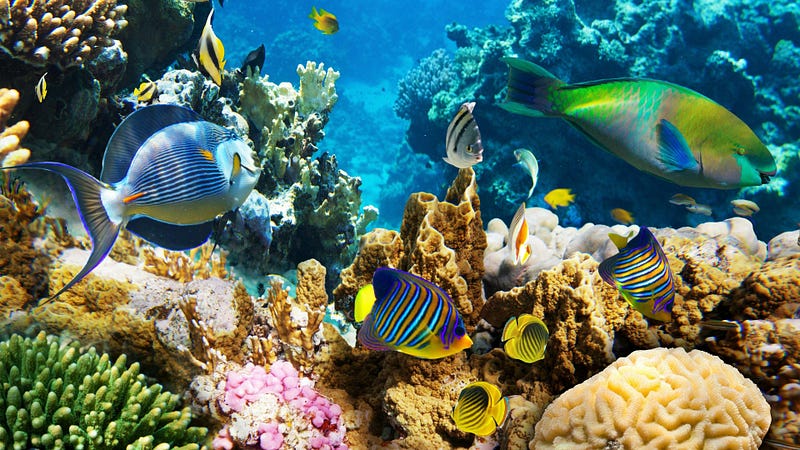
Coral Reefs are genuinely nature’s colorful underwater art. There are far too many to name or rank. To rank them would be very subjective at most. Coral reefs can be found in tropical destinations around the world, mostly in areas around the equator where the water is warmer. More than one hundred countries have a coral reef system within their borders. We will explore a few selected coral reefs in this article.
Did You Know These Facts About Coral Reefs?
The three largest Coral Reef systems are :
· The Great Barrier Reef in Australia
· The Mesoamerican Barrier Reef System off the coasts of Mexico, Belize, Guatemala, and Honduras.
· The Florida Keys Reef Tract (USA)
Corals are alive. Corals are formed by tiny creatures called polyps that have a sac-like body with emerging tentacles. Corals gain their rock-like structure from the polyps as they use calcium and carbonate ions from the seawater to create a hard outer skeleton to protect their soft bodies. The algae absorb light from the sun, which feeds the coral. The algae also give the corals their bright colors. Corals are nocturnal. During darkness, the polys come out of their casings to catch small creatures for food. Corals only spawn (reproduce)once a year.
What is a bleached reef?
When changing conditions cause polyps to let go of the algae, it depends on to live, this is called bleaching. Remember, algae give coral its color. So, it becomes a colorless reef and appears to be dead. Depending on the length of time it is starved of algae, it can die off.
Great Barrier Reef
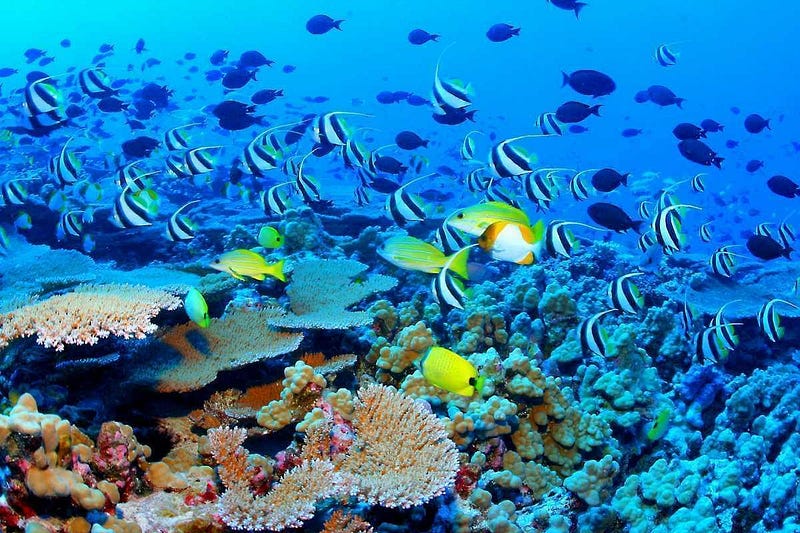
The Great Barrier Reef is composed of over 2,900 individual reefs and 900 islands. It stretches over 2,300 kilometers over an area of approximately 344,400 square kilometers.
The amount of species that inhabit the Great Barrier Reef are too many to list. Below are the most impressive groups that the reef is home to:
· 30 species of whale, dolphin, and propoise
· 6 species of turtle
· 17 species of sea snake
· More than 1,500 species of fish
I took facts from: greatbarrierreeftourscairns.com
Red Sea
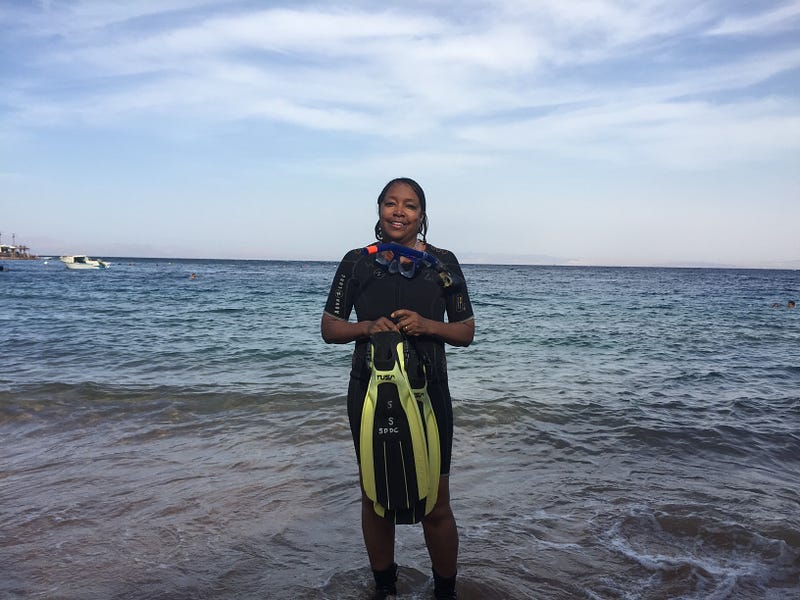
In April 2017, I had the pleasure of Snorkeling, for the first time, in Dahab, Egypt. The coral reef was beyond beautiful. I quickly lost my fear once surrounded by the beauty of the sea. Although an avid scrapbooker, I was too much of a novice to take underwater pictures.
Dahab is located on Egypt’s Sinai Peninsula in the Red Sea. Dahab is known for its Scuba Diving and attracts divers from around the world. It is famous for its Canyon and Blue Hole dive sites.
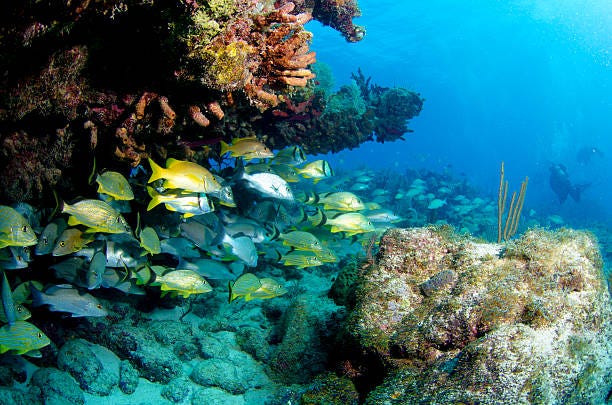
The Red Sea coral reefs are well-developed off the coasts of Egypt, Saudi Arabia, and Sudan. It gets its name from red algae that turn the water slightly red when in bloom.
Of course, there are many Biblical references to the Red Sea. Some archaeologists believe the Gulf of Aqaba is where Moses crossed the Red Sea. Also, Mount Sinai is believed to be where Moses received the Ten Commandments.
The Red Sea is home to:
· Over 1200 species of fish
· 250 species of coral
· Of these species, 17% of the fish and 8% of the coral species are endemic(suffering from regularly occurring diseases, both plants and animals)
40% of the Red Sea is shallower than 100 meters/330 feet. 25% is less than 50 meters/164 feet deep. It lends itself to lots of recreational activities.
The Red Sea is the northernmost tropical sea in the world because its waters cross the Tropic of Cancer.
I took facts from: google.com
Rainbow Reef
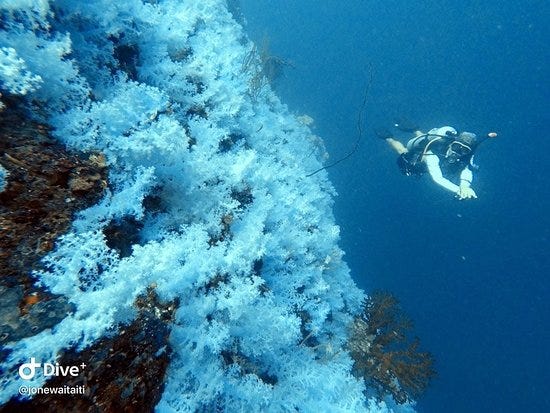
The Rainbow Reef is a reef in the Somosomo Strait between the Fijian islands of Taveuni and Vanua Levu. It is one of the most famous dive sites in the South Pacific. The Great White Wall is a popular diving site.
The Rainbow Reef is home to:
· 230 species of hard and soft shell corals
· About 1200 species of exotic fish
The White Wall and Rainbow Reef are considered the best places for diving. However, they are for experienced divers only.
I took facts from: google.com
The Florida Keys Reef Tract (USA)
The Florida Keys Reef Tract is the only living coral barrier reef in North America,
Florida’s Coral Reef stretches almost 350 miles from the Dry Tortugas to the St. Lucie Inlet. It’s the only coral reef system in the continental United States.
It is home to:
· Over 45 species of reef-building stony corals and 35 species of octocorals provide shelter, food, and breeding sites for millions of plants and animals.
· Over 70 species of Marine sponges are found along the coral reef.
In 1950, it was estimated that Florida had over 5 million acres of seagrass. Currently, seagrass covers only 2.5 million acres of shallow waters near Florida’s coastlines, estuaries, and bays.
I took facts from: floridascoralreef.org
Mesoamerican Barrier Reef System
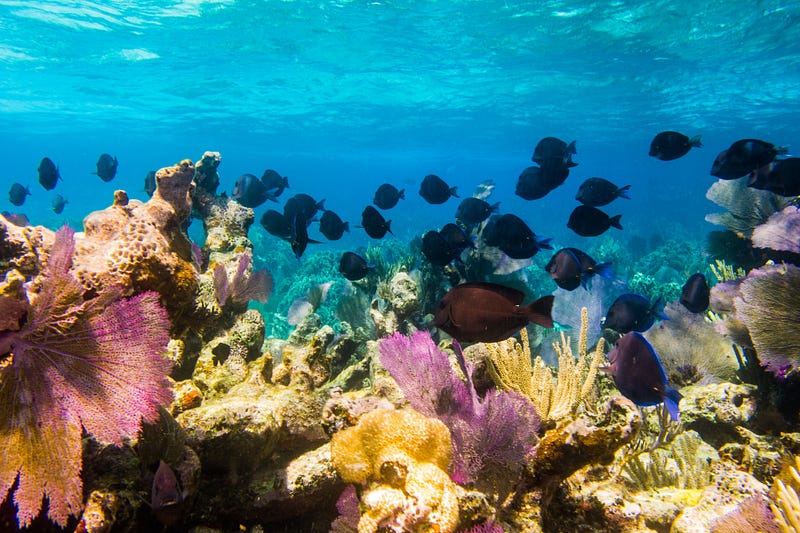
The Mesoamerican Barrier Reef System region lies within the Caribbean Sea and touches the coasts of Mexico, Belize, Guatemala, and Honduras. It contains the largest barrier reef in the Western Hemisphere.
Also known as the Great Mayan Reef or Great Maya Reef, it stretches over 1,126 kilometers along the coasts of four countries.
The Mesoamerican Barrier Reef is home to:
· 65 types of hard coral
· 500 Fish species
· Parrot Fish (One of the most important fish in the Caribbean.) They’re one of the largest herbivore fish and the most colorful ones. They eat harmful algae that hurt the corals. When the Parrot Fish disappears due to overfishing, the coral reef declines.
· Five species of Marine Turtles
· World’s largest congregation of Whale Sharks
· The largest population of Manatees
· Red Lion Fish — This fish is an invader. It has been damaging the reef’s delicate ecosystem for years. It eats cleaner shrimp and algae that keep the corals clean and healthy. They also eat lobsters, affecting the local fishing industry.
The reef affects the lives of one to two million people.
I took facts from: google.com
Conclusion
Unfortunately, like most natural habitats around the world (i.e., The Rainforests), there are many threats to the survival and possible extinction of reefs if measures are not put in place to save them. Climate change is a significant force with rising sea temperatures. However, pollution, bleaching, and tourism play a role. Swimmers often touch damaged reefs and leave behind rubbish, sun creams, and other pollutants.
There is no easy answer or solution to guard or protect this beautiful underwater work of art. Like children are told, we must look but not touch the corals when diving or snorkeling.
As always, I thank you for reading, and I welcome your comments.