
Copyright Violations And Plagiarism
An in-depth guide of what you can and cannot do
Copyright is a legal term that protects your creative works as an author, photographer, artist, or musician.
Whenever you create something from scratch, this piece of work is automatically protected by copyright. You are the sole owner of this product and anyone who copies it without your consent violates your copyright. Originally, you had to file a copyright claim formally and legally for it to count. It also differed from country to country.
But since, international treaties have been formed to agree on respecting copyrights. While you still can file formal copyright and have it documented, your work is technically protected from the moment of its creation, and being able to prove original authorship is more than enough to win a legal case.
Plagiarism is a slightly different problem, where someone does not simply infringe on your copyright, but takes your work and passes it on as their own creation. Plagiarism is not always a copyright violation but can lead to a copyright violation surfacing after discovery.
In order to help understanding the problems of copyright and plagiarism, as well as to help writers avoid accidentally plagiarizing someone else’s work.
How copyright works
Copyright is in place to protect your creative works from being stolen. Note that it will protect your work based on an idea, but not the idea itself. If you write a book about a private detective going rogue after a poison attack, then the story you write is protected by copyright law. But if someone creates a similar story from the same idea, only changing a few key elements, then it’s not a copyright infringement.
You can protect your book, but not the idea that led to this book.
How long does copyright protect creative work?
Generally, copyright law protects creative work for as long as 50 to 100 years after the original copyright holder has passed away. This means that even the work of people who died recently is still being subjected to copyright law and copying their work for your own gain is a copyright violation.
Do I need to file for copyright ownership?
No. Technically, your copyright is respected and protected by law in any of the countries that are part of the Berne Convention.
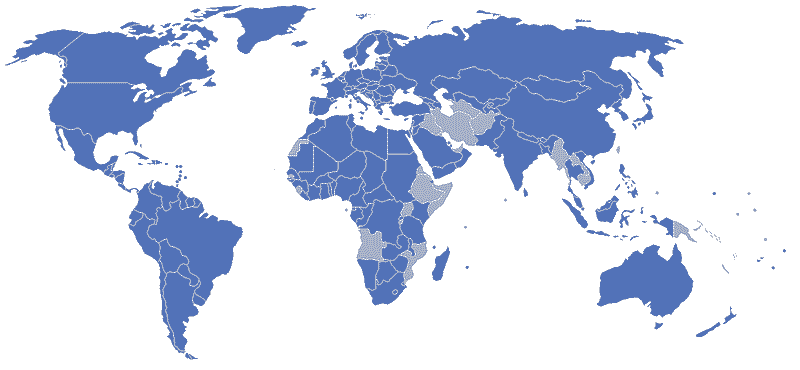
This means you won’t need to explicitly state your copyright ownership, though you sometimes will see people use phrases like “Copyright 2020 — All Rights reserved” somewhere in their work.
You can add this line or the copyright symbol © to your work if you’d like, but it won’t really have any additional effect on your copyright. Everything you write is automatically copyrighted by law, as long as it is original content.
What penalties does copyright violation entail?
The penalties depend on local laws dealing with copyright violations. Depending on where a lawsuit gets filed, the verdict may differ. What you generally can expect if a lawsuit is filed against you in a copyright violation is:
- Payment of damages (in some cases up to $150,000 and more)
- Confiscation of all work you have illegally copied
- A prison sentence of up to 5 years
- Payment of all legal costs (court & attorney)
Generally, copyright infringements are known as “piracy” in the world of software and movies. But these cases don’t differ from the pirating of books or written works. In some cases, a copyright holder may first approach you directly and ask you to take down your content. Others may directly file for a DMCA or other litigations to press charges against you.
What is ‘Fair Use’?
Fair use is a clause that allows the use of copyrighted content to an extent without facing reprisal for copyright violation. This is mainly to allow the use of copyrighted content in order to create satire off it, educate with it or for journalistic reasons.
Fair Use, however, is a case-by-case claim and not always acknowledged as such. It depends on how much copyrighted content you use, whether you earn money from it (commercial use) and if the copyrighted content represents the majority of your content.
The problem with commercial use
If you use copyrighted material in order to earn money from it, you are using it ‘commercially’. While you can often claim “Fair Use” when providing your own content including copyrighted content for free, monetizing that content in any way often no longer counts as fair use and violates the copyright.
What does that mean for writing on Medium?
If you put your articles behind the Partnered Paywall (indicated by a star next to your story), then that article counts as ‘commercial use’, since you earn royalties for people reading it.
This means that any material of third parties in your article, which is not declared as “free for commercial use”, is a violation of copyright and the original owner could file a DMCA against you.
This includes photos and images, text you copy over from a copyrighted work as well as audio and video files you share on the article. You need to make sure that all contents you present in your articles that are not your original work are “free for commercial use”. Else you might be subject to a DMCA.
And let’s face it: Is it really worth risking a lawsuit costing you thousands of dollars for the ~$10 you might earn with that article? I think not.
What about embedding Youtube videos?
If you embed a Youtube video in your article and a reader watches it, the video uploader on Youtube still receives a view and if they monetized their video, ad-based royalties for that view.
It’s still also freely available in the public domain (directly on Youtube) and therefore does not act as exclusive content of your own article. You are not commercializing the video for your sole benefit.
What you can not do however is creating an article for the sole purpose of advertising or sharing a Youtube video. The article itself must provide sufficient value for the reader. Else it violates against Medium rules.
How to avoid copyright infringement
The rule of thumb is: Never use anything you don’t have the rights of use for. This means if you can’t answer the question: “Do I have the right to use this?” with a firm “yes”, then don’t use it.
Sharing copyrighted stuff without earning any money from it is often ignored (often! not always!), but as soon as you are in a position to earn money from it, you play in a different league.
- DON’T use images you found on Google
- DON’T use screenshots of movies or videos you took
- DON’T use stuff that states “free for personal use” (you need to look for “commercial use” if you put it somewhere that pays you money for it)
- DON’T use material from unknown sources
It is your obligation as a writer to comply with copyright laws. If Medium detects some of your work as a violation of someone’s copyright, the content may be taken down and you will receive a DMCA by the issuer. You then can file a counter-notice if you believe that the claim is intangible. To avoid a headache and/or being surprised by a big bill, just avoid using questionable content.
Plagiarism
Plagiarism is not always a copyright violation or a crime, but it counts as a violation of moral code. Plagiarism means using someone’s work and selling it as your own, effectively taking credit for it.
One of the best examples of the consequences of plagiarism comes from the Guttenberg Plagiarism Scandal. The Ex-Minister of Defense of Germany, Theodor zu Guttenberg, held a doctorate for a dissertation, which turned out to be plagiarized in big portions. The scandal led to him losing his doctorate and resigning from his position as defense minister.
He was all over the news for several weeks, being dubbed “a fraud” and “a despicable and dishonorable man”.
What counts as plagiarism?
If you copy text directly from another source (verbatim copy) without citing the source of the text, it is regarded as plagiarism. You either have to use your own words or cite the source somewhere in your document to ensure proper credit is given where credit is due.
But note that citing the source of text does not allow you to commercialize it by using it in a paid article or book. A citation does not legalize commercial use of someone’s work if such use is prohibited.
Another form of avoiding plagiarism is the use of quotes. If someone said something that you’d like to repeat verbatim, use quotes.
Lastly, rephrasing a source document only lightly to avoid plagiarism is known as “patchwriting” or “mosaic plagiarism”. While it might avoid automatic detection, it can still count as plagiarism and be punished.
How can I detect plagiarism?
There are many tools available online to check an article or website for plagiarism.
The free Plagiarism Checker from SmallSEOTools.com allows you to directly check websites or alternatively text of up to 1000 words for plagiarism.
The tool will run a quick plagiarism check within a few seconds. It will tell you in percentage how much of the scanned text counts as unique and how much has been deemed plagiarized from other sources. It will also provide links to the sources.
Grammarly offers a built-in plagiarism checker with their paid subscription, which can check your text on the fly for plagiarism and help you avoid accidentally plagiarizing existing content.
Copywritely offers a paid tool that fulfills many roles, from checking your content for plagiarism over to SEO optimization, keyword density, and more.
It was developed by one of my clients and I have free access, however, you’d need to buy a paid subscription in order to utilize it. It works with a multitude of languages, English, Russian, German, Spanish, and French to name a few.
These three tools are more than enough to quickly check your content for plagiarism. You can use it in two ways:
- You can make sure that you don’t plagiarize someone else’s content.
- You can check whether someone else has plagiarized your content.
If you don’t want to pay for a subscription, the first link I provided here is more than enough. None of the tools here work better than others. They all do the same job: Scanning whether any of the content you feed it already exists somewhere else.
Someone is using my content without permission, what can I do?
If you identify plagiarism or illegal use of your content, get in touch with the owner of the site you found the content on. Prove that you are the original author and request the content to be taken down. If your request is being ignored, you can file an official DMCA complaint against the perpetrator.
If you find your content plagiarized on Medium, you can file a DMCA takedown notice and send it to [email protected].
If your content has been plagiarized elsewhere, you need to send a DMCA takedown notice to the host or ISP of the site where you found the content.
Where do I get a DMCA takedown notice?
You can file a takedown request with the DMCA here:
But this service is quite costly at $199 per site. However, the takedown notice itself is only required to be written formally. You can download a free DMCA takedown template here:
Disclaimer: This is a third party offering the template. I am not affiliated with the provider, nor do I benefit from providing the link. It’s a simple word document with an existing template for free download.
Website hosts are required by law to take DMCA takedown notices seriously. If you file your notice properly and can provide sufficient evidence that you are the legal owner of the plagiarized work, then they will be obligated to take it down upon receiving your legal notice.
If you want to take legal action, please first consult a lawyer dealing with copyright and plagiarism. This article in no way replaces any professional legal advice.
How we deal with plagiarism and copyright violations at Illumination
Illumination is one of the few Medium publications that allow all writers to publish their works through us. We try to minimize the waiting time until your articles are being published. Our editors work diligently to make this happen.
We also keep an eye on the content to ensure that no one is plagiarizing content in order to earn money off of someone else’s work. If we have the suspicion that someone has plagiarized content, we will generally notify them.
However, if we feel that someone is doing it deliberately (for example by submitting a large number of articles that don’t pass the plagiarism check), then we take the right to turn them down without further notice and if necessary, report a copyright violation to Medium.
One of our leading editors, Timothy Key, has published an interesting article regarding plagiarism within our publication and the action he’s taken to ensure our quality standard:
If you want to publish content with us which you already published elsewhere in the past, please use a disclaimer like in the following example at the bottom of your article:
“Originally published on [LINK]”
This way, we know that this is your original content. Otherwise, we might turn your article down in the belief that you plagiarized it from someone else.
Plagiarism and copyright violations are to authors and writers what software piracy is to developers and programmers. Please make sure that you don’t infringe on other people’s rights. And if someone stole your work, take action and report them.
Kevin is an editor and writer for the ILLUMINATION and Polyglot Poetry publications. Follow him on Twitter and LinkedIn.


