
Copy Google's secret on how to build high-performing teams
In this article, I will break down how to build and manage high-performing teams using the Progress Principle. The Progress Principle essentially involves tracking the momentum that builds towards achieving a meaningful goal. Its impact is profound, as it can unlock motivation and foster a high-performing work culture. And this a technique and strategy applied at leading tech firms such as Google and Meta.
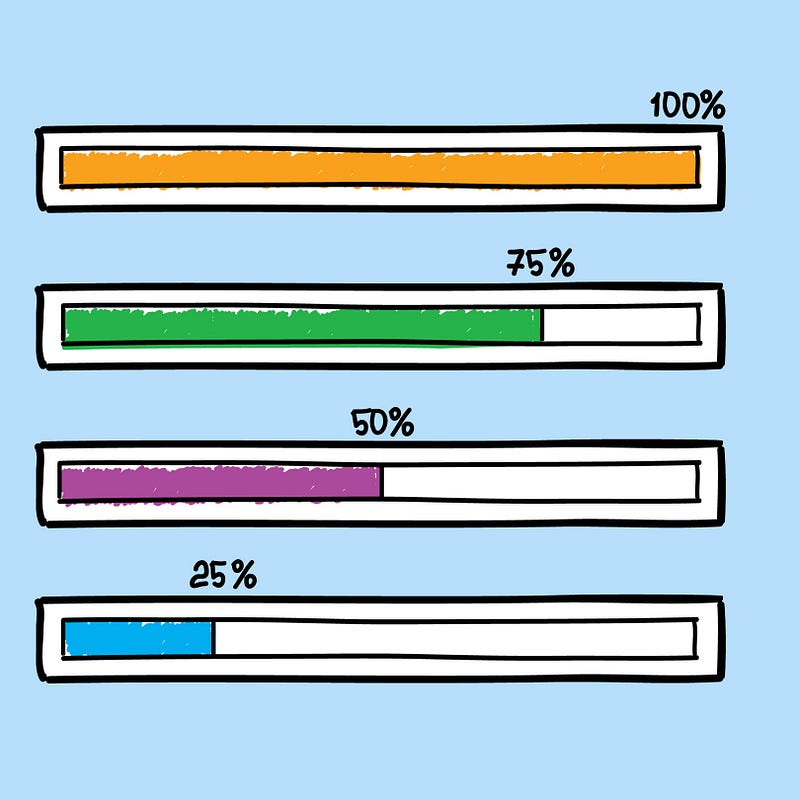
As the Harvard Business Review highlights in their article The Power of Small Wins, the progress towards meaningful goals fuels passion and motivation. Your teams are intrinsically motivated by a sense of accomplishment and progress. Progress doesn’t always mean taking a giant leap. It could simply involve scheduling an important meeting or overcoming the first hurdle of a project. A small win can significantly impact how people feel and perform in an organisation. As a manager, it’s your responsibility to recognise these small wins and track their progression.
The benefits for managers
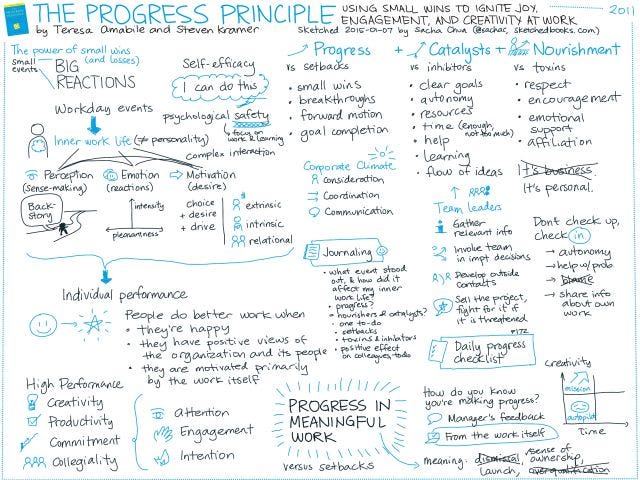
Learning the Progress Principle enables you as a team leader to build a high-performing culture. The act of setting goals/KPIs/OKRs, and then tracking the incremental progress towards these, will lead to better output, greater motivation, improved wellbeing, and culture. Progress is nourishment for employees, and recognizing this can be the key to motivating people at work.
The dilemma
While the Progress Principle offers many benefits for being an effective leader, the issue is that managers rarely focus on small steps and progression towards a purposeful goal. The focus of management tends to skew towards motivating employees and offering recognition or reward. While these are factors that rate highly in improving team performance, it is not the key to unlocking it.
Tracking your team and an individual’s progress towards a goal stimulates Inner Work Life, which is a team member’s positive attitude and emotions they have towards work. And when this is elevated better work follows. Your team is more committed, creative, and engaged. Progress no matter how small stimulates and drives this feeling.
Progression is fulfilling for workers and working on meaningful projects is where the unlock happens in motivating employees.
Enter the progress loop
Managers need to consistently track progress by creating a loop where they are constantly monitoring progress towards a specific goal. Being a manager focused on employee progress not only enhances your team’s output and motivation but also the company's performance. Below is a tool you can use with your team to track and motivate progress and performance.
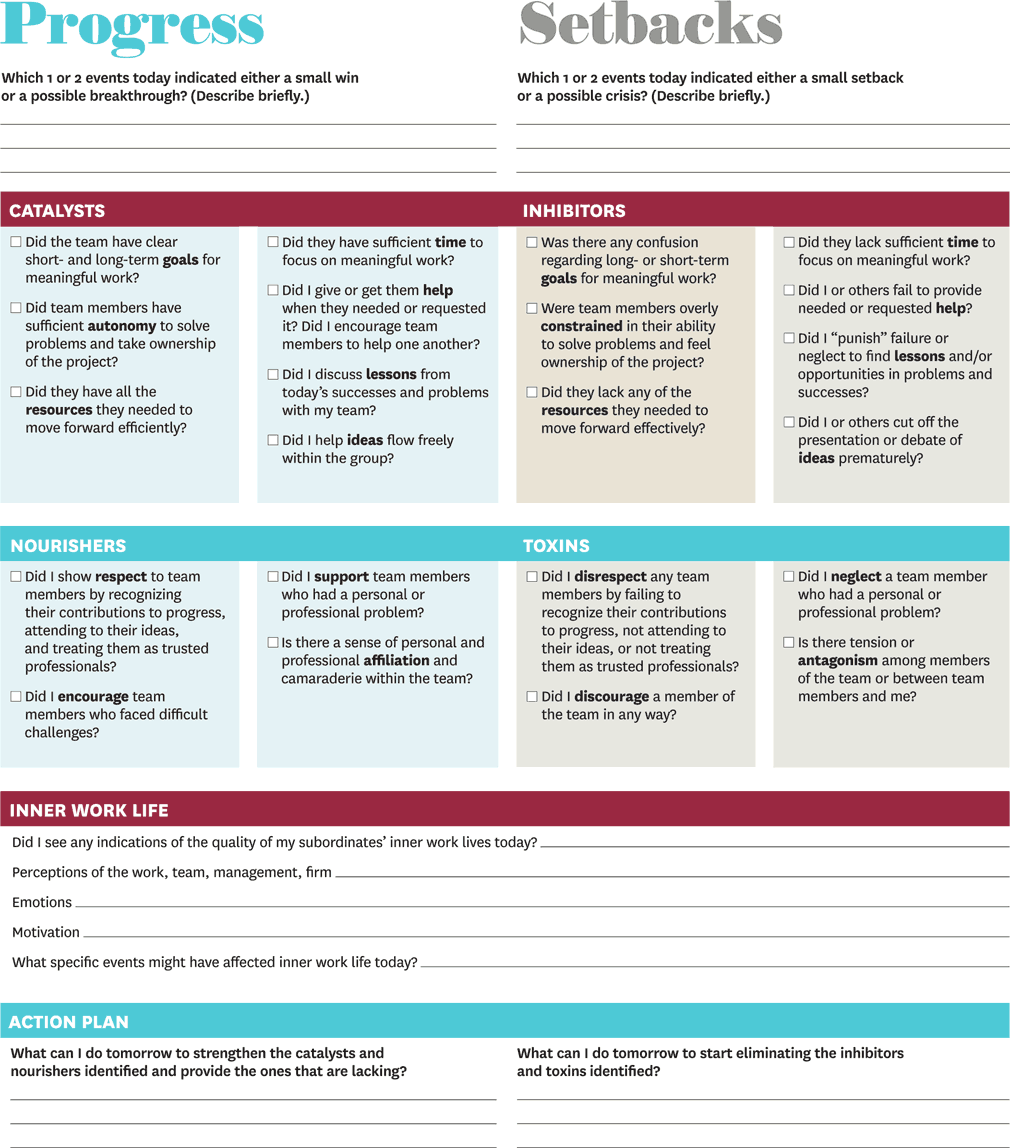
Harvard Business Review Tool
The worksheet below can be used to develop and embed the Progress Principle in your teams and culture.
The Progress Principle, as I am learning, is a great tool to unlock employee motivation and create a culture of high performance. It is a method I wish I was managed by, but will apply to my teams moving forward.
Thanks for reading, Luke Twitter — Gumroad (free stuff) — LinkedIn


