
BIOLOGY AND EVOLUTION
CCBE — Part 2: Bacteria and lateral gene transfer
Starting at the bottom: cooperation and competition among microorganisms
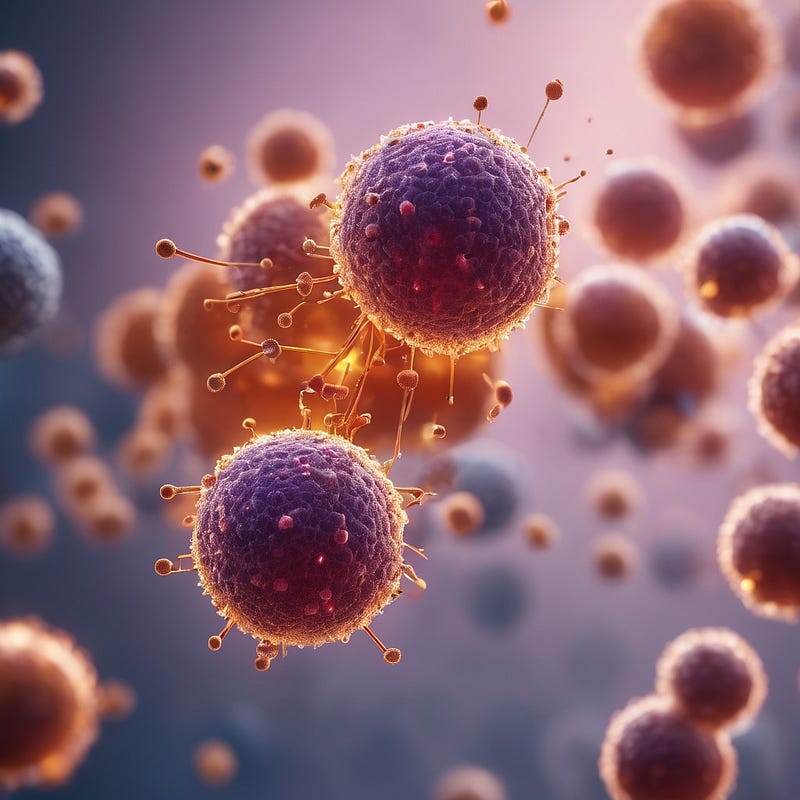
Bacteria may seem like a strange place to start a story about cooperation and competition. What can those gross things that cause infections and have weirdo names like Streptococcus (strep throat) and Staphylococcus (staph infections) tell us about ourselves?
For starters, not all bacteria are pathogenic creeps. Research has shown that we’re colonised by so many microorganisms, including neutral and even helpful bacteria, that our own cells are outnumbered by microorganisms somewhere around 10 to 1. This involves a complex combination of cooperation and competition between ourselves and our colonisers (more on this later in the series).
But beyond our own relationship with bacteria, it turns out that cooperation and competition are also part of a bacterium’s life. True, not in quite the same way as us, but in a way that helps to show how cooperation and competition are infused at every level and in every process of life.
Competition among bacteria
Okay, so how do bacteria compete? At the risk of stating the obvious, bacteria compete for resources in their environment, and this involves the usual cast of characters: sugars, fats, protein, vitamins and minerals.
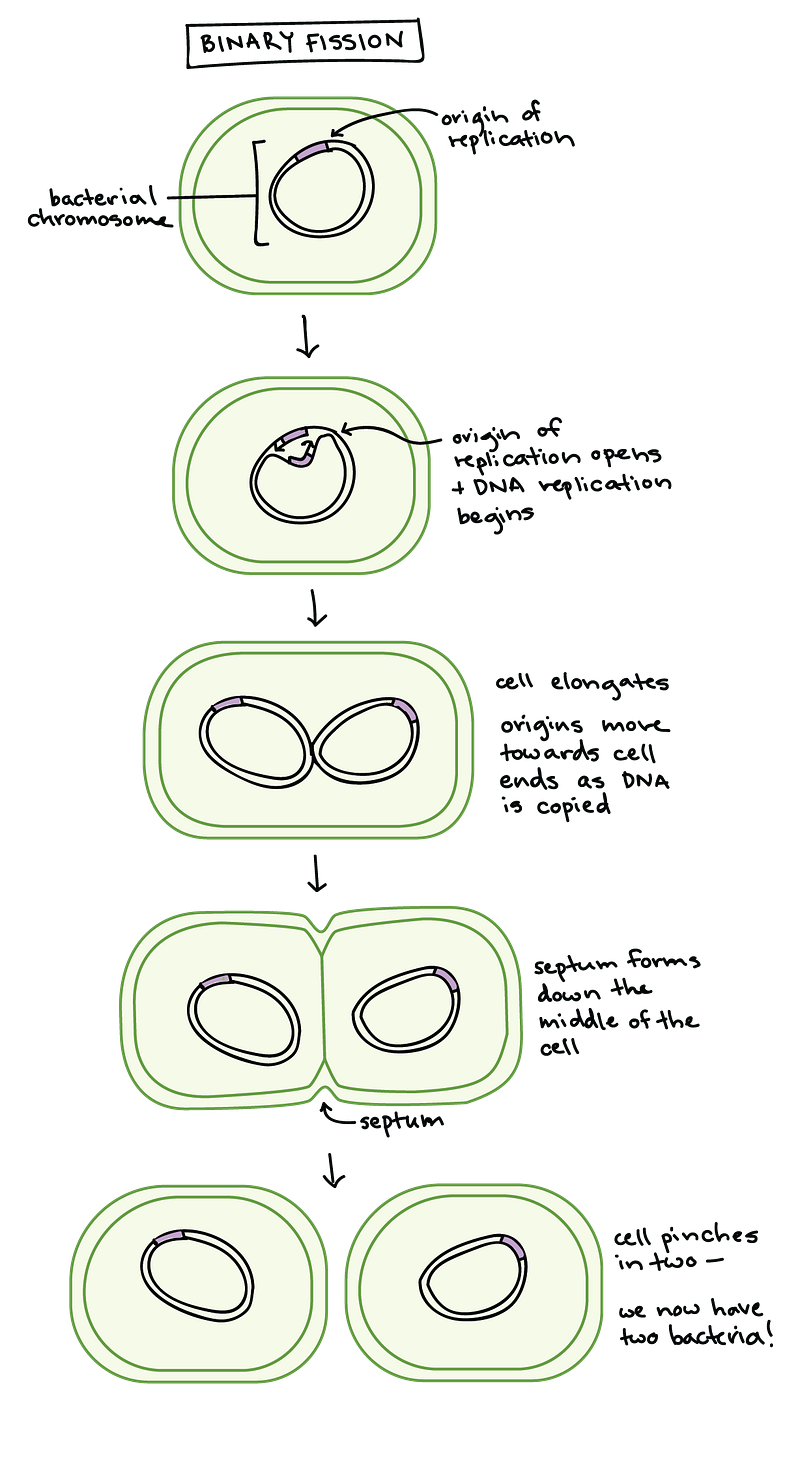
Bacteria have their own DNA, and different bacteria will have different DNA, much like different people have different DNA. Bacteria don’t spread their genes by mating with other bacteria to produce offspring, but instead spread their genes by replicating, as you can see in the diagram above and the image below.
The process of replicating themselves requires energy, and any bacterium that tries to replicate in an environment with too few resources will wind up in big trouble real fast. Bacteria that replicate faster have an advantage and can outcompete their neighbours for resources, putting more of their fast-replicating genes into the future generations.
So, if fast replication gives the bacterium a competitive advantage, how do some bacteria replicate faster than others? Funnily enough, the answer lies in a type of genetic cooperation that occurs between bacteria as a population. The term for this form of bacterial cooperation is lateral gene transfer.
The biology of energy
To explain what this is and why it matters, we need to cover a few basics about our body’s universal energy currency: ATP (or adenosine triphosphate for the aficionados out there). The ATP molecule is used as the primary source of energy by all living organisms studied to date. Without ATP, an organism couldn’t function and would quickly die.
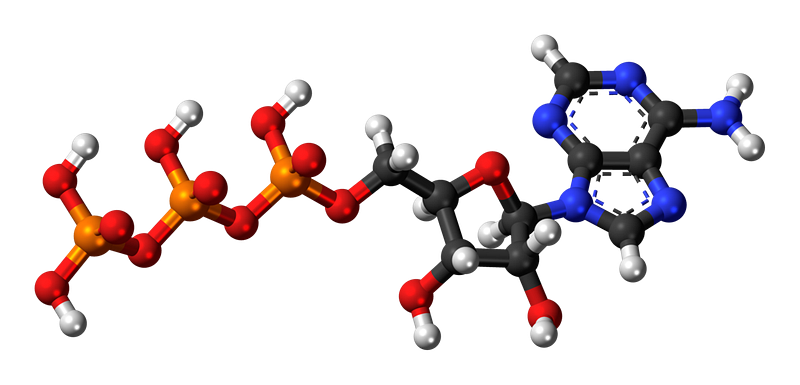
ATP is also used when bacteria replicate themselves, and that’s where lateral gene transfer comes in. The key idea is that bacteria have an incentive to get rid of unnecessary genes because minimising the amount of stuff that needs to be replicated reduces the energy and time required to replicate.
As a consequence, and in stark contrast to people, bacteria purge disposable genes in an attempt to optimise their energetic efficiency and replication rate. These stretches of DNA are released into the environment where other bacteria can accept them into their own genome as a new gene. This trading of genes between bacteria as a population is known as lateral gene transfer (or my less preferred term, horizontal gene transfer).
Next time
So, what does this tell us about cooperation and competition? This was already a bit of an info dump, so we’ll leave it there for now and save the answer for next time. To be continued!


