
Conversations with Creatives — Henry Jaglom
I interviewed my pal, the legendary indie film director, Henry Jaglom
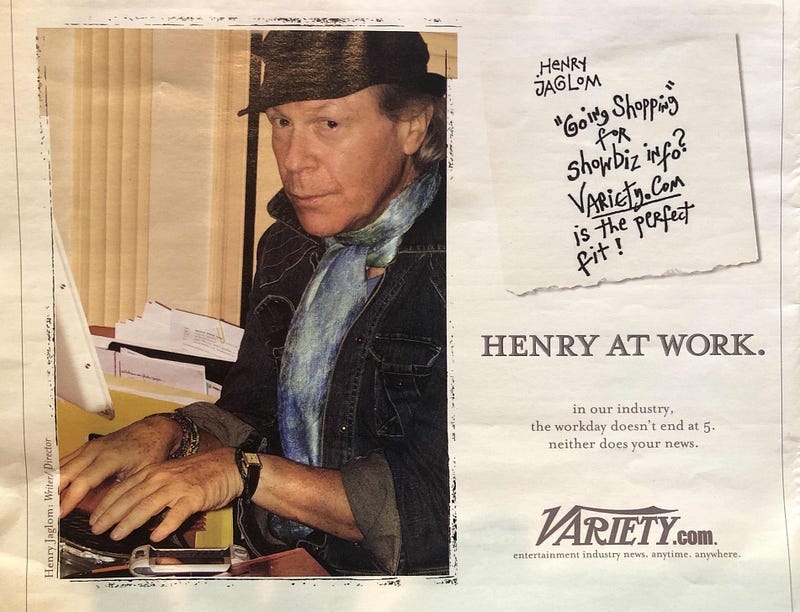
One of the sheltering in place side effects for me has been my newfound friendship with the legendary indie film director, Henry Jaglom.
As a teenager, I remember going to the Laemmle theatre on Sunset Blvd to see Henry Jaglom’s film, Eating, a movie about women and their relationship with food. What I remember liking about it was how the entire film was about women. What women thought, felt, feared, and wanted. Women, women, women! This was at a time where women characters were mostly second banana to the men characters. And as an actress myself, this Jaglom guy shined a spotlight directly on women in a way I hadn’t seen before. I left the theatre and immediately told my friend, I want to be in a Jaglom movie one day.
In the early days of the pandemic here in the States, Henry generously posted on Facebook that he was willing to send a link to all of his films for people to watch while they shelter in place. I asked him if I could include the link in my newsletter and he said yes. Then…
we started a fantastic back and forth email friendship sharing art and stories and we even spoke on the phone!
I don’t like speaking on the phone. It’s a thing. But, hey lock-down changes a gal. So we spoke on the phone! Henry has fab stories about his Hollywood life with his Hollywood pals (like Orson Welles, Jack Nickolson, Paul Newman, Candice Bergen, Blythe Danner) from the 1960s on that I’m sure he’ll write about himself in his book.
He used to date the glorious Natalie Wood! He draws! I love his drawings. and if you haven’t watched his movies, you can find most of them on Amazon Prime.
As a filmmaker, I don’t direct. I take away. I extract. Orson (Welles) said I was like an old Eskimo carving away at a walrus tusk, trying to find what’s inside. — Henry Jaglom
Qs & The As
Q: You made indie films your own way, seemingly never having to answer to anyone. It took a lot of chutzpah to go your own way in Hollywood from the start.
A: YES, I have never had to answer anyone about any of my films EXCEPT MY FIRST, “A SAFE PLACE”. On that film, Burt Schneider, who financed it for Columbia Pictures, had Final Cut. I had worked with him and Jack Nicholson on editing Dennis Hopper’s “Easy Rider” and he was very tough on that film as we cut it down from over 3 and a half hours to much less than 2. And I was ready for a colossal battle. But much to my surprise and relief, when he saw my final cut of “A Safe Place” he had tears in his eyes. He said to me: “This is so much, so uniquely, YOUR film, it is going to lose every penny and be a commercial disaster, but I’m not going to make you cut a single thing.” I was stunned, I was sure he was going to desperately try to make it “commercial” as we had done with “Easy Rider” and I had seen him do with several other films. “How come?” I asked him. He turned to me and I saw his red, still moist eyes. “Because it made me cry!” he said and smiled at me as he wiped away the tears. Everybody at Columbia was stunned that he did this, this was so unlike him.
Q: Where does that chutzpah come from?
A: I’m not at all sure, it’s just always been my personality as an artist. Maybe a combination of my father’s incredible self-confidence throughout his life (I’ve got astonishing examples of that in the book I’ve been writing these last 16 years.) Maybe my mother’s life-long telling me I could be and do anything I wanted to. Who knows exactly where personality traits come from.
Q: Did you always know, even as a kid, that you were a storyteller?
A: Yes, I was always making things up, my mother told me. And very sure of myself and my stories, even if they were completely made up. My mother kept a postcard I had sent from summer camp when I was 6 or 7.
It said:
Dear Mommy, I am fine.
How are you?
Love, Henry
p.s. Keep this card for future historians.
Where I got that from I have no idea, but it never wavered, I’m afraid.
Q: Were your parents happy about your creative pursuits or did they have other ideas for you?
A: My father was not happy about it, he kept trying to get me to his office after college at Penn to do what was called “business’’ and was looked at by him as “serious” as opposed to my pursuits, which he couldn’t quite understand. But he kept me on an allowance for many years until I “made it”, so I never had a financial struggle, a big advantage over all of my peers. My mother, on the other hand, encouraged me in every way possible to follow my dreams. She hadn’t done that herself, had given up on her girlhood dream in Weimar Berlin to be a writer & became a social person and a hostess, and suffered all her life from what she didn’t do, so she was incredibly supportive of me and my artistic dreams.
Q: It seems like your movies elicit extreme love or hate response from the audience. For the lovers, such as myself, we enjoy the truth and humor and the focus on women. For the haters, what do you think that’s about?
A: I think that’s about the openness or closed-ness of men and women generally. I think women embrace the truth about life and themselves and men, as a whole, deny it and hate to be forced to look at it, are scared to actually.
Q: Your films often have an improvisation feel to them. Did you write your films as traditional screenplays and then allow for improvisation or did you give those in your films an outline or maybe pose a question and then let them go to town?
A: When I have non-actors (or not so good actors or highly imaginative & brilliant actors) I let them go off in all directions and capture the best stuff, like with my brother & Zack in “Sitting Ducks” or my brother (with Karen Black) in “Cherry Pie.” “New Year’s Day” was outlined on shirt cardboard from the dry cleaners, nothing more, because I don’t write lines for myself. But mostly, I write them completely, very detailed and thorough, then encourage the actors in each scene after they have done the lines as written to keep going, in their own words, and express themselves as they think the characters would if not bound to my words. In my very first scene with Jack Nicholson & Tuesday Weld in “A Safe Place,” I shot the sen as written several times, then realized that Jack and Tuesday were better than what I had written for them and let them go off as they wished. I was 100% better. But when I tried that with Orson, his character didn’t work, so I had him doing the part as written, line for line.
(But *Tanna is so brilliant at it that she does BOTH — the lines, then taking off from the lines into her own impulses, her own expressions.) And at least half the time what the actors, if well cast, come up with is so much better and more interesting than what I wrote that I would guess the final dialogue in most of the films (with the exception of “Train To Zakopane”) is 50% mine & 50% what they came up within their characters. Since “Zakopane was a play, it was, of course, shot word for word as written.
*(Henry’s wife, actress Tanna Frederick)
Q: Let’s take a little dip into your personal life. I know that you dated the talented Natalie Wood. What was that relationship like?
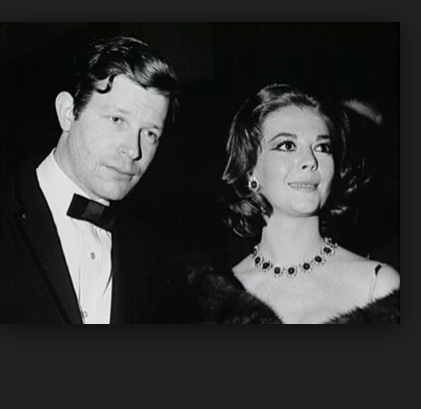
A: We were both in our mid-20s and to be honest I was juggling two relationships at the time, one with an actress in New York who was doing a play there and one out here with Natalie. I adored Natalie and we got along wonderfully well, but she was very into being the last of the old fashioned kind of Hollywood star (She was the number 1 female star at the time) and I was very rebellious and upset about the War in Vietnam and tho guest-starring in “Gidget” & “The Flying Nun”, hoping to write and direct my first movie, adapted from a play I had done for Lee Strasberg at The Actors Studio in New York. Natalie’s movie star-ness got disturbing to me after about a year and tho it’s mentioned in quite a few books about her, it wasn’t working out, even tho on one level we really adored each other. Sweet as she was, I was very political and socially conscious and brought her to the Studio to hear Strasberg, which she rejected, and tried to involve her in the Anti-Vietnam War stuff I was doing along with Jane Fonda and Donald Sutherland at the time, but tho her sympathies were all very decent she had a very 1950s idea of Stardom (having grown up in movies then as a child star) and finally, we couldn’t overcome our differences.
Q: You obviously don’t have to answer the following question or any question for that matter. We’ve talked about how you enjoy occasionally wearing women’s clothing. There was a time, most of the recent past when this was considered scandalous. But today more people are open to people expressing themselves however they choose. Do you think that had the world been more accepting that you would have openly enjoyed living as a woman?
A: Never wanted to live as a woman, no. You’ve got quite a misconception there, tho I guess it’s understandable. I do love the feminine, everything about the feminine and that includes first of all women but also their lives, their interests, their battles, and yes, to some extent, their clothing. But I am not really a crossdresser at all, tho I do enjoy certain soft articles of female clothing, nighties and robes most especially, and am kind of mad about silk and chiffon scarves, which I collect and love to wear. But that’s pretty much the extent of my “crossdressing”, tho you know the story of my starring in the play at 15 in summer camp as a girl and how my mother tried to get me to go to her and my father’s 1920s themed 26th Wedding Anniversary as a “flapper” when I was 16. But the truth is I am quite essentially male, not always in the most positive sense, often aggressive and domineering I’m afraid, tho always trying to cure myself of those negative aspects of “masculinity” which I feel attach to that idea, trying to undercut it as much as possible in myself with a certain degree of femininity. I think of my films as very female-centered and women’s lives on the whole certainly interest me much more than do men’s, which accounts for much of my work, such as “Eating”, “Going Shopping”, “Babyfever”, “The M Word”, “Irene In Time”, “Queen Of The Lot” and certain aspects of all the others. I have characterized myself as a “male lesbian” and in many ways that come closest to the mark, I think.
Q: You often speak of your great friendship with Orson Wells. When did you first meet and was it mutual love at first sight?
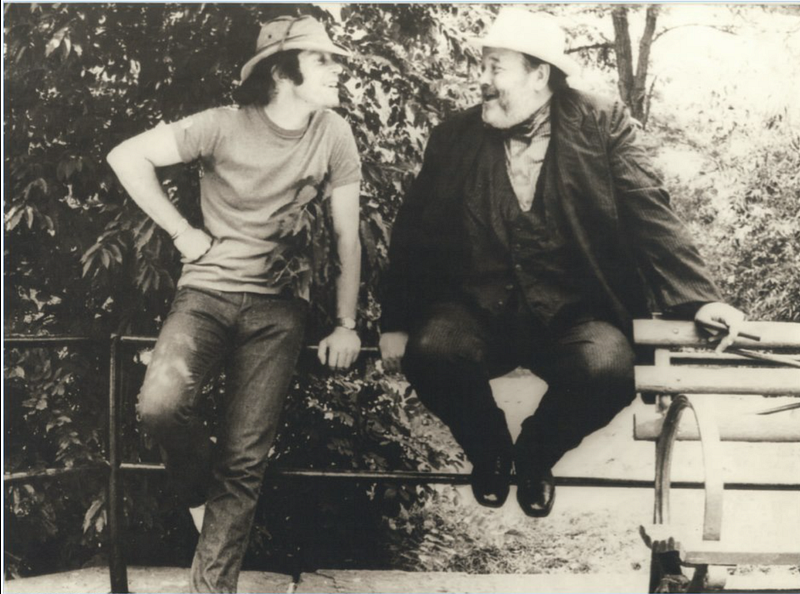
A: You will forgive me but so much has been written about my astonishing friendship with Orson that I don’t feel I can sum it up here. I recommend to anyone interested get a copy of “My Lunches With Orson”, readily available everywhere. And to watch “Someone To Love”, his last movie appearance, in which I do get him, for the first time on screen, to be fully his wonderful self, small nose and all.
Q: Now, about your art, we’ve sent some of our drawings back and forth via email and I love your work. Have you ever had an exhibit of your art?
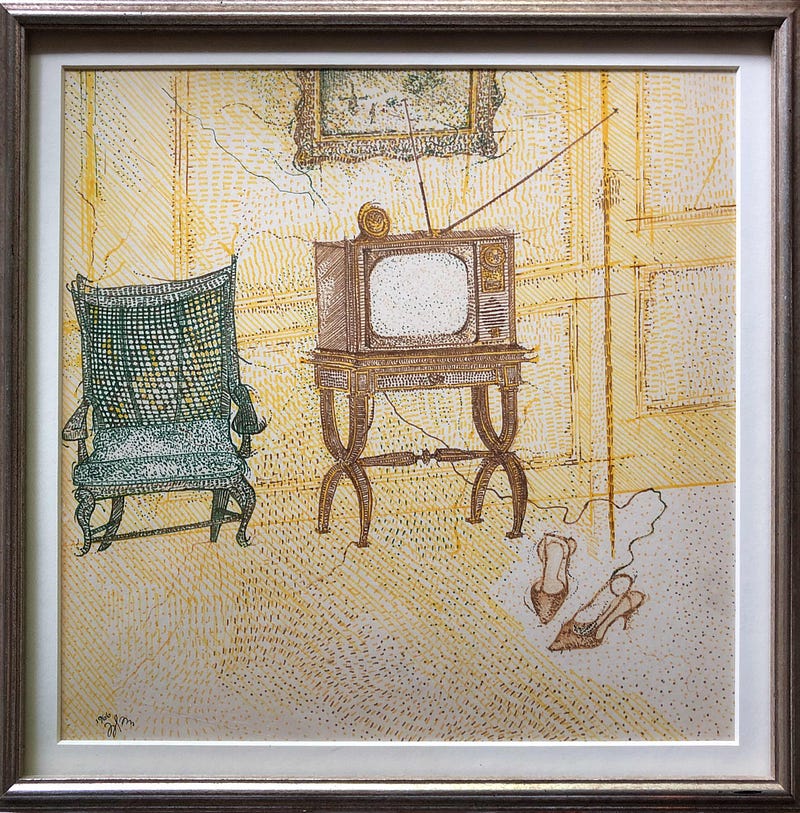
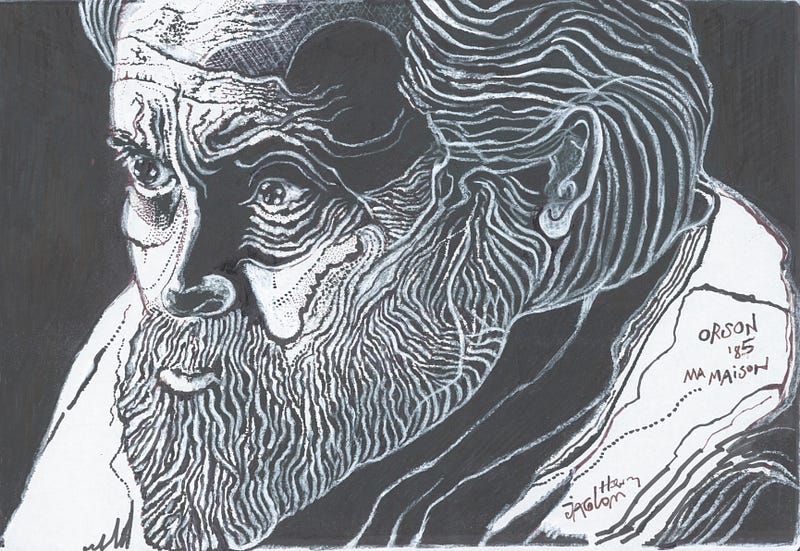
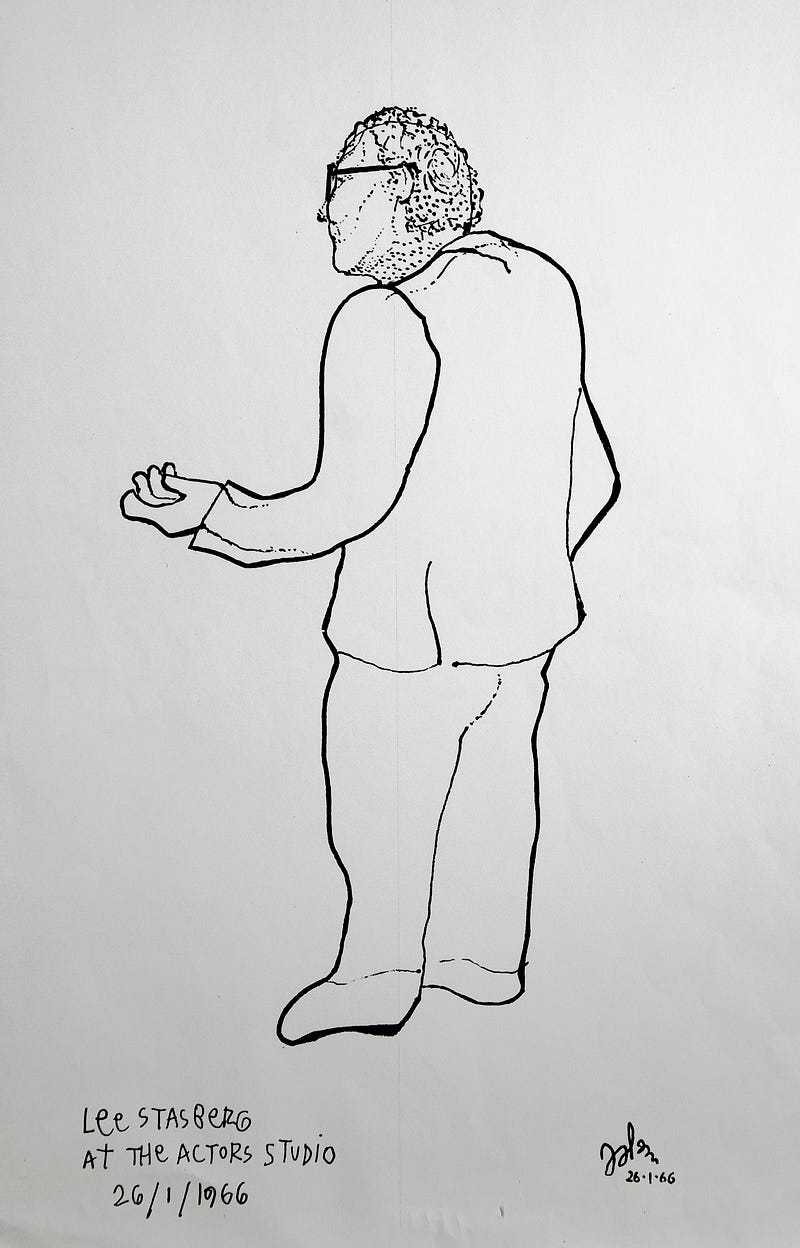
A: Never had an exhibit but I am hoping for a book of my drawings that I am currently preparing under my daughter’s loving but persistent prodding.
Q: I know that your wife, actress, Tanna Frederick, has been away shooting a movie. How has this self-isolating time been for you?
A: Lonely, sometimes terribly lonely, but very productive as it has given me all the time I need to greatly expand — and hopefully finish — the book I have been writing for much of the past 16 or 17 years, which is entitled “The Third Stone On The Second Row — A Family Memoir And A Brief History of The Jewish People”.
Q: And finally, is there something you’d like people to know about you that you think they’ve gotten wrong?
A: I’m a really sweet creature, whose bark is much worse than my silly bite.
Sign up for Annie’s monthly newsletter, Things I Liked, Wrote & Drew