
Play Is More Important Than Wet Socks
Our convenience should never outweigh the needs of children
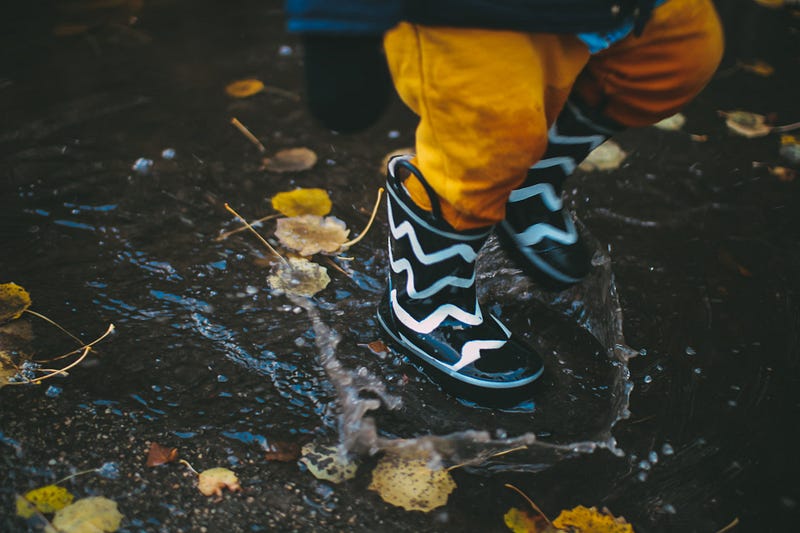
Spring has… splashed
This week we are finally starting to see some melting here in Manitoba, Canada. It’s been a crazy winter, with more storms than I’ve seen in the 15 years I’ve lived out here, so it’s a relief to see signs of Spring.
This morning I happily dug out my son’s rubber boots so he could splash in puddles at recess. When he got home I asked him if he had fun doing just that. He told me, “we’re not supposed to, kids might get all wet, and not everyone has a change of clothes at school.”
So… Instead of simply asking parents to send extra clothes, we take away one of the best parts of this time of year?
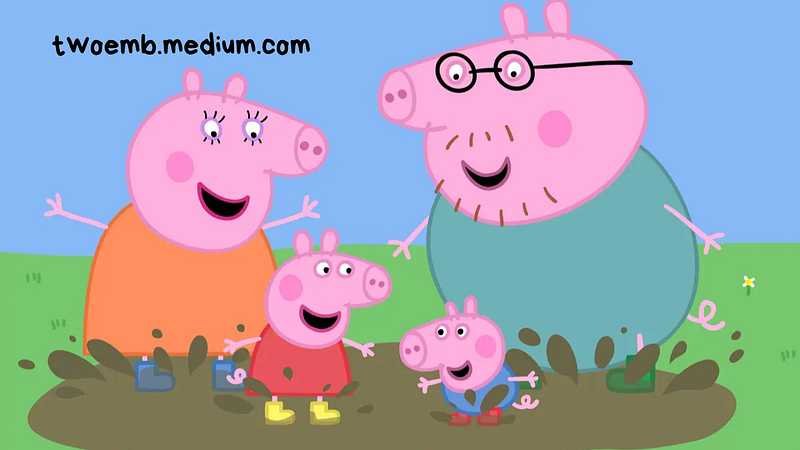
I mean, come on, there’s an entire cartoon predicated upon the pure joy of jumping in MUDDY PUDDLES!
I get it, it’s miserable sitting in wet clothes all day. I’ve done it many times, especially as a kid. It’s a rite of passage, really.
We expect parents to send, and students to bring, supplies to school on a daily basis: lunch, water bottle, agenda, pencils, etc. Why can we not expect them to also send (and bring) a change of clothes?
Okay, I don’t get it.
I admit, I’ve certainly prevented my son from doing something fun, simply because I was too exhausted to clean up the mess afterward. I accept and acknowledge I did it for my own convenience at that particular time.
When I do, I then plan for — and make a point of — ensuring he has another opportunity to do that fun and messy activity at a future time. A time when I have the energy and resources to let him run wild, then help him do damage control when he’s finished.
I love to complain as much as anyone
This isn’t just about finding fault because schools don’t want muddy boot prints in their hallways, or parents complaining because their kid came home dirty and wet.
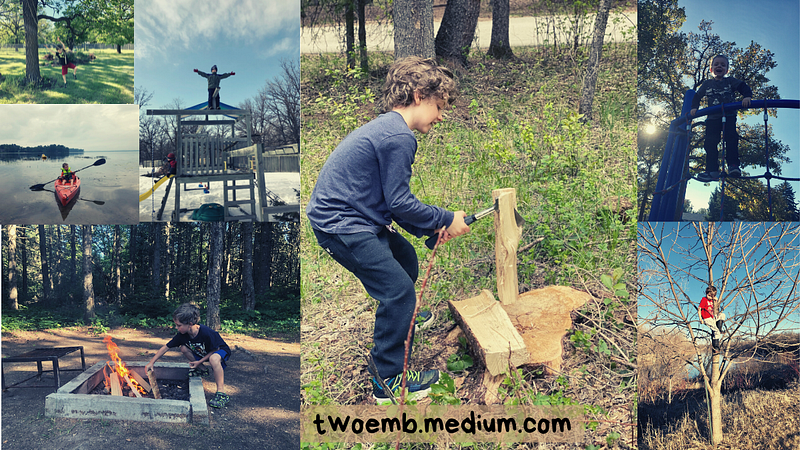
Personally, I love it when my kid comes home dirty and wet. That means he got outside to play and probably had a lot of fun.
It’s also much more than that.
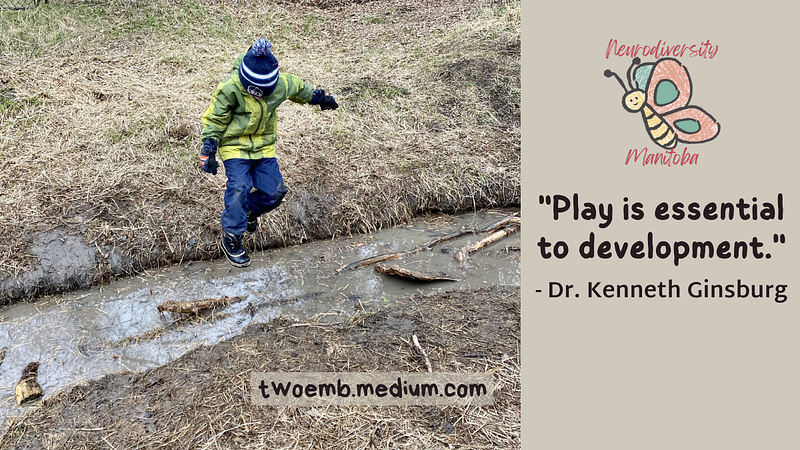
Unstructured play outdoors in nature offers both physical and emotional benefits.
“The physical, cognitive, social, and emotional benefits for children are greater with less structured, less supervised play that involves dimensions of risk, challenge, and adventure.” — Dr. Michael Patte
The less we try to control, restrict, or interfere with children’s play, the better. Of course, supervision is needed, and adults will need to gently intervene if a child is doing something potentially dangerous.
That said, we need to trust children more, and give them opportunities to learn to trust themselves. If we are always micro-managing them, kids can’t develop the ability to self-monitor and self-evaluate; skills needed for them to determine where their own personal limits are.
It’s difficult, I know, especially with our own children. There have been many times I was tempted to speak up and direct my son when I felt what he was doing was going to end badly.
Through gritting my teeth and biting my tongue (yes, both at once — as you may have guessed, I do not hold my tongue easily), I’ve learned my son is almost always more capable than I give him credit for.
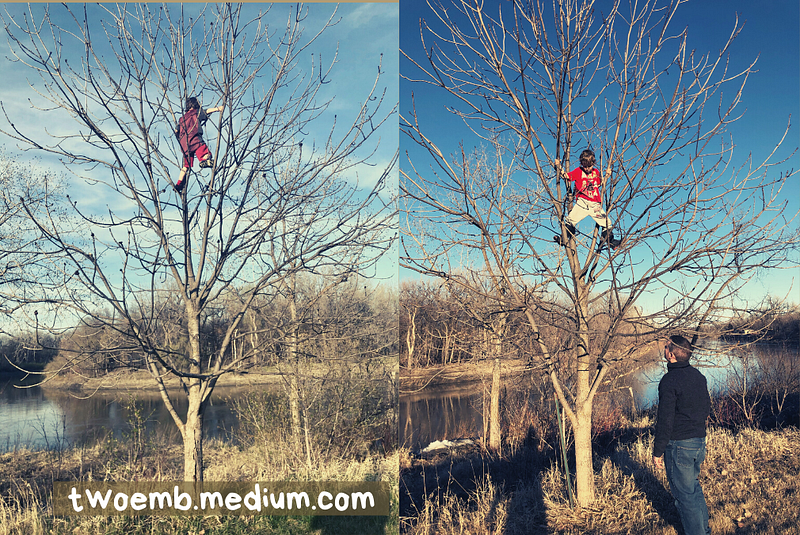
When I sit back and watch (often holding my breath), I am pleasantly surprised — not only by my son’s ability to do the thing, but also by his self-awareness and willingness to stop himself when he probably shouldn’t do the thing.
If I had stepped in, I would have robbed him of the opportunity to practice those skills for himself.
“Play is how a child learns about risk, problem-solving, consequences, and getting along with others.” — Bruce McLachlan
Grey hairs and skinned knees
While I may have a few more grey hairs, and dental damage from gritting my teeth, my son has grown in so many ways. Physically he’s stronger and healthier for all the outdoor play, climbing, running, jumping, and falling he’s done.
He’s also more aware of his own boundaries and has discovered strengths he didn’t know he had.
In their book, “Let The Children Play”, Pasi Sahlberg and William Doyle summarize studies done by American Pediatricians to create a list of 25 ways in which play improves the lives of children.
For brevity, I’ll summarize further, and will list the four I feel are most important:
- Play is integral to a child’s education.
- Play, in all its forms, is the ideal developmental and educational milieu for children.
- Free play is an essential part of childhood.
- Recess, especially unstructured recess, provides the creative, social, and emotional benefits of play.
Bottom line: Play isn’t just fun, although that’s yet another important benefit. Play is absolutely essential to every child’s healthy development. Sometimes the ways children want and need to play are inconvenient to adults.
Tough. This is what we signed up for as parents and as adults who care for children. Our job is to provide the necessities of childhood, which include play.
I promise you it’s more important than wet socks.
© Jillian Enright, Neurodiversity MB

When you join medium, as a member you’ll have access to unlimited reads for only $5 per month. If you use my referral link, I’ll earn a small commission, and you’ll earn my undying gratitude.
Related Stories
References
Kenneth R. Ginsburg, the Committee on Communications, and the Committee on Psychosocial Aspects of Child and Family Health. (2017). The Importance of Play in Promoting Healthy Child Development and Maintaining Strong Parent-Child Bonds. Pediatrics; 119(1): 182–191. https://doi.org/10.1542/peds.2006–2697
Patte, M. (n.d.). The Decline of Unstructured Play. Retrieved from TheGeniusofPlay.org
Sahlberg, P., & Doyle, W. (2019). Let the Children Play: how more play will save our schools and help children thrive. Oxford Press.


