
Machine Learning Art
Controllable Text to Image Synthesis
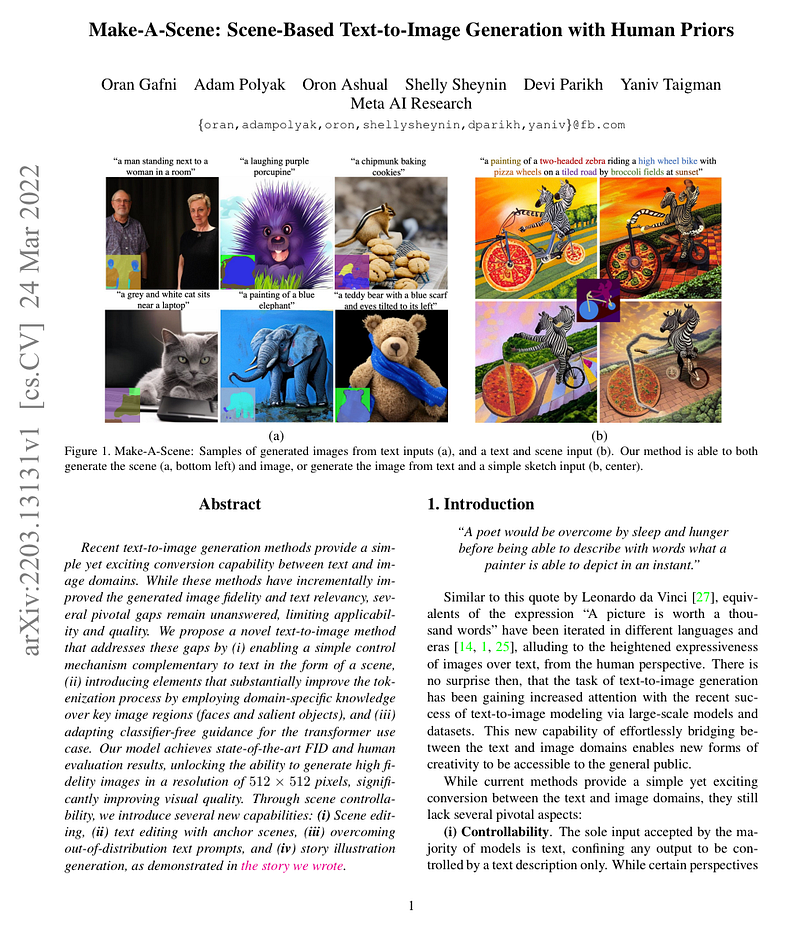
Generative models for text-to-image synthesis have shown significant progress. However, generating high-fidelity images remains a challenge, especially with long text descriptions.
The last few years have seen a surge in the use of GANs for image generation and advances in transformer architectures for natural language understanding. In this paper, the authors propose a novel text-to-image method: Make-A-Scene Text-to-Image Generation with Human Priors.
The method proposes in the paper:
- enables a simple control mechanism complementary to text in the form of a scene,
- introduce elements that substantially improve the tokenization process by employing domain-specific knowledge over key image regions (faces and salient objects),
- adapting classifier-free guidance for the transformer use case.
Achieves state-of-the-art FID and human evaluation results, unlocking the ability to generate high fidelity images in a resolution of 512x512 pixels, significantly improving visual quality.
You can use a similar method to generate VIDEO based on your text. You don’t need to do anything, just write a few words, and the rest will happen by itself. Just click the HERE, 🟠 and we’ll get started! The article includes step-by-step instructions with screenshots and videos. A complete, non-technical guide.
Project Page (scroll down) Through scene controllability, the authors introduce several new capabilities:
🔵 Scene editing,
🔵 text editing with anchor scenes,
🔵 overcoming out-of-distribution text prompts,
🔵 story illustration generation, as demonstrated in the below video.
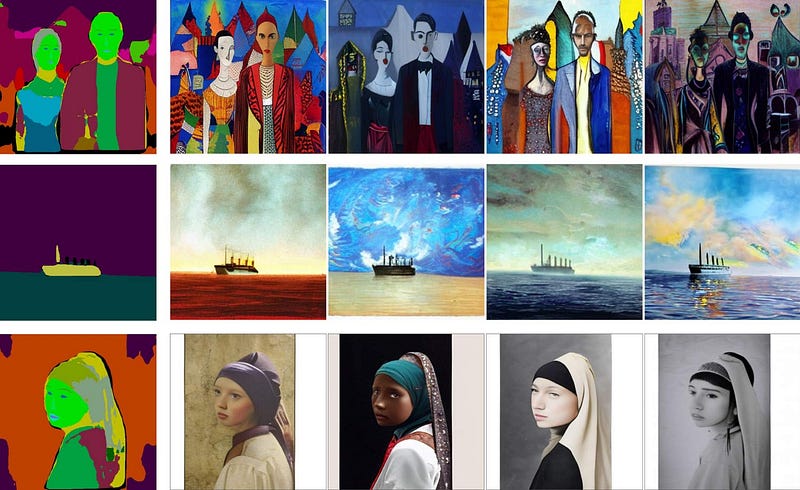
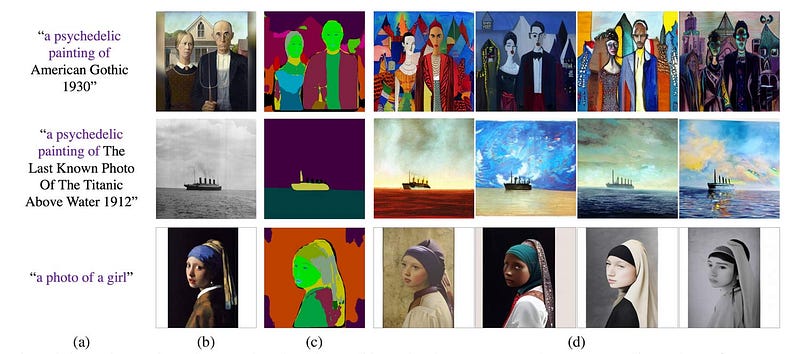
Generating new image interpretations through text editing and anchor scenes. For example,(below) for an input text (a) and an image (b), the authors first extract the semantic segmentation. Then they can create new images (d) based on the input segmentation and the edited text. Purple means that text has been added or the original text has been replaced.
Title: Make-A-Scene: Scene-Based Text-to-Image Generation with Human Priors
Authors: Oran Gafni, Adam Polyak, Oron Ashual, Shelly Sheynin, Devi Parikh, Yaniv Taigman
Project Page:
Make-A-Scene: Scene-Based Text-to-Image Generation with Human Priors
I invite you to explore the concept of “AI creativity” by reading and learning from the many articles found on 🔵 MLearning.ai 🟠
- Check out my instagram with new material every week
- If you enjoyed this, follow me on Medium for more
- Want to collaborate? Let’s connect on LinkedIn
- https://linktr.ee/datasculptor
- 3D Machine Learning generated model on sketchfab
Data Scientists must think like an artist when finding a solution when creating a piece of code. Artists enjoy working on interesting problems, even if there is no obvious answer.
All our writers (members) receive the opportunity to be promoted on our social media, which increases the popularity of articles published on MLearning.ai


