
Control Over Something, Anything, Is the Last Gift You Can Give a Dying Loved One
You are not powerless in the face of a loved one’s death.

Sooner or later, for some only once in a lifetime, for others it is a cycle of life that keeps repeating, we are all faced with the final days of life for someone we dearly love. No one gets out of this life alive, but that doesn’t make the final days and final good-byes any easier. Feelings of guilt, personal recriminations, accusations and unspoken words can haunt the survivors for the rest of their days. Death is final. There are no instant replays or overtime opportunities. It really doesn’t matter how much you did or how many memories you shared, there is always a sense of something left undone — just one more thing you could have/should have/would have done — but you didn’t. A Personal Perspective Far from being an expert on this subject, I do feel that I have a perspective that can give some solace to those who grieve both for the loss of their loved one and for the unresolved conflict they may have in their own mind. I lost my first husband far too young (at the age of 38) to leukemia. Trust me when I say this disease is ugly and painful and, in my first husband’s case, far too drawn out. The treatments were grueling and any small feelings of hopefulness were fleeting at best.
One of the hardest moments in my life occurred right after the hospice nurse told me and my father-in-law that there were no further treatments available and I could expect his death in three months or less (probably much less). My first husband was in the bedroom (at home at this time) and could hear his father crying. I went into the bedroom and he asked why his father was crying and wanted to know what the nurse had said. We did not have a relationship built on lies and I was not about to start then. I had to be the one to utter the words my first husband that he would die. That solemn, freeze-frame shock of reality will be forever branded in my heart and soul. I was never forced to be that strong before and I hope to never need that strength again. A Plan for the Future The earliest days of living with the terminal verdict were not easy, but I guess I really don’t even need to state the obvious. We dealt with his palliative care as best we could. In only a few more days after the visit from the hospice nurse, he would return to the hospital continuing care center, never to return home again. We spent our time, at least the times when his morphine-addled brain was able to make coherent thoughts, talking about the future — yes, really - the future for me that did not include him. He said he was accepting his fate — his only regret being that he was not ready to leave me behind.

This Is What I Want You To Do He wanted to know where I would live, what I wanted to do going forward, how I saw the rest of life play out. In a moment a little humorous, but sadly tragic at the time, he started to go through what he considered to be a list of his eligible male friends, trying to make a suitable match for me as he didn’t think I should be alone. I sidetracked that train of thought quickly - both because I felt it was inappropriate at the time, but also because the possibility that such a match-up might randomly happen sometime down the road would have been a little too creepy for me. He wanted to know if I would continue to live in our home. I told I would not do that, the memories being too much to endure. He understood and agreed. He then proceeded to help me figure out the best course of action for selling the house when he was gone. We had done some very nice decorating in our eight years in that house, mainly in a Victorian style. Two of the bedrooms boasted gorgeous Victorian lace window treatments — a bit costly for our financial situation at the time, but we did it anyway. I loved those windows and the excessive fluff they represented. He told me he wanted me to leave those window treatments in place when the house went up for sale. He thought it would do a lot for the appeal of the home and aid in selling it more quickly. When the time came, shortly after his death, to put the house on the market, the real estate agent told me to remove those expensive window treatments and replace them with something basic and plain because a potential buyer would expect to receive the house and its contents as they saw it. She thought I could use the treatments in a future home. I chose to let my first husband’s decision stand and I told the agent as much. One of the last gifts I could give him was to let him make an important decision (at least, important in his mind) and to stand by it. Whether those windows treatments really sold the house, I will never know. They probably didn’t matter much in the overall scheme of things in selling the house, but they mattered to me. I gave one last ounce of power to a dying man. He was still in charge of something.
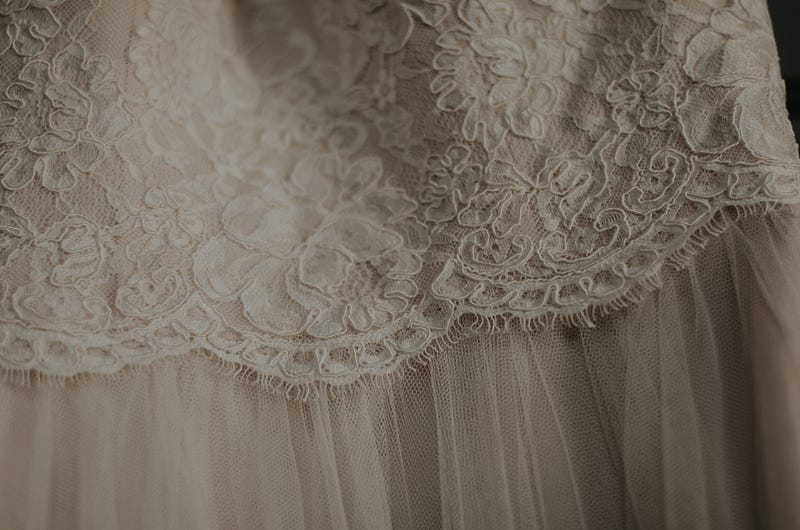
Those Window Treatments are Remembered It’s been quite a few years since his death. I have since remarried (not to someone on his eligibility list) and have lived in five other homes since. There has never been an opportunity to use those Victorian lace window treatments in any of those homes. There was always an issue with either the number of windows in any given room or the overall size of those windows — or maybe it was more the fact that my personal tastes have evolved in a much more minimalist direction. Had I removed those window treatments, I likely would still be dragging them around in my life, an albatross to remind me that I wouldn’t let my first husband have the last word on something. But, I did let him have the last word. His last word resonated in my decision and gives me a certain peace, even to this day. We All Have a Gift to Give at the End For anyone faced with the impending loss of a loved one, I offer one small glimmer of hope. Give them the power to exert control over something, anything, in their world. As you can see from my window treatment example, it doesn’t have to be the power to move the universe. It only needs to be something that shows they still have value and an opinion in the world they share with you. There will be a sense of peace on both ends of the dying process. And, it may help to counter-balance any of the guilt, personal recriminations, accusations and unspoken words that may somehow linger.