
Continuous Token-Curated Registries: The Infinity of Lists
“Token-curated registries are decentrally-curated lists with intrinsic economic incentives for token holders to curate the list’s contents judiciously.” — Mike Goldin
This post describes a variation of Token-Curated Registries that employs a continuous token model and ends up waxing lyrical about lists.
Background
Continuous token models are different than what we mostly see in the token space currently, where tokens are minted once for some purpose, and never again. With continuous token models, tokens are minted as needed, and used within the protocol or application when required. There is no “ICO”, “Token Generation Event” or “Token Launch”. The network/dapp forms around the need of the token and dissolves naturally if it is not useful anymore.
You can get some background of continuous token models & token-curated registries here:
Combining continuous token models with token-curated registries can create a liquid, low-barrier market for global games of curation & categorisation. Anyone can create a list, set criteria for inclusion, and play the crypto-economic game to include or exclude actors. The value of the registry will be determined by how useful it is and whether it acts as a good schelling (focal) point. This can also create a long tail of categorisation that wasn’t necessarily feasible or possible before.
This description assumes some understanding of how Token-Curated Registries determine whom to include or not.
Continuous Token-Curated Registries
This variation is as follows. It uses the same continuous token model found in Curation Markets:
Instead of pre-selling tokens, the tokens are minted according to a pre-determined algorithmic curve. ETH is used to buy this token and it is kept in a communal pool. With more tokens in circulation, the cost to buy the token increases. At any point in time, a token holder can sell their token back into the pool, burning the token, and taking out a proportional amount of ETH. This in turn decreases the supply, and decreases the cost to buy the token.
This create a natural price ceiling & floor for the tokens.
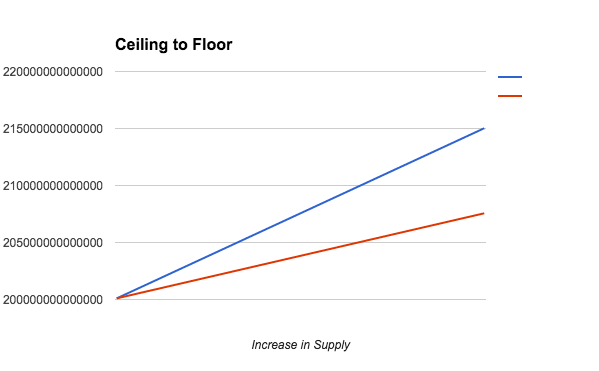
With more tokens in circulation, the cost to buy new tokens go up, and if one burns one token, the amount of ETH taken out increases (per token).
This registry will thus grow and shrink naturally as the usefulness of the list changes. If the registry is useful and a group of token holders judiciously curate it beneficially, there will be more buyers who want to be a part of the list and more buyers who want to participate in the curation of it (in order to receive rewards for doing so).
Token holders who helped curate can leave voluntarily, taking out the ETH they are due for the benefits they provided.
This fortuitous feedback loop will continue until the marginal return for the value of the list is not worth the cost to participate. This will start producing churn.
At this point, the registry can either remain at this churn, or undergo tokenized mitosis, creating continuous sub-registries (the sub-registry contains a pool of the parent registry’s token).
With continuous TCRs, there is also the additional market force where, because there is a low barrier to entry to start a TCR, they can eventually also compete. Thus: in order to sustain the value of the list, the participants of the list need to ensure they also outcompete potentially competing lists.
This produces a potentially boundless system of competing lists. A potential infinity of lists.
The Infinity of Lists
What’s interesting about this game of lists and the possibility of it, is what it also says about us.
Umberto Eco wrote “The Infinity of Lists”, an illustrative book, showcasing humanity’s penchant for lists throughout history.
As he describes:
“This infinity of lists is no coincidence: a culture prefers enclosed, stable forms when it is sure of its own identity, while when faced with a jumbled series of ill-defined phenomena, it starts making lists.”
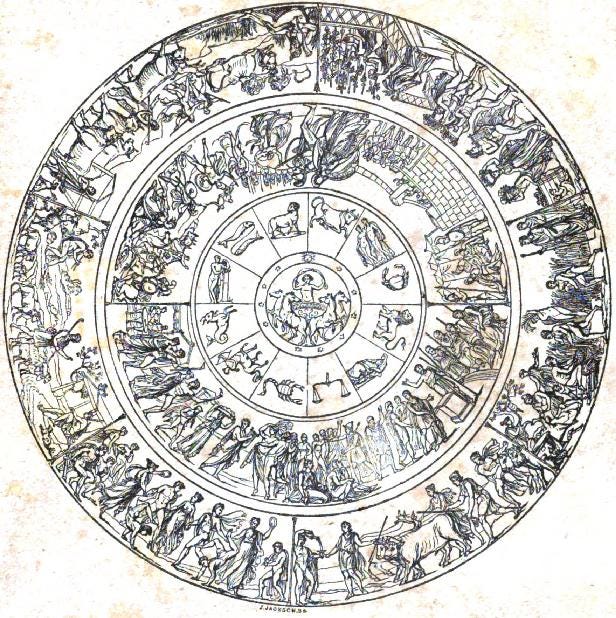
Practical lists, poetic lists. All of them. From the scenes on the Shield of Achilles or a list of quests for dinner.
She looked over his shoulder For ritual pieties, White flower-garlanded heifers, Libation and sacrifice, But there on the shining metal Where the altar should have been, She saw by his flickering forge-light Quite another scene.
Quite another scene indeed.
I quote from Umberto Eco’s interview with Der Spiegel (bold is my emphasis):
SPIEGEL: But, in doing so, doesn’t he stray from poetry?
Eco: At first, we think that a list is primitive and typical of very early cultures, which had no exact concept of the universe and were therefore limited to listing the characteristics they could name. But, in cultural history, the list has prevailed over and over again. It is by no means merely an expression of primitive cultures. A very clear image of the universe existed in the Middle Ages, and there were lists. A new worldview based on astronomy predominated in the Renaissance and the Baroque era. And there were lists. And the list is certainly prevalent in the postmodern age. It has an irresistible magic.
SPIEGEL: But why does Homer list all of those warriors and their ships if he knows that he can never name them all?
Eco: Homer’s work hits again and again on the topos of the inexpressible. People will always do that. We have always been fascinated by infinite space, by the endless stars and by galaxies upon galaxies. How does a person feel when looking at the sky? He thinks that he doesn’t have enough tongues to describe what he sees. Nevertheless, people have never stopping describing the sky, simply listing what they see. Lovers are in the same position. They experience a deficiency of language, a lack of words to express their feelings. But do lovers ever stop trying to do so? They create lists: Your eyes are so beautiful, and so is your mouth, and your collarbone One could go into great detail.
SPIEGEL: Why do we waste so much time trying to complete things that can’t be realistically completed?
Eco: We have a limit, a very discouraging, humiliating limit: death. That’s why we like all the things that we assume have no limits and, therefore, no end. It’s a way of escaping thoughts about death. We like lists because we don’t want to die.
Perhaps an extreme viewpoint in this context, but if we take that angle, it doesn’t seem that farfetched with what we are unintentionally busy with.
Eco also describes how the lists that appeared through history echo the spirit of times. In this future where cryptocurrencies thrive, perhaps imbuing lists with a life of their own (a survival of the fittest lists) feels like us pushing at the limits of our desire to create lists. If we do it to create order in the boundless world we live in, what greater feat than imbuing lists with life itself?
Ralph Merkle, inventor of the merkle tree, a cryptographic data structure that forms part of all blockchain architecture, even mentions this propensity to see these as living systems in a recent paper.
Briefly, and non-technically, Bitcoin is the first example of a new form of life. It lives and breathes on the internet. It lives because it can pay people to keep it alive. It lives because it performs a useful service that people will pay it to perform.
ht to Gabe Tumlos for pointing me to Eco’s work.


