
Continuing His Journey Of Discovery
Thomas McIlhenry visits his brother Andrew at the farm
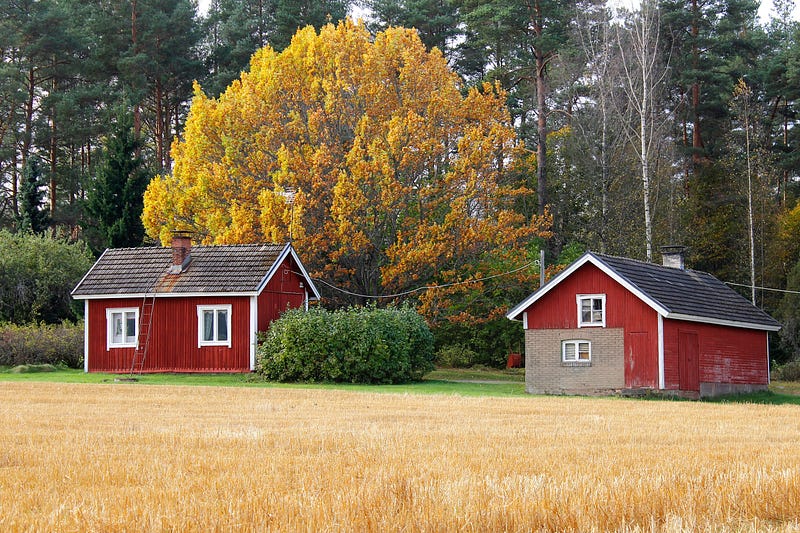
When Thomas McIlhenry entered his daughter Anna’s room at eight o’clock in the morning after his Chicago trip, she was sitting on her bed waiting for her mother to take her to school.
“So, what are you doing at school today?” he asked her as she fidgeted with a notebook on her lap.
“We’re going on a field trip to a farm,” she answered.
“I’m going to a farm today as well,” he told her. “I’m driving out to Uncle Andrew’s farm to look at some papers.”
“Are there animals on the farm?” she asked him.
“There are lots of animals, cows and horses and chickens and I even think there are sheep.”
“I like sheep,” she told him.
“So do I,” he responded.
“Where we are going there are some animals. But I think we are looking at vegetables,” she explained. “I like animals more than vegetables!”
“So do I,” he responded. “Have a good day today, Anna.” He bent over and kissed her on her cheek and hugged her and she kissed him back.
“Love you,” he told her.
“Love you with kisses,” she answered.
“I’ll see you this evening.”
Her mother came into the room and grabbed Anna’s hand to take her to school.
“I must go and see Andrew today. I promised him. I should be home by six o’clock.”
“I’m fixing fried chicken tonight,” she responded.
“Sounds great. I’ll tell Lois and the kids you send your love.”
He kissed her and left the room. It was about an hour and forty-five-minute drive from his house to the farm and it always brought mixed feelings when he visited his brother, because he had to drive past his family’s old farm on the way. The farm was now owned by a food conglomerate named Manheim Brigand, who among other products made organic tortilla chips of various flavors. On his family’s old farm, they now grew mostly corn. Three hundred and sixty-five acres of some of the finest corn in all the country, now being cultivated by high-tech machines and a staff of thirty-six company employees. He hated the sign with its circle and triangle logo and the huge, stylized MB beneath it and he was always tempted as he drove past to throw something at the sign. But thus far he had always congratulated himself that he had managed to control his impulses.
About halfway through the trip, he would always stop at “the best Diner in Wisconsin” as the restaurant advertised itself and he could have a slice of the most delectable apple pie that ever touched his palate.
This day it was no exception and at nine-thirty exactly he pulled into the parking space and exited the car. Though he would sometimes complain later about having to go out to see his brother, he really enjoyed stopping at the diner and he had learned the names of everyone who worked there.
“Good morning, Mr. McIlhenry,” a waitress named Sue greeted him as he entered the brass double doors at the front of the restaurant. “Have you come to see the farm again? We have a nice pecan pie today if you like a change.”
“Sure,” he responded. “I like pecan pie.”
“Also Maxine had her baby a couple of days ago, a baby girl named Irene.”
“Tell her my best wishes. This makes four now, right?” he asked.
“Yes, four. Randall and Michael and Esther and Irene.”
“I see Maxine likes variety in her names.”
“I think she picks the first name that comes into her head,” Sue answered.
“So how are you, Sue?”
“I’m great. I’m getting married next month.”
“So Ellis finally popped the question,” he told her.
“I haven’t seen Ellis in over a year. His name is Perry.”
“I’m sorry. I’m terrible with names,” he told her.
“You’re great with names,” she countered.
“Faces I sometimes have a problem with,” she told him.
He thought of Marcus sitting in his cell in the prison as he said this remark.
“Let me go and get your pie,” she told him and left the table. She returned a few minutes later with a slice of pie with whipped cream on the side.
“I remembered how you like it,” she told him.
“As always, with people like you, Sue, this diner lives up to it’s name,” he told her.
“Is there anything else?” she asked him.
“Yes, ask Darryl to come here from the kitchen,” he requested.
A few minutes later Darryl the cook came outside to talk to him.
“I have that paper you wanted to prepare for you.” Thomas told him. He reached into his satchel and removed a document. “I’m sorry for the delay.”
“How much do I owe you?” Darryl asked.
“Nothing. It took about five minutes of time.”
“I have to pay you something, I insist,” he responded.
“How about this? Next time I come here you teach me how to make that tomato sauce and we’ll call it even.”
Thomas returned to his seat and finished his slice of pie.
“Would you like another piece?” she asked.
“No, I’m OK. I may stop by on the way back.”
He paid his bill and then he left.
It was close to eleven o’clock when he arrived at the farm. His brother Andrew was feeding chickens when he pulled into a driveway near the barn.
“Sorry to be a little late,” he told his brother as he exited the car.
“I have the papers here in the house,” Andrew told him.
“I could look at them in a few minutes. I’d like to go to my favorite place in the whole world.”
“I don’t get your fascination with that old shed. I haven’t been inside that shed for months.” Andrew answered.
“That’s because you’re not a romantic like I am,” Thomas answered.
Thomas walked down the pathway toward the old wooden shed and he opened the worn door and walked inside. It was the shelf of books that fascinated him most. There were mostly adventure stories, Robinson Crusoe, Jules Verne, Tom Sawyer, and Huckleberry Finn. Joseph Conrad.
“I always imagine the little boy sitting in this shed, reading the books and dreaming of the adventures. What happened to that boy? Is he still alive?” Thomas asked.
“I can tell you he’s still alive. David still talks about him. He sold televisions in New York. Must be nearly eighty by now.”
“Where is David?” Thomas asked.
“I think he’s still in Germany,” Andrew answered.
“This is what Mircea Eliade calls a sacred space.” Thomas commented as he looked into the shed.
“Mircea Eliade,” Andrew struggled to pronounce. “Who is he?”
“An anthropologist and philosopher. He’s not important,” Thomas answered. “You and I are very different, Andrew. You’re a practical thinker. No flights of fancy. I envy that.”
“So what have you been doing, Brother?” Andrew asked.
“I’ve been living the dream. Fighting for all the lost causes. What was that line in that movie, ‘The lost causes are the only ones worth fighting for?’ Mr. Smith goes to Washington.”
“I remember that movie,” Andrew spoke.
“So let’s go look at those papers,” Thomas left the shed. “Where’s Molly?”
“She’s inside the house.”
Andrew and Thomas walked toward the farmhouse.
“What did old man Fox used to call this place?” Thomas asked.
“He called it Eden. It is a beautiful piece of land,” Andrew answered.
“So how are our friends, East of Eden, Manheim Brigand?” Thomas asked.
“They’re supposedly growing organic corn for their chip business.”
When they entered the house, Molly was in the kitchen cooking.
“Is that you, Andrew?” she shouted.
“Tom is here,” he shouted back to her.
She came into the front parlor wearing a strawberry apron over her blue dress, and her auburn hair was pinned back.
“The kids are in school. You’re welcome to stay for lunch.”
“That would be great,” Thomas acknowledged.
“How are Elena and Anna?”
“Everybody’s great. Anna’s a carbon copy of her mother.” Thomas paused. “I’m so glad somebody’s working this old place.”
“It’s a lot of work,” she responded.
“Go and get the papers. I’ll sit down and look,” Thomas told her.
Andrew went to his bedroom and returned a few minutes later with a stack of papers which he handed to his brother.
“I’ll take a look at these and maybe you can bring me a cup of coffee.”
“Certainly.” Then Molly left for the kitchen.
Thomas sat down at a table and began to work through the papers. He pulled a small notebook from his satchel and began to write down notes as he was reading. Andrew watched him while shuffling from foot to foot for nearly thirty minutes and then Thomas closed the notebook, returned it to his satchel and stood up from the table. He was silent.
“Well, is everything in order?” Andrew asked.
“There’s only one clause that gives me concern. These ten dollars a month fees for something called, Charitable donations,” I’d like to know where the ten dollars a month is going. Otherwise, everything’s fine.”
“So, I can sign it.”
“Sure.” He paused. “Have you spoken to David Fox recently?”
“I talked to him two weeks ago by phone.”
Molly returned with a cup of coffee which she set down on the table.
“Thank you,” Thomas said. “I’m looking forward to lunch.”
“Molly does cook well.”