
Content Means Nothing Without Context
You can’t just tweet an article and expect 1,000 shares
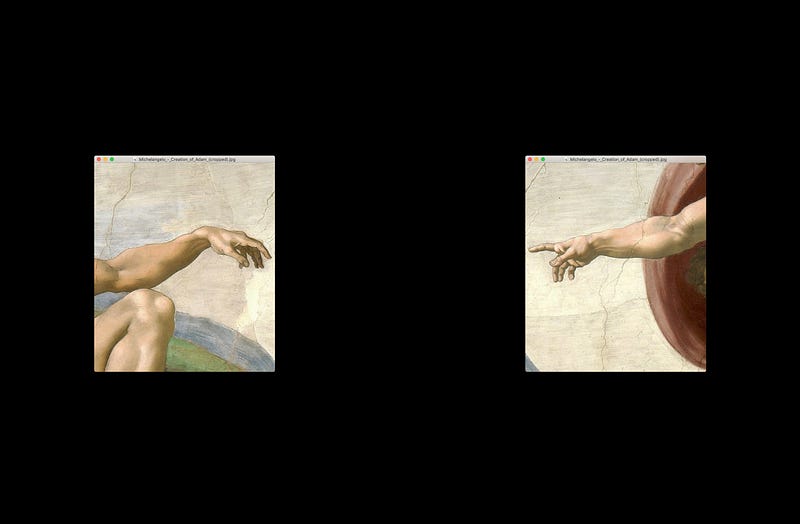
In the Middle Ages, there was only one killer argument, and only one person could use it: Whenever the king wanted something done — for whatever irrational reason — all he had to say was: “I have been instated by God. Therefore, y’all shall do as I say!”
Now I don’t know if any kings had Texan accents, but if you ask me, that’s a pretty frustrating doctrine to live under — no matter if you believe in God or not.
Ironically, even today, long after democracy has made its way into (most of) our nations and homes, we often live by the same mantra. We just word it differently: “Because I said so.”
As children, we like to play “the Why game,” much to the frustration of our parents. As we keep badgering them in our endless curiosity, they run out of patience and knowledge, until they — and we — hit the ground floor: “Because I said so.”
Why is the banana yellow? Because I said so.
Why do we have to get a shopping cart? Because I said so.
Why do I need to be quiet in school? Because I said so.
By the time we’re grown up and go to work, we’ve become so accustomed to the “because I said so” argument that we don’t question it anymore, and we painfully have to rediscover that — in the long run — accepting it at face value will not get us where we want to go.
If you do creative work of any kind, “because I said so” will be the death of you.
One of the first things I did as a writer was to put together a series of three articles showing people how to use Google to answer nearly any question. It was a massive guide.
I was proud of it, and I got some positive feedback from the few readers I had at the time. It must have gone to my head, because I instantly turned that praise into my next mistake: I decided to publish the guide as a book.
I spent a week laboring over it, expanding it, improving it, making screenshots — the whole nine yards. I designed everything myself (another mistake) and self-published it on Amazon.
The result? Crickets. Even at my low hourly rate at the time, I’m still waiting for that one to recoup its investment.
There were many reasons why my book was a flop, but the main one, I think, is that I broke the cardinal rule of creating in an online world:
Content is king, but context is God.
You can’t just tweet out your article and expect to get an extra 1,000 shares. You can’t just transcribe a video and hit ‘Publish.’ What does well as an article won’t automatically sell as a book.
Like the kings of history, our work can only do well insofar as it is empowered by the context around it. If a people stopped believing its king was God’s messenger, they chopped his head off. That’s exactly what happens to our content if we distribute it across dozens of platforms like a firehose, not thinking about the culture and context of each one: It dies immediately.
Why do we do this in the first place? “Because I said so.”
Influencers, trend reports, pseudo-experts, they all tell us the same thing: “Nowadays, you gotta be everywhere. Be on Instagram. Be on Facebook. Make a TikTok account. Hell, that one’s new — make two!”
Bullshit.
The only thing that happens if you promote yourself anywhere and everywhere is this:
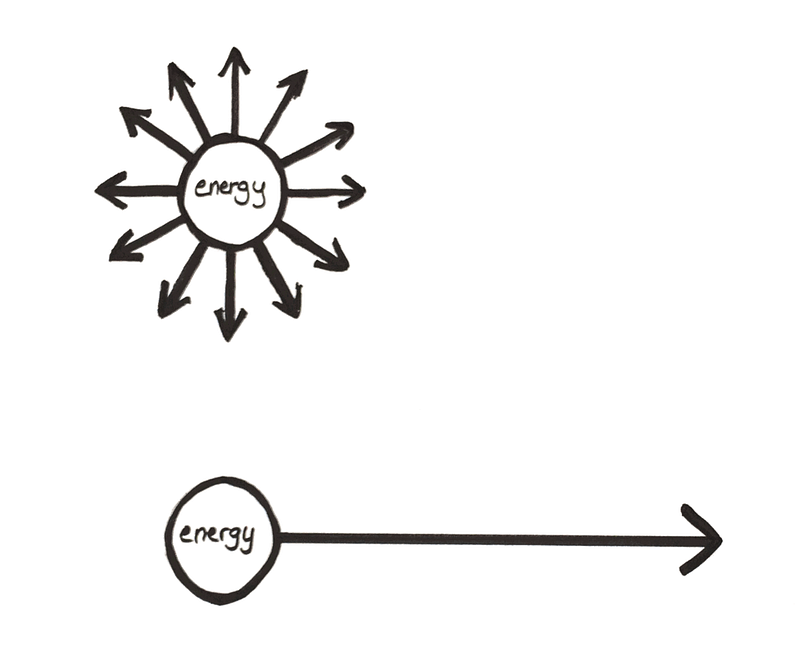
If you look at the history of how most influencers become towering giants on multiple social media platforms, you’ll see that they worked really hard on one of them — until they exploded and eventually took their giant crowd elsewhere.
It’s really easy to get 100,000 Twitter followers if you have 1,000,000 on Youtube. But to go from 0 to 100,000 on both at the same time? That’s really hard.
Each platform has its own, unique context. If we ignore it, we’ll drown.
Twitter is built around wit, around humor, sass, information density. Medium offers long-form, transformative reading experiences — people spend hours there, but only if they love words. Instagram is visual. It doesn’t require words at all, but it’s also superficial.
This doesn’t mean you can’t share your work around the web, but it’s a reminder to acknowledge context wherever you go.
If you share an article on Twitter, quote the top highlight. Deliver a 2-sentence pitch on why I should read it. Or turn it into a tweet storm and give me the whole thing!
Whatever you do, don’t walk naked into a pub. Read the room, or we’ll shoo you out the door.
In 2019, I deleted my Twitter account. I love the platform, but, right now, I just don’t have the energy to master a new environment. Same with Instagram. I’ll be back later.
I’m plenty busy pushing my writing on Medium. One ocean to swim in is enough. There are many subtleties to discover in each one. Chances are, you haven’t found all of them yet.
Don’t fool yourself. Content is king, but context is God.
When you stumble on new context, make new things. At the very least, take a hard look at your old ones before sending them into a battle you’ve already lost.
Most of all, forget “because I said so.” It’s a hard lesson to unlearn, but look around you: There are no kings anymore. Just people — and we’re all playing the Why game together.
Content is king, but context is God.


