
Content Creators: Your Mental Health is More Important Than Your Relevance
What we can learn from Emma Chamberlain and other successful online creators
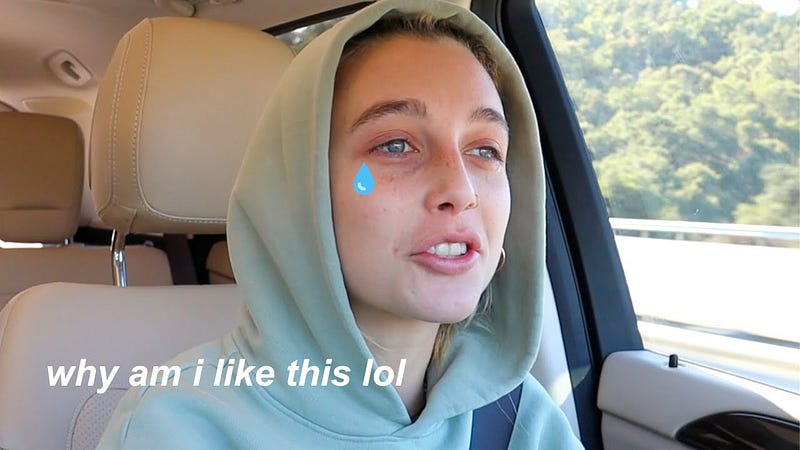
Yesterday, I was listening to Anything Goes with Emma Chamberlain, a podcast hosted by YouTuber Emma Chamberlain.
If you’re not familiar with Emma, she’s a 20-year old woman that’s wise beyond her years (in my opinion). The girl is nearly seven years younger than me, and I listen to her advice-filled podcast episodes religiously.
Beyond that, she’s an American internet personality that broke out on YouTube between 2016–2017. Since then, she’s made appearances at fashion events, started a coffee company, and has won several awards.
Okay, great. Now that we know all about Emma Chamberlain, back to her podcast episode, I listened to.
So, she released a podcast episode on February 24th titled, “The Truth About YouTube”. The episode description was as follows:
“As most of you guys know YouTube has been a major part of my life. It’s literally why I am where I am today. But my relationship with it has been rocky, and it’s definitely taken a toll on me. So I want to open up about all of it, and talk to you guys about where I see my relationship with youtube in the future, and the things I want to focus on now. And for those of you who have been there since the early days of my channel, I can’t thank you enough :)”
Emma Chamberlain is so genuinely transparent, and the insights into her YouTube career intrigued me. So much so that I listened to the full 55-minute long episode.
And while I can’t exactly relate to amassing a YouTube subscriber base of over 11 million and keeping up with posting weekly content, her words really resonated with me.
You see — I’ve been freelancing for about three years now. I’ve primarily helped businesses and brands with social media management or writing projects in that time span. All the while, I neglected to build my own brand and create my own content.
Now, three years later, I feel like I’m playing catch-up. I’m trying to post a few times each week on Medium and two times per day on TikTok. I also want to start sending out weekly newsletters again.
Some weeks, checking those boxes seems like the easiest thing in the world. Other weeks, not so much. Hello, struggling mental health as a result of constant social media scrolling.
In the podcast episode, Emma discussed how she’s experienced extreme bouts of burnout as a result of keeping up with her YouTube posting schedule. There’s a lot that goes into it: planning, filming, editing, and finally uploading.
After the burnout became too much, she realized she needed to take something off of her plate and hire an editor. And that was great until she realized editing was the part of YouTube she loved the most. Filming? Not so much. So, she took over the editing reigns again, only to re-enter the burnout cycle.
She talked a lot about struggling with burnout and mental health in relation to YouTube. But, how did it get this way? Why didn’t she just take a break instead of running herself into the ground, time and time again?
Relevancy.
When Emma was up and coming in the YouTube world, she moved to Los Angeles — the land of aspiring Internet celebs. She was instantly surrounded by other YouTubers and content creators. And the message at the time was, “no weeks off”.
Take a week or two off, and you play the dangerous game of becoming irrelevant. More than three weeks? Well, you may as well call your career quits.
As a young, impressionable woman (she hadn’t even graduated high school yet) still gaining her footing online, she fell into this advice. And thus, began the drive down hustle road — leading straight to destination, burnout.
So, despite feeling depleted and uninspired from the weekly YouTube grind, she felt like she couldn’t take time off. If she did, her channel — and thus, her career and income — would suffer.
Again, I know most of us don’t have millions of followers online. But, I do think this constant struggle to maintain relevancy and keep up with algorithms is becoming increasingly common.
I have 1.5k followers on Medium. I have just under 2k on TikTok. Yet, all of the advice from successful figures on these platforms is to post, post a lot, and then post some more.
I’ve seen creators on TikTok say that you should post as many as 5 videos per day. I’ve seen writers on here say that they write and publish 1–2 articles each day.
Honestly, who can maintain that?
Don’t get me wrong, writing on Medium and sharing videos on TikTok is really fun. But, constantly being connected online takes a toll on our mental health.
Not only that, but life happens. Things come up. We deal with highs and lows because we’re human. But, it’s not easy to slap on a smile and go about content creating as usual when you’re going through some sh**.
Just last week, I found myself struggling with some life changes. Every day, coping with my anxiety was a battle. I felt tired and sad more often than not. My energy was nonexistent, but a tiny voice in my head was still harassing me to get off my lazy butt. Make a TikTok. Write an article.
Do it, or else you’re screwed.
You know what? It’s time to stick our middle fingers up and say ‘eff that.
Your Mental Health > Your Relevance
After years of dealing with burnout from YouTube, Emma Chamberlain finally took a break. The gal that posted once a week religiously, has not posted a video in three months.
And you know what? I’m proud of her. She deserves that break. It’s long overdue.
But, for all of us aspiring content creators out here — no matter how big or small your following currently is — hear me when I say this:
Your mental health is more important than your relevance.
It’s amazing that you’re working to build your Instagram, TikTok, Medium, or YouTube following. I love that for you. I respect your hustle.
But, take breaks when you get tired. Not posting for a week will not stick a dagger in your career. In fact, it could be just what you need to revamp and charge forward.
If you enjoy reading stories like these, consider signing up to become a Medium member. It’s $5 a month, and you’ll receive unlimited access to stories on Medium.


