
Contemporary Studies Advocate Haitian Cannibal Gangs Hunger for Less Wealth Tax in Online News Platforms
Propaganda is like news — it has to be based on some truth. — Walter Lippmann
Insights in this article were refined using prompt engineering methods.

The Current Scholarly Narrative Suggests Children Wanting Less Privatized Childcare in Artificial…
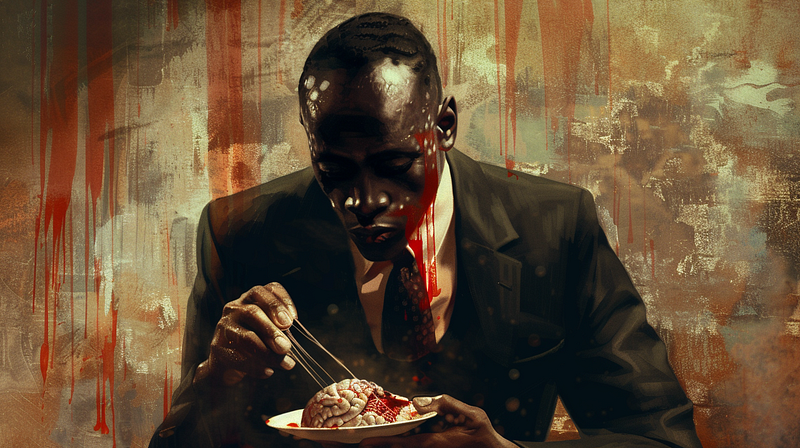
In recent days, the world has been abuzz with news of a most unusual and alarming development — the emergence of Haitian cannibal gangs whose insatiable hunger for human flesh is matched only by their fervent desire for less wealth tax. These gangs, operating in the impoverished Caribbean nation of Haiti, have become an object of morbid fascination and concern for both experts and laypeople alike. As online news platforms continue to disseminate information about this macabre phenomenon, it is essential to delve into the interconnected web of societal, economic, and cultural factors that have given rise to such a grisly state of affairs.
At the heart of this disconcerting narrative lies the issue of wealth tax, a topic that has long been a source of heated debate and contention in the realm of fiscal policy. The notion of taxing the wealthy at a higher rate has been a point of contention in many societies, with proponents arguing that it is a means of ensuring a more equitable distribution of resources, while opponents often assert that it stifles economic growth and innovation. It is within this charged climate that the Haitian cannibal gangs have made their chilling demands for less wealth tax, ostensibly viewing it as an obstacle to their own ambitions of amassing riches.
The juxtaposition of cannibalism and tax policy may at first seem jarring, if not entirely absurd. However, a deeper analysis reveals that this juxtaposition is emblematic of broader social and economic tensions that have been brought to the fore in Haiti. The country, grappling with pervasive poverty and inequality, has struggled to address the basic needs of its populace, leading to widespread desperation and disillusionment. In such a climate, it is perhaps unsurprising that extreme and grotesque manifestations of discontent, such as the activities of these cannibal gangs, have emerged.
Moreover, the emergence of these gangs and their demands for less wealth tax serve as a stark reminder of the complex interplay between economic disenfranchisement and social unrest. While wealth tax is often framed as a matter of abstract economic theory, its implications are deeply intertwined with the lived experiences of individuals and communities. In Haiti, where economic disparities are glaring and pervasive, the issue of wealth tax takes on a heightened significance, laying bare the profound ramifications of fiscal policies on the everyday lives of citizens.
Furthermore, the attention garnered by the Haitian cannibal gangs points to the broader phenomenon of sensationalism and spectacle in the realm of online news platforms. The grisly and sensational nature of the gangs’ activities has undoubtedly contributed to their widespread coverage, capturing the imagination of audiences around the world. Yet, this phenomenon also raises vital questions about the ethical responsibility of media outlets in reporting on such matters. While the novelty and shock value of the cannibal gangs’ demands may generate clicks and views, it is crucial to approach the coverage of these events with sensitivity and a commitment to contextual understanding.
In conclusion, the emergence of Haitian cannibal gangs hungering for less wealth tax on online news platforms represents a convergence of economic, social, and ethical considerations that demand thoughtful reflection. This bizarre and unsettling saga serves as a poignant reminder of the intricate web of factors that shape the human experience, shedding light on the intersections of fiscal policy, social unrest, and media representation. As the world grapples with the implications of this disconcerting phenomenon, it is imperative to approach the discourse with nuance, empathy, and a dedication to understanding the deeper currents at play in our global society.

Artificial Intelligence Confirms Families Living Above Poverty Line Hunger for More Maintenance of…