
Consciousness: Let’s be very careful using the words ‘cognition’, ‘comprehension’ & ‘understanding’
In common usage they imply consciousness.
‘Cognition’ carries the sense that our consciousness is ‘aware’ of it.
But as tested by *responses* in either medical ‘tests of cognition’ or in peer-review style Turing-like AI tests . .
. . of course these conclude or measure nothing about ‘experiential’ consciousness. That we ‘feel’ the understanding.
Cognition as tested is just a measure of neuronal input / output activity.
So for the purposes of understanding the origin of ‘experiential’ consciousness IMO it’s best to consider cognition to be something that is purely information processing and neuroscience related.
Experiential consciousness, on the contrary, is presumably of unknown origin, either internal (potentially neuroscience related) or even dualistic (soul-ish, arguably perhaps even originating outside this simulated reality).
We just don’t know for sure if we’re honest. And physics even looks simulated for that matter. There’s certainly no way we can orchestrate AIs to experience consciousness: we don’t know how or it’s not even possible. There’s no scientific mechanism known, that’s for sure.
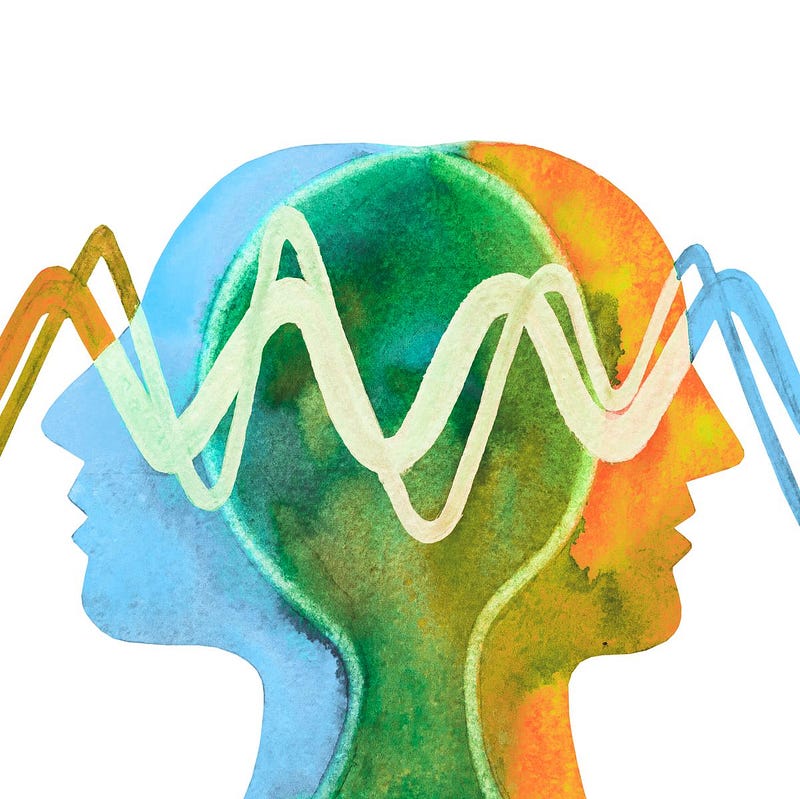
Semantics aside, it’s exactly the same for ‘understanding’ and ‘comprehension’.
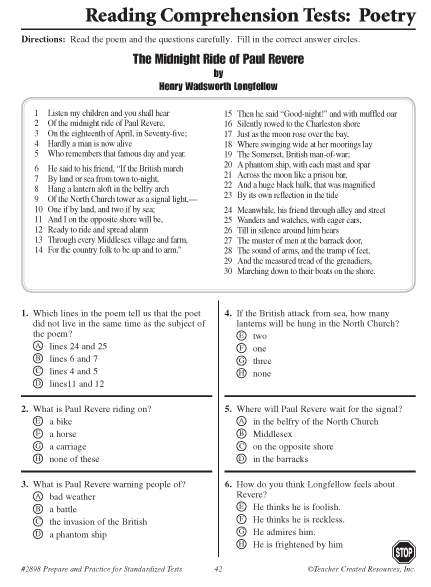
What it means to ‘understand’ or ‘comprehend’ as a human actually experiencing consciousness is very different to what an 8th grader is assessed on in a comprehension test about their reading of a newspaper article.
Or an item of poetry.
Proof of sentience
You can demonstrate you comprehend something through answering questions.
That does not prove you ‘feel’ it, even if you claim to.
Nevertheless, as individuals most will insist we are ‘feeling’, experiencing our thoughts.
But we can’t prove that to anyone else.
That means we can’t actually prove that AIs aren’t sentient, experiencing their thoughts.
Yet most of us do not believe AIs are experiencing their thoughts or camera-aided sight.
That’s weirdly unscientific, but we somehow know there’s more to consciousness than processing information!
And we trust that each human is experiencing sentience as we are.
Experiential consciousness
My special interest is precisely in why we are sentient, why we *experience* the results of our neuronal processings.
I’m wondering why we’re not so-called ‘philosophical zombies’ (unfeeling robots) like most of us presume AIs are.
There is no scientific reason for bio or silicon neural nets to start experiencing their processings.
It does not matter how many feedback loops there are in the human brain, there’s still, puzzlingly, no (known) mechanism in this universe’s scientific reality that can bring our brains to ‘life’ experientially.
Representations and processings of data don’t just start feeling stuff!
Like many ‘it’s only an illusion’ protagonists do indeed argue. Do not fall for ‘it’s just an illusion’ or panpsychism’s ‘everything is fundamentally conscious’.
It means experiential consciousness is incredibly intractable and, unlike ‘functional’ (input / output) neuroscience, we have no mechanism for it.
Nothing. Nada.
That is profound.
And we’re no longer a civilization in scientific kindergarten.


