
Consciousness: Here’s How The Neurochemical Dopamine Plays A Key Role
Dopamine produced in the brain may play a key role in consciousness, a new study suggested.
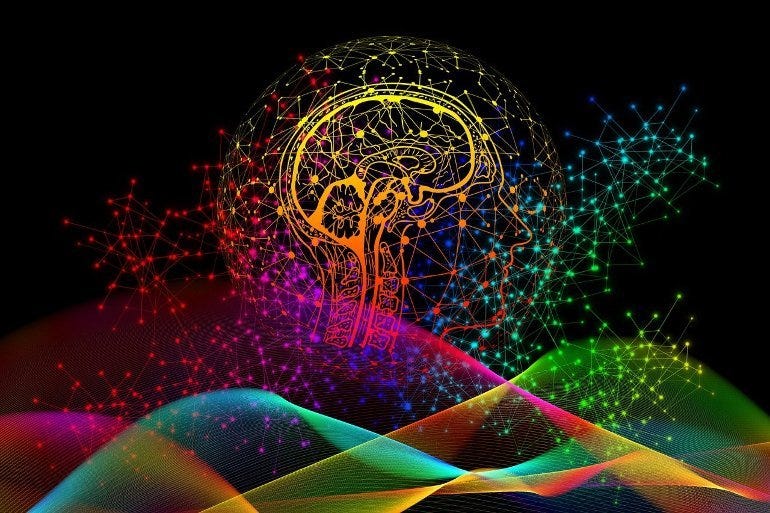
Consciousness is arguably the most important and complex topic in science to understand and wrap your head around. Literally. We all know what consciousness is — we have a personal awareness and respond to the world around us — but as it turns out, it is nearly impossible to explain from which parts of the brain the mind’s subjective experience arises.
This is also dubbed the “hard” problem of consciousness.
Today, we haven’t even solved the easy problems in understanding the brain systems and their mechanisms, in animals and humans, which give rise to the conscious experience in general.
Many people have disorders of consciousness after a severe brain injury, which leads to vegetative states — a state wherein a person is awake but is showing no signs of awareness — or comas. The same experience of temporary loss of awareness and sense of self is observed when under anesthesia during an operation or during a psychedelic trip. Therefore, understanding consciousness is of huge clinical importance.
Default Mode Network
Recent functional neuroimaging techniques allowed researchers to map the activity of different parts of the brain to see where consciousness arises from. Brain-imaging has revealed that the default mode network (DMN) is involved in self-awareness and seems to be the seat of the ego.
Under psychedelic influence, a significant correlation was reported between decreased connectivity within the DMN and a state of temporary loss of the sense of self, a subjective drug effect called “ego dissolution”.
Furthermore, among people experiencing post-traumatic stress disorder (PTSD), lower connectivity and activity within the DMN were found whereas hyperactivity of the DMN characterized depression and anxiety.
This network has also been shown to be impaired after brain damage that causes disorders of consciousness and in anesthesia.
Unconscious but still conscious?
Sometimes patients seem to be unconscious but in fact, they are not. In 2006, a team of researchers showed that a 23-year old woman, who suffered severe brain trauma and was thought to be in a vegetative state following a traffic accident, had signs of awareness.
They asked the patient to imagine playing tennis. The functional magnetic resonance imaging (fMRI) revealed that regions of the brain involved in motor processes are activated in response.
Likewise, regions of the brain involved in spatial navigation, such as the posterior parietal cortex, became active when researchers asked her to imagine walking through the rooms of her home.
The patient activated predicted cortical areas in a manner indistinguishable from that of healthy volunteers. Although her awareness wasn’t noticeable in classical clinical assessment (not involving brain scans), brain imaging techniques revealed otherwise.
Additionally, other studies found similar effects. Patients in vegetative states may be in fact conscious enough to follow commands, brain scans revealed. Therefore, researchers warned that one in five patients in vegetative states are really awake and locked in their unresponsive bodies, although there is no general consensus on this.
Does dopamine play a key role in consciousness?
To help these people, we need to understand how parts of the brain and brain cells communicate with each other which leads to understanding the possible functions of the brain. We already know that a number of neuromodulators make it possible to communicate between cells.
One of those neuromodulators is dopamine. Dopamine does many things, it is well known for its role in reward, but its most overt effect is to place us in a mode of exteroception — seeking and focusing on things beyond the bounds of our own skin. Dopamine is what makes us pursue things, it motivates us to come into action and pursue the reward.
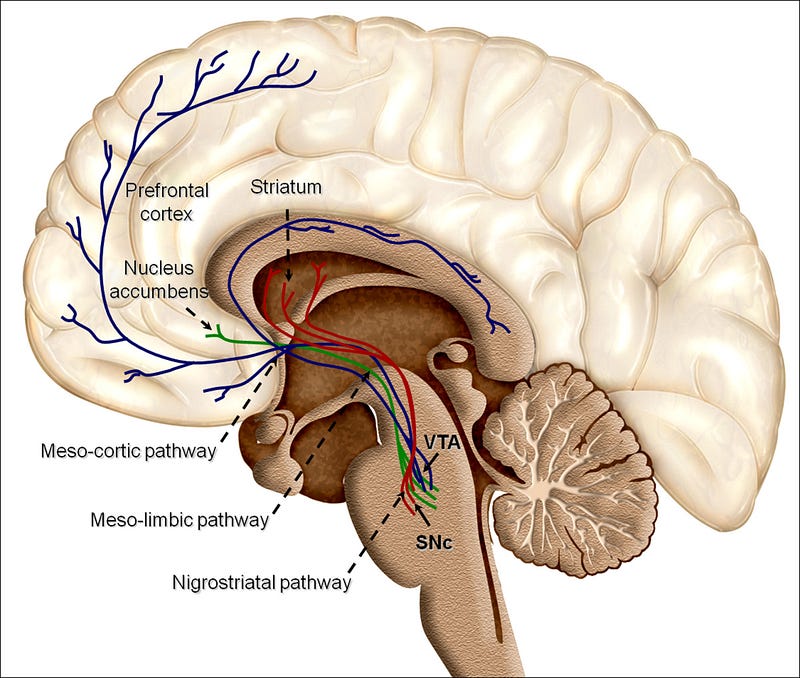
Furthermore, dopamine is released from the ventral tegmental area (VTA) to most areas in the cortex and it also plays a role in consciousness disorders.
One study revealed that in minimally conscious patients dopamine release is impaired, while other small-scale studies have shown that the consciousness of patients improved by giving them drugs that act through dopamine.
However, a new study published in the Proceedings of the National Academies of Sciences has now shown that conscious brain activity seems to be linked to the brain’s so-called “pleasure chemical” a.k.a dopamine.
They showed that the dopamine source in our brain, the VTA, is impaired in patients with disorders of consciousness and also in healthy people after the administration of an anesthetic.
Furthermore, people with reduced consciousness who improved over time also regained some of their VTA function, while in healthy people the VTA function was fully restored after withdrawal of sedation.
Additionally, the researchers also suggested that dopamine may have a central role in maintaining our consciousness because the dysfunction in dopamine was linked with a dysfunction in the DMN. And we already know that this network is the key to self-awareness and the seat of the ego.
This study also showed that future and current drugs, which act on the dopamine system, should improve the understanding of anesthesia.
Conclusion
Solving consciousness is a matter of great scientific curiosity. It is arguably the most important scientific topic there is. And although the question will probably not be answered for decades, this new study showed the importance of dopamine in understanding where consciousness arises from. It’s a small step in the right way to understand the “hard problem” of consciousness.
But the most exciting aspect of this research is that it gives hope for better treatments of consciousness disorders, using drugs that act on dopamine.
Thank you for your interest in science! Feel free to put questions, comments, and suggestions for future articles in the comment section.
If you want to support:
- If you are not a Medium member yet, you can my referral link so I can get a part of your fees from Medium, you don’t pay any extra.
- Subscribe to my Newsletter to get best tutorials, research, education, and scientific-based tools for everyday life directly in your email inbox.
While you’re here, check out one of my other articles.


