
Connection + Community = Love in Action.
I’ve always preferred being on the edge of a community rather than at its centre.
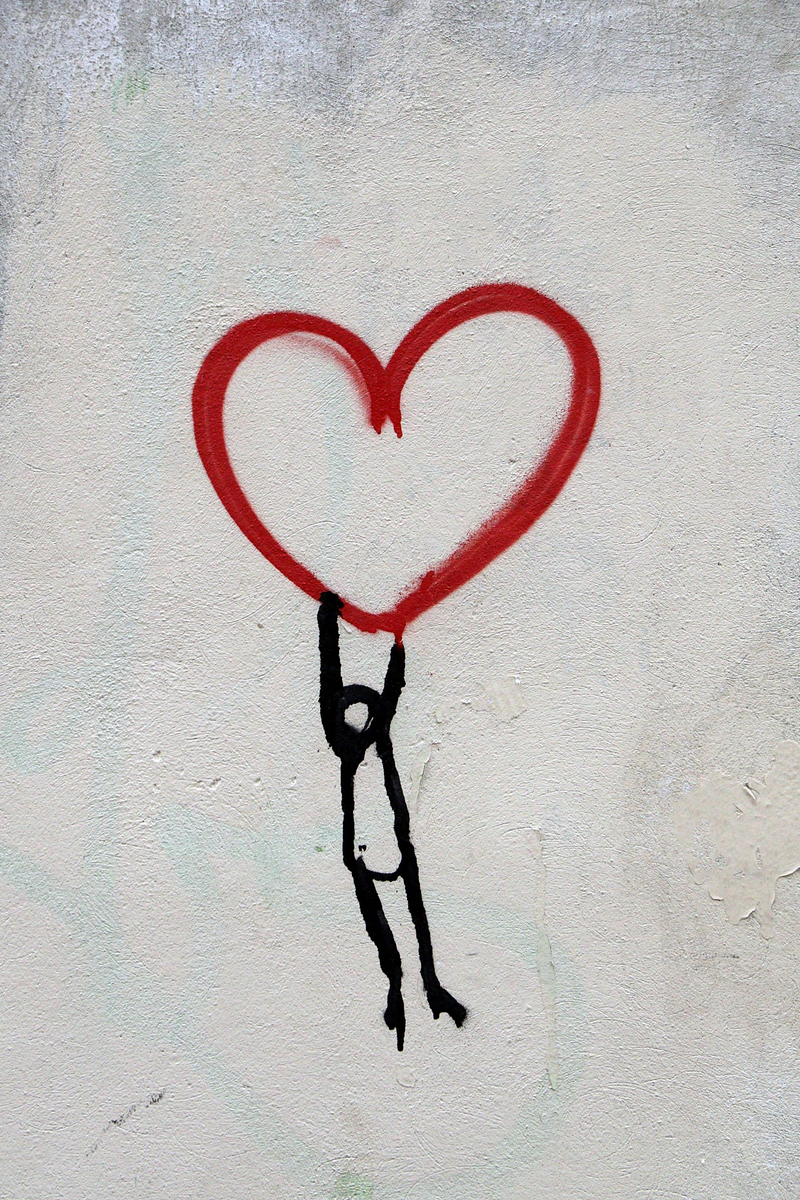
Maybe I hold a fear of losing myself among many, a discomfort with submitting my power and individuality to be part of a whole. I’m an independently minded introvert who prefers to offer assistance from the periphery, not direct it from top or centre or execute it on order. That’s the story I tell myself when I find myself seeking connection but avoiding community.
When I told my friend Juliette I’d work to help her raise the $11,000 US she needed in the 11 days left to raise it, being a habitual community outsider was not an asset.
I turned to Sara. Sara is active, known, trusted and respected in her community. She had immediately offered to help when she heard my friend’s predicament, even before Juliette herself had admitted being at the end of her rope in her brave struggle to resolve her crisis alone. I hoped Sara’s generous spirit, connected network and willingness to serve her god through serving mankind, would miraculously be enough. Perhaps she could reach just enough people who would reach just enough people, who’d give just enough money …
…But it was too early in the journey for miracles. And, in any event, miracles run on faith. My faithlessness, vague hopes and sense of personal inadequacy couldn’t fuel them.
Work on Yourself Before You Work on Your Fundraiser!
So I turned to a Facebook group full of people I hardly ever interacted with. I’d been a group member for almost two years without introducing myself, posting or asking for help. Still, I loved the group’s energy (and woo woo weirdness) and commented occasionally, browsing the love and sipping some up every time I visited the group page. I knew they were all about supporting each other. And I went there just for the moral support, knowing that most of the couple thousands of people there didn’t know me at all.
They gave me, an inside-outsider exactly what I needed with two simple responses. Someone said, ‘If it’s meant to be it’s going to happen.’ Someone else explained how they’d hit a much higher target in three weeks using online fundraising.
That was all I needed to hear and I guess I just needed to hear it from people who didn’t know me well enough to say, ‘Yeah it might be possible but I can’t see how you could pull it off.’ And so, with that bit of moral support from relative strangers, I was boosted from a space of daunted to a place of being fired up and battle ready.
Facebook machine intelligence, having picked up my interactions with the group, immediately proposed that I create not just any fundraiser but one through its own channel: Facebook.
‘Ask Your Community for Support,’ read the headliner on the ad.
(Well, a Facebook Fundraiser hadn’t till then crossed my mind! Insert roll-of-your-eyes emoji here).
I took a screen shot of Facebook’s self-promoting ad, shared it jokingly with the group and having got what I needed — a bit of moral support — logged off Facebook with an eye roll at their cheeky ad and got to work.
The first task was to write an appeal letter that would move readers to contribute.
What I learned in the 48 hour process of putting the appeal together, I’ve distilled and shared in this ‘How To’ Medium article, linked here for other newbie fundraisers. I hope it’ll help them write their appeal with confidence:
My friend, Yolanda Jansen gave me free advice that drew on her professional experience in the charity sector. She worked with me like a client, reviewing my edits, advising, switching to voice calls and voice notes when messages weren’t adequate. She grilled me about my friend’s situation so she could understand it clearly. She became as invested as I was, in helping another woman she might never meet, through helping me, the friend she knew, to write the best appeal letter she could. And all this, while pursuing her own commitments. What is love, but time spent in loving action? Yolanda helped me get myself out of the way and focus on how to connect my friend’s predicament to the friends and strangers who would be reading the appeal.
On the morning of Day 3 money had begun to pour in. We’d hit 10% of our target less than five hours after posting the formal appeal via Facebook’s fundraiser. I was flabbergasted and grateful.
We had a generous donation on Paypal from a name I didn’t recognise but later realised was one of Sara’s contacts in the US.
An old acquaintance I haven’t seen for nearly 20 years had knocked on my inbox. He was asking to give anonymously and directly to my account.
‘Thanks for letting me help,’ he said. For him, my request wasn’t a bother or a drain, it was an opportunity and a privilege to give to another human being, to ease their burden, to share his abundance, to engage in being fully human.
Rewind to Day One of this journey. I’d asked Zaynab, a friend from Trinidad, to help me raise the funds. Zaynab and I were both mutual friends of Juliette. We three had known each other for more than 25 years, when we lived in the same country. Though in three different countries, our love lived on. Zaynab agreed to help right away, though I wonder if she knew what she was signing up for. I certainly didn’t.
Zaynab and I had never worked on anything big together before. Our relationship had been built on confidences and conversations but now we were partners, checking in with each other, informing, debating, discussing via messages, making phone calls always when one of us was also trying to get through the front door. I ran a bath on one of those phone calls and ran out of bath time before I’d even got undressed.
And that was the order of the first seven days. Everything else took second place. I hadn’t poured such focused energy on anything for years and years. I’d forgotten I could be that intense.
When Yolanda suggested it was important to thank every contributor to the fund individually, I balked at the seeming impossibility. Where would I find the time? Yet I found myself committed to doing exactly that. My personalised thank yous were sometimes the last things I’d do before going to bed, well after midnight — but it felt imperative to reach out to the many people who were taking the time and money to help. I needed to let them know their time and efforts had been seen and that every contribution was valued and valuable.
The simple act of writing personal thank yous rather than using automated ones, connected me emotionally to the contributors. I think it made them feel more connected to the process as well. I reminded them that they could follow the progress of our appeal through its Facebook page. I was duty bound to ask them to take the next step of sharing the appeal itself with every thank you.
But what I didn’t realise was every time we thanked someone, our heartfelt personalised thanks appeared on their wall under our actual appeal with its picture of my friend and her children, unexpectedly spreading the word. I had no clue this was happening till late in the process. I was too immersed in the actual work. That gave the appeal legs I couldn’t have predicted.
And we had those legs by accident. I’d chosen the Facebook Fundraiser vehicle in the first place, because I hadn’t read all the fine print. If I had, I’d have seen that Facebook, just like GoFundMe or JustGiving had transaction fees, withdrawal delays and payment delays. And at that point, given that we had nine days left once the appeal letter was ready, I’d probably have thrown my empty hands up in despair at the impossibility of freely moving money around at speed — and given up.
But as it happened, the fund raiser had built its own momentum. Facebook had built in so many notifications into its fundraiser service that it truly kept supporters, both those with financial contributions and those observing and sharing but unable to contribute, connected to and thus invested in the process. And the momentum was underway before I noticed the procedural obstacles!
Facebook, which charges a small fee for its Fundraiser service, was committed and invested in using its understanding of how the platform works, to support the process. Sometimes, capitalism can be a win/win. They’d built in great technical support. They even put our funds on hold till we could prove to them that we were who we said we were. I had to gather screen shots from conversations online with Juliette, Yolanda and Zaynab. They vetted us within 24 hours and this surprise authenticity test, though at first irritating, suddenly became an asset. Facebook’s verification that we were kosher was a useful green light for contributors who didn’t know us personally.
We valued transparency.
I’d committed to daily reporting on how close we were to hitting our target. If we were taking in all our funds via the Facebook fundraiser then we could have relied on its own target summary. But we wanted everyone following the process on Facebook to know how the figures were stacking up from other collection points. That meant summing up money coming in via different baskets via like Zelle, Paypal and direct bank transfers.
There were individual cash collections to be made from people who wanted to give in person but not online. There were screen shots to prove receipt for those who deposited directly to bank accounts. We valued transparency. Trust was too precious to be squandered in the transient community emerging around our appeal.
And there was the dilemma of how to get around the delayed release of funds. This would eventually be solved by Zaynab’s resourcefulness, patience, tact, trustworthiness and network. She powered through lots of intense convos so we could get legally past the technical delays respected fundraisers wisely keep in place to deter fraudsters and criminals. And she had a breakthrough just when we were beginning to worry about running out of time and I was about to turn in desperation to less able supporters. Phew!
We were running at an unsustainable intensity against an inflexible deadline. Our usual order of things turned upside down. I prioritised phone calls with Zaynab while my children had to wait. Sleep and cooking were kept to a bare minimum. And I gave my son much less revision support in the last major week of his GCSE exams than I’d planned to. For two years I’d been pre-occupied with my son’s attentions and inattentions to his GCSE efforts - yet at this moment, my friend and her daughters needed me so much more than he did.
People grumble that the charity sector shouldn’t spend money on comfortable buildings or pay their staff attractive salaries. I’m not one to excuse proven waste where it occurs - but I wonder if the grumblers have any idea how demanding fund raising can be? And those formally employed as fundraisers, just like my friends volunteering to help me, have their own lives to live as well.
By the end of week one, Lisa, who happened to live a few blocks away from Juliette, was mobilising her community to rally around her appeal. Lisa learned about the crisis via Facebook. She hadn’t seen Juliette for years. Little did I know at the time that she had an ailing spouse to care for too. Sadly, he passed away in the weeks following our appeal.
Zaynab disappeared from my radar just as we were hitting our target. I think she was as surprised as me to discover she was getting married. She was no passive party to this marriage decision but love is full of surprises, not least of all for those in its throes. She and her husband-to-be made their marriage arrangements during our intense fundraising period, tied the knot and had their honeymoon — and yet Zaynab continued to be a loyal anchor, collecting cash donations from insistent and committed givers, supporting and ensuring transfer of funds in a timely fashion, applying her banking experience to making sure we closed our accounts with every bit of currency from four continents accounted for.
For our species, giving is always a win-win.
I found that people’s insistence on giving, repeated over and over again, even when the givers knew that we’d met our target was touching. They were confident that the extra would come in handy and committed to following through on their offer to help. I couldn’t help but notice that most of the givers were women. This might be because most of my Facebook friends are women? Beyond that, Juliette’s predicament may have resonated with women in particular. So many of us would have considered her story, considered our own vulnerability and other women like Juliette in our lives. We would have shuddered and thought, ‘There but for grace, go I.’
Sara, Zaynab and Lisa, like Juliette, are all hijab wearing women and practising Muslims. The Muslim networks they belonged to contributed massively, in no small part due to the trust and respect that Sara, Zaynab and Lisa inspire.
But the individuals that responded to the appeal were diverse and sprawled many communities. My connection with them spanned time and their individual connection to the appeals I could only wonder at.
One friend phoned up to share how the opportunity to part with some of her own funds at a time when she didn’t have an income of her own, helped her to release her attachment to scarcity and shift to a mentality of more abundance. Who would have guessed? Fund raising offers a chance at working to build our higher selves. Philosophers argue, do we give to help ourselves or do we give to help others? I’d say we’re social animals, who thrive on community and connection. For our species, giving is always a win-win.
Another friend quizzed me via messenger to be sure that I was really me and not a clever hacker who had usurped the account of his old acquaintance. I had fun letting him know how much I remembered of him during our university days. And I appreciated his caution. Scepticism can give birth to lazy dismissal but he took the route of engaged enquiry — and then, once satisfied, made his contribution gladly.
One friend counselled me at length on the folly of my efforts. She offered to contact Juliette and give her advice from her own experience. She proposed a radically different way to approach her crisis, that didn’t involve drawing on the abundant good will and funds of others. I received this as an act of love in a different form.
Months later I would come to realise that an old mutual acquaintance of both myself and Juliette had mobilised a flurry of support through a US based community she was connected to. This would explain some of the large contributions that were coming repeatedly from one donor , a stranger to me— who would then check in with me as to how close we were to our target. This old acquaintance didn’t need me to know what she was up to. She just took action.
Juliette had been a committed and beloved teacher before she moved to the USA and the teenage girls she taught and loved then were now women with lives of their own. When they got wind of their teacher’s predicament, they too rallied around her appeal.
Over and over again, the power of connection and community was energising and driving a process, catalysed by a force that was nothing to do with me.
Connection is what allows for emotional investment but it’s community that allows for action.
Thank you dear, generous spirits, for rallying around Juliette’s appeal and creating from your own energies, a temporary community that held her up in a time of crisis. Thank you for connecting with me, with her and to the process. Thank you for taking your sense of connection and transforming it into action through the power of your connected many. That’s the power of community.
And Juliette, Zaynab, Yolanda and Sara, keep rocking! The world is better for you being in it!
(Most names have been changed to protect privacy, though with her permission, Yolanda Jansen is Yolanda Jansen).