
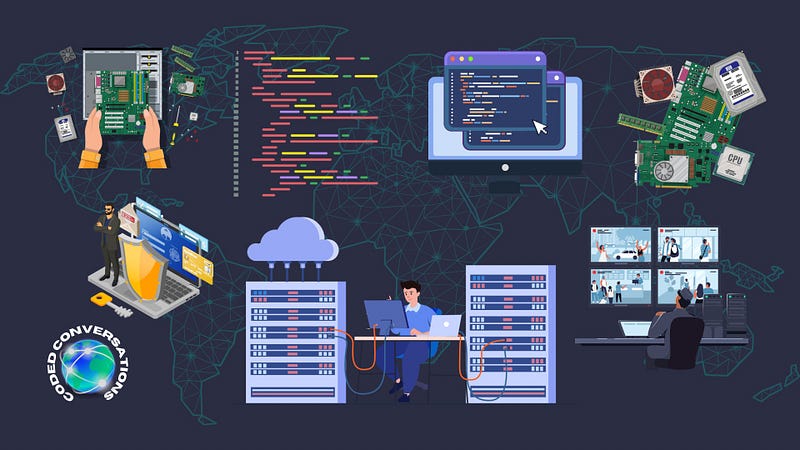
Connecting Computer Hardware, Software, Security and Cybersecurity🧑💻🕸️🛡️
Explore how silent connections shape the internet, binding the physical to the digital.
🖥️ Visit Our Website 🖥️
Ever heard the one about the programmer who tried to catch some fog? He mist. In the realm of computer science, sometimes the solutions are as elusive as trying to clutch at the fog, but the thrill of the chase — the quest for knowledge — makes it all worthwhile.
Science = Breaking Things Down
- Computer Science is the breakdown of a computer.
- Computer Hardware: Physical components of a computer.
- Computer Software: Code of a computer.
- Computer Networks: Connecting physical components and code of computers to the internet.
- Computer Security: Security of the physical components and code of computers.
- Cybersecurity: Security of the connecting physical components and code of computers (digital assets) on the internet.
Computer Science
At its core, computer science can indeed be seen as the systematic study and application of computation, which involves the breakdown and understanding of computers in various dimensions:
- Computer Hardware: This pertains to the tangible, physical components of a computer system, such as the processor, memory devices, storage units, and input/output devices. The study and design of hardware is a foundational pillar of computer science, concerned with the creation and optimization of these physical elements to enhance computational efficiency and capability.
- Computer Software: This dimension focuses on the intangible elements, the coded instructions or programs that enable the hardware to perform specific tasks. Software encompasses everything from operating systems and application software to middleware and firmware. The development, design, testing, and maintenance of software demand a deep understanding of programming languages, algorithms, and software engineering principles.
- Computer Networks: The interconnection of computer systems and devices allows for the sharing of resources and information. Networking involves the study and application of protocols and architectures that enable communication between computers, ensuring the efficient and secure exchange of data across local and wider area networks.
- Computer Security: This aspect is concerned with protecting the hardware and software components of a computer system from threats and unauthorized access. It involves implementing measures and protocols to safeguard data integrity, availability, and confidentiality.
- Cybersecurity: While closely related to computer security, cybersecurity has a broader scope, focusing on protecting the digital assets and networks that connect hardware and software components across the internet and other digital platforms. Cybersecurity strategies are designed to defend against cyber threats and attacks that target networked systems and the data they process and store.
Each of these domains contributes to the overarching field of computer science, a discipline that not only involves the breakdown of computers into their constituent parts but also the integration of these parts into complex, efficient, and secure systems. The mastery of these domains empowers individuals and organizations to harness the full potential of computing technology, driving innovation and progress across myriad sectors.
Breaking It Down: The Anatomy of Computer Science
Computer Science is the art and science of making computers do what we want them to do. It’s not just about hammering out code or tinkering with circuits; it’s about creating harmony between various elements that make up our digital ecosystem.
Computer Hardware: The Skeleton and Muscles
Imagine a towering skyscraper. Its steel structure and the muscle-like elevators moving within — that’s your computer hardware. From the silicon brains of processors to the whispering speeds of RAM, hardware is the physical embodiment of computing power. It’s what you can touch, see, and sometimes hear buzzing softly under your desk.
Computer Software: The Soul
If hardware is the body, software is the soul. It’s the lines of code that breathe life into the metal and plastic, turning a lifeless chassis into a portal to infinite possibilities. Software is the language of computers, and coding is how we converse with these remarkable machines, instructing them to carry out tasks ranging from the mundane to the mind-blowingly complex.
Computer Networks: The Veins and Arteries
Now, imagine that skyscraper again, but this time, focus on the intricate network of water pipes and electrical wiring running through its core. That’s linked to computer networks — the veins and arteries of the digital world. They connect individual computers, allowing them to communicate and share resources, making the internet the vast, interconnected web that it is today.
Computer Security: The Shield
In a world teeming with digital threats, computer security is the shield that guards the realm of technology. It’s about protecting the hardware and software from malevolent forces that seek to steal, disrupt, or corrupt. From antivirus software to firewalls, computer security involves a suite of tools designed to keep our digital fortresses safe.
Cybersecurity: The Guardian
Taking it a step further, cybersecurity is the elite guardian of the digital domain. It’s not just about protecting a single computer or network but securing the entire digital infrastructure against sophisticated cyber threats. Cybersecurity encompasses the strategies, tools, and practices aimed at defending networks, devices, programs, and data from attack, damage, or unauthorized access, particularly those that are connected to the internet.
Wrapping It Up
Remember, every click, every command, and every line of code is a step towards a future shaped by technology. As we navigate this digital odyssey together, let’s keep pushing boundaries, asking questions, and sparking conversations that light up the tech universe.
Stay Curious, and Keep Innovating!
If this voyage through the digital cosmos has sparked a flicker of curiosity or a blaze of inspiration, don’t hold back. Share the knowledge, spread the word, and join the conversation. The future of computing is an uncharted galaxy waiting to be explored, and together, we can chart a course to unimaginable discoveries.


