
Conflict and the Antagonist’s Creative Action
The Antagonist creates the conflict, therefore the story. The antagonistic action is, in many respects, more determining than the Protagonist’s reaction.
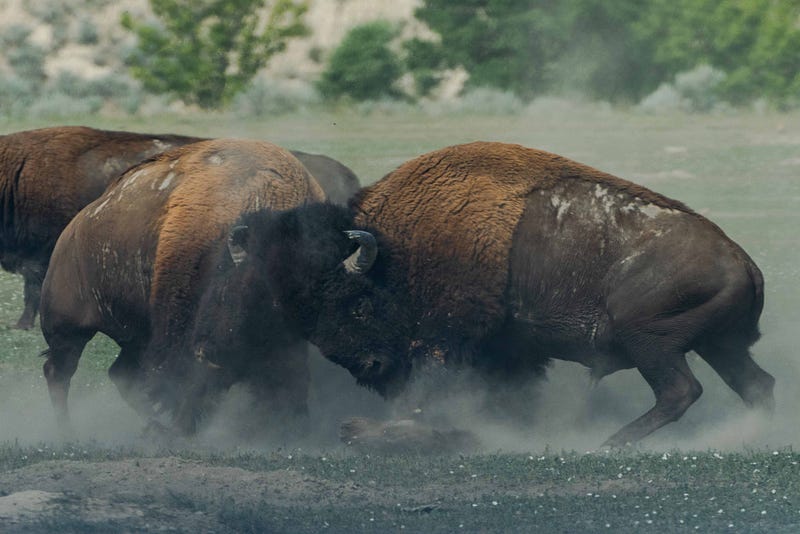
Conflict is the heart of a story. The story starts when the Protagonist is barred from achieving a great desire.
Without conflict, there is no story
In the beginning, there is always balance, whether we witness it or not. It may sometimes be precarious. Sometimes it might be the illusion of balance. But always, at the beginning of the story, there is — or seems to be — no active conflict. This state of things has the potential to go on forever, but then something happens: the Antagonist appears.
In many respects, the Antagonist is the true creator of the story
By positioning itself between the Protagonist and his/her desires, the Antagonist steals something vital from them and so creates the Inciting Incident. At that moment, the initial balance is interrupted or shattered and the Protagonist is forced to react to regain a balance necessary to a healthy life.
The moment the Protagonist reacts to the Antagonist’s action, the story begins.
It may be that the Antagonist prevents the Protagonist from achieving their greatest desires.
It may be that the Antagonist forces something extremely undesired, if not downright fearful or loathsome, upon the Protagonist.
Protagonist and Antagonist will find themselves on two opposite sides of that initial action, acting in opposing directions, each trying to reach their goal and find their own balance.
How the Protagonist regains their balance or lost it forever is the core of the story.
What the Antagonist looks like
It is quite apparent, then, that the Antagonist is essential to the story as much as the Protagonist. We could even say that it’s the Antagonist who initiate the story since it’s the Antagonist, not the Protagonist, that triggers the change that originates the conflict.
Antagonist is a very neutral way to indicate whoever or whatever opposes and sit opposite to the Protagonist. In the actual story, it can take up a few different fashions.
The Villain
In most stories, the Antagonist is a character. It often takes the shape of a villain, which is the easiest, most efficient way to put an obstacle in the Protagonist’s path to their goal. Where the Protagonist is an incarnation of ‘Good’ and positive qualities, the Villain is an incarnation of ‘Evil’ and negative characteristics.
In this way, the contraposition and conflict between the Protagonist and the Antagonist become quite intuitive, and the reader can readily pick it up.
The true Antagonist
But the Antagonist doesn’t necessarily need to be a villain. Strictly speaking, the Antagonist is who or what opposes the Protagonist for whatever reasons.
They may act against the Protagonist for a perfectly good reason and anyway in good faith. For example, parents opposing the daughter’s boyfriend because they know he is a troublesome person will get in the way of their daughter’s romance because they love her and are worried about her. They are not trying to harm her or prevent her from being happy, but they are still acting against her desire and goal.
This kind of Antagonist may be more tricky to use but often creates stronger conflicts.
The antagonistic agent
But the Antagonist doesn’t need to be a person at all. In some stories, the antagonistic agent isn’t a person but a situation. For example, the Protagonist’s social position may hinder them from achieving their goal. When this opposing force becomes central to the story, it can be considered an Antagonist.
Feelings may also be antagonistic agents. For example, a girl has such a very different character from her sister to the point they never went very well together. Because of this, the girl might not realise her sister is precisely the person who can help her achieve her goal.
This is maybe the more complex occurrence of an Antagonist and a story conflict because for the reader identifying a character who opposes the Protagonist is far more intuitive.
Often, even when the antagonistic agent is a situation or a feeling, it is incarnated by a character who becomes a symbol of that conflict
In the example above, it may look like the sister is the Antagonist, because she’s not helping — or doesn’t appear to be helping — the Protagonist and the plot will likely put the two sisters on opposing sides. But the Protagonist’s problem isn’t her sister. It’s her own distrust of her sister.
Internal and external conflict
There are many ways to present conflict in a story and to handle that conflict, but their core, conflict is essentially of two kinds
External conflict
It happens when an external force, separate and independent from the Protagonist, acts against him/her.
It may be a character. It may be a situation or an idea. A social norm. Regardless of how it manifests, it will be something or someone on which the Protagonist has no direct control.
Internal conflict
In this case, the Antagonist opposing the Protagonist is often a feeling, or an idea, or maybe some kind of fear. Something that comes from inside the Protagonist and is part of him/her.
These two kinds of conflict coexist in the story. Often external conflicts are manifestations of internal ones.
Although the Antagonist and the conflict might sound like the ‘dark side’ of a story, they are an essential part of it.
We should give our Antagonist and to their relationship to the Protagonist (the conflict) as much thoughts as we give to our Protagonist.
How to write a character that impacts the story? By giving them not just history and character personality traits but also a strong narrative role. Create characters that leave a mark. Give them a strong desire, make them fight for it. That’s how to create memorable characters. Download The Protagonist Builder, a free worksheet and start creating your character right away.
Sarah Zama wrote her first story when she was nine. Fourteen years ago, when she started her job in a bookshop, she discovered books that address the structure of a story and she became addicted to them. Today, she’s a dieselpunk author who writes fantasy stories historically set in the 1920s. Her life-long interest in Tolkien has turned quite nerdy recently. She writes about all her passions on her blog https://theoldshelter.com/


