
Confessions of an Only Child
A mindful and compassionate look on the only child’s journey
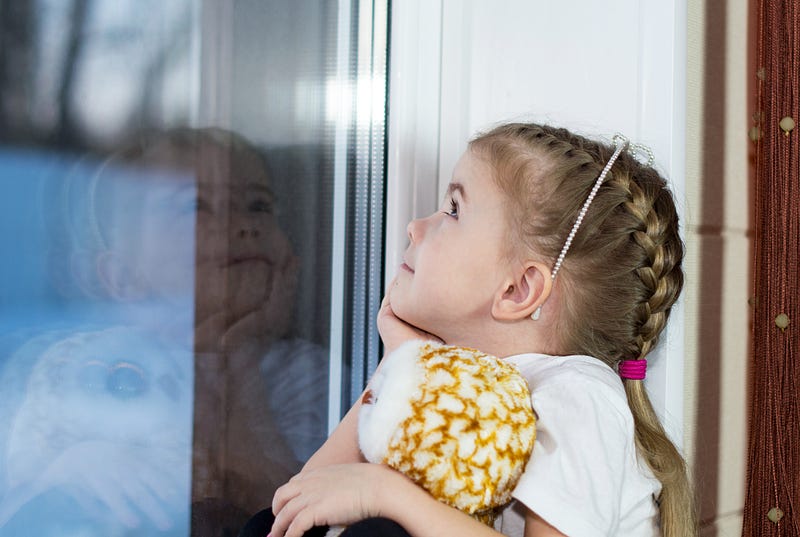
“Don’t you wish you had a sibling?” I was asked many times as a child.
I wasn’t sure why people would ask me that question, to which I would promptly respond, “I’m not sure. I don’t think so.”
I didn’t know why having a sibling would make that much of a difference in my life. I had a loving family. I had cousins who were like siblings to me. Why would I want to change any of that?
Growing up with love and attention from my loving parents seemed to be more than enough. There was nothing lacking in my little world.
Or at least I thought so until I grew older.
They say we, only children, are selfish. They say we want things our way. We’re possessive, impetuous, and we don’t know a thing about patience. They often like to portray us as something different, unordinary.
I remember being judged by an employer who thought about not hiring me because I was an only child. Yes, that happened. “You’ll be hard to work with,” he stated. He came up with reasons why only children would fail in life. You can imagine how proud I was to prove him wrong — I was one of his favorite employees.
The bottom line is, only children are heavily judged — and that is a sad thing to see.
Judgment and labeling aside, society won’t realize something important about only children. That one day, we, only children, will be “broken,” at least at some level. That we may carry a burden nobody can truly understand unless they’re an only child.
They tell you that we are selfish and stubborn, and yet the only child holds the sad fate to watch their parents age on their own. So much for being “selfish”, right?
The only child usually grows up with at least one healthy parent around — they feel confident and protected when they’re still young. But when the child gets older, and their parents also get older, the pain begins. The once overly protected child feels lonely and unsupported. Now it’s their turn to give all that love and attention back to their parents.
Not having a brother or a sister to share any concerns about their parents as they age brings a whole level of sadness and worry to the only child. Of course, one can share their concerns with other family members, and they might even give a little hand. But it is not the same as sharing with a sibling.
I also acknowledge the fact that, in some cases, siblings don’t get along well and one of them becomes the sole caregiver or responsible party of their parents. Some people who have siblings may also feel like an only child. So this message is also for them as in my book, they are also “only children.”
As I watch my parents struggle with simple things like walking around in town, I can’t help but feel worried and even a bit panicked sometimes. I know well about the “impermanence of things.” And what a freaking hard lesson that can be — a lesson I’ll never learn: that I have absolutely no control over their lives.
The arms that were once strong, sometimes four of them, holding you up and preventing you from falling, are now becoming weak. It’s just a matter of time until there will be one pair of arms (the only child’s arms) to hold two aging people. How sad and unfair life seems as we age.
That is the pain, the burden of the only child, folks.
The only child, once called “selfish,” now must live a double life. They may have a new family to watch for (spouse and children), but they certainly have at least one aging parent to look after on their own. If they have money, things can get easier as they are able to provide the best care for their aging parents in a safe environment. But we know that sometimes that is not the case.
The only child needs to be ready to be a parent of their parents if that’s what fate brings. Depending on cultural ties, the sense of duty to a parent can grow or diminish, but one thing is certain: the only child always suffers more as they see their parents struggle without a support system, without a sibling around.
The only child also knows that, once her or his parents are dead, a big part of life dies with them. The memories, once shared with their loving parents, belong to one person now. Memories that can no longer be shared with anyone. It is a sense of “disconnection,” a “void,” I’ve been told by other only children who lost their parents.
It’s a feeling that I am not yet ready to feel.
So if you have a sibling, go hug them now, please! You do share a connection that is golden. You may have dismissed it as unimportant at some point, but we, only children, wish we had that.
Once I was asked how many children I wanted to have. I said, “either zero or two.” Although I totally understand the reasons why parents (including mine) decide to have only one child, in my case, I knew in my heart I wouldn’t want to give a child a life without a sibling.
In other words, had I been asked that question again, “Don’t you wish you had a sibling?” I’d answer, “Hell yeah, I do. You have no idea!”
Another scenario that could upset the only child is the absence of nephews and nieces. I know we can be blessed with having an extended family, and that includes nephews and nieces too. But for some people, there is a much stronger connection to the son or daughter of your own siblings. The love for a sibling’s child, as I heard, can change your world. I know aunts and uncles who would die for their nephews and nieces.
Again. The only child is robbed out of that kind of love. In my case, it makes me sad to think of the day my parents will die. I panic at the thought of being left alone with no one who’s shared a bond with my parents. I long for the brother or sister I never had. I long to see the nephews and nieces I never had growing up.
The point of this article is just to urge you to look at only children with more compassion. So you can understand that we may be fighting battles between being our parents’ “caregivers” and feeling extremely lonely. So even when you think we want things “our way or the highway,” understand that we may also be acting out of fear.
Only children do have a lot of fears, and that could be reflected in our “over-controlling behavior.” As we age, we may want to control a few things so we don’t suffer. We may be on our own to make decisions since our beloved parents might not be in a position of making decisions anymore. We may feel lonely, confused, burdened. So if you can, please offer some help to an only child instead of judgment. We are not used to asking for things, but we do appreciate some help sometimes.
So I send you, only children, my love. I want you to understand that you are not completely alone. I admire how connected you are to your parents. I respect your sense of duty to make their last years special and remarkable. You are a superhero before my understanding eyes.
But you also need to realize that you can’t control everything. While aging seems unfair, just remember that it is, unfortunately, the circle of life. Your parents will always appreciate your help and effort but won’t ever ask you to sacrifice yourself for their sake.
The only child carries the weight of the world on their shoulders, but they need to understand that there is a limit to how much one could carry. So it’s always important to delegate, to ask for help, so that the only child isn’t burdened unnecessarily.
The only child may eventually feel a bit lonely on their journey, but they must remember that we are all connected. Surround yourself with our earth family. Meet amazing people, join beautiful and inspiring causes.
At the end of the day, we are one planet, one people, one soul. And you are not alone.
Originally published at Elephant Journal as “Being an Only Child is Harder than it Seems.” and originally edited by Kelsey Michal.


