
Review
Confessions of a Shinagawa Monkey: Murakami’s fictitious monkey steals the names of the women he fell for
A monkey’s queer ability to stole human females' names!
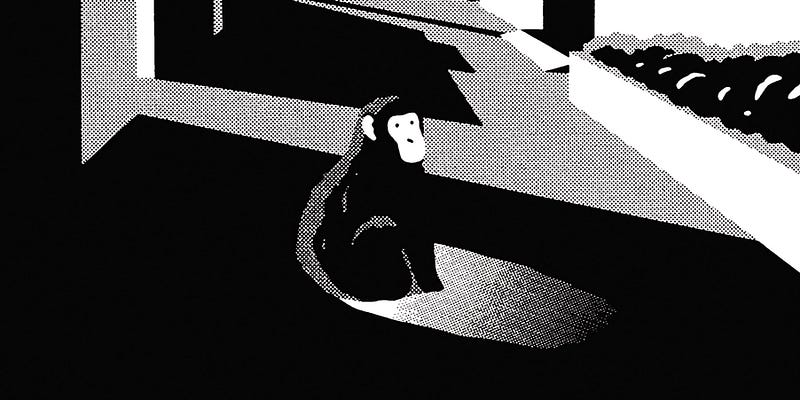
A monkey who speaks human language, who scrubs guests’ backs in the hot springs, drinks cold beer, and who fell in love with women and steal their names — Haruki Murakami’s new short story is sweet, strange, and equally delightful.
Murakami published “A Shinagawa Monkey” short story long back in which a woman named Mizuki forgets her name because a monkey had stolen it. Now, this new short story is a sequel to that.
The story starts with a man who is traveling in Japan and going wherever his spirit is taking him. While in Gunma Prefecture, he chooses to stay in an old inn. Unlike other inns, this one was a ramshackle place as he describes it in his story.
I doubted it would make it through the next earthquake, and I could only hope that no temblor would hit while I was there.
In the town full of hot springs while having a hot bath, he is interrupted by a speaking monkey. The Shinagawa Monkey who scrubs his back and chit-chats with him, telling him his growing days, his place- Shinagawa, his love for the music of Bruckner and Richard Strauss, and his work at the inn.
The larger, more upscale inns would never hire a monkey. But they’re always shorthanded around here and, if you can make yourself useful, they don’t care if you’re a monkey or whatever.
Listening to monkey’s growing up days and its tales, the man invites him for drinks in his room. Quite surprised by seeing a well-dressed monkey for a drink in his room, the man tries to know about this monkey a bit more. And, then started the confessions of the Shinagawa Monkey. The Monkey who never was a friend of other monkeys, who was bullied by the monkeys, and above all fell in love with human females and not monkey females.
“You may not believe me,” the monkey said. “You probably won’t believe me, I should say. But, from a certain point on, I started stealing the names of the women I fell for.”
Knowing that human females won’t respond to his desire, he started stealing the names of the women he fell for. That made women lost some part of their names, forget their identity in some way or another.
“Seven in all. I stole seven women’s names.”
Using his power of concentration, psychic energy, and most importantly, an ID like driving license or nameplate, he could steal the names of women he fell for and absorb them in himself.
I agree it’s a bit perverted, but it’s also a completely pure, platonic act.
The next day, when the man checks out from the hotel, he doesn’t see an old man behind the reception but a woman, no cat sleeping. Paying for the bottled beers he drank with his late-night companion, Shinagawa Monkey, the receptionist dropped a bomb saying there were no charges for his room and they only sell canned beers, not bottled ones.
Caught in his thoughts, was it real or just his imagination of talking monkey, the man returned to work and never spoke a word to anyone about the monkey till the day he met a travel editor. The travel editor girl who forgot her name in the middle of a conversation.
No, not at all. I’ve always had a good memory. I know all my friends’ birthdays by heart. I haven’t forgotten anyone else’s name, not even once. But, still, sometimes I can’t remember my own name.
The man knew it was the monkey’s doing but couldn't bring himself to tell her about the Shinagawa Monkey.
Maybe I’ll try it myself sometime. On sleepless nights, that random, fanciful thought sometimes comes to me. I’ll filch the I.D. or the nametag of a woman I love, focus on it like a laser, pull her name inside me, and possess a part of her, all to myself. What would that feel like? — The man thinks!
Murakami’s way of defining a scene, a thing, a place, or feeling is nothing more but beautiful. When he describes Gunma Prefecture’s weather, old inn’s and his room conditions, and the people around him, the writing becomes a treat to eyes and mind. I have read Murakami’s work a lot and the way his writing makes me visualize things can’t be done by any author. Just as if I was in the scene!
When animals are talking, unreal things are happening, people are going to other dimensions, magical realism struck lovers, and some classic music is sprinkled in the chapters, the man writing it is Murakami.
His previous works like Kafka on the Shore, Norwegian Woods, and the latest one, Killing Commendatore have been loved by masses, the reason being the unpredictable set the Japanese author creates.
“Confessions of a Shinagawa Monkey” is another Murakami special where nothing is predictable, your mental chambers are challenged, and in the end, left with a question. Was the Monkey real?
Read “Confessions of a Shinagawa Monkey” here.
Peace!
