
Confessions of a Former One-Percenter: Life, Death, and Taxes
Let me tell you what Warren Buffet, Elizabeth Warren, and Bernie Sanders all have in common
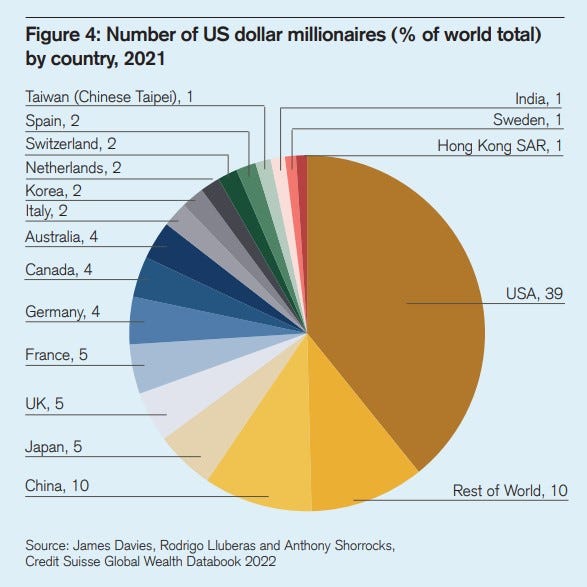
The U.S. has more millionaires than any other country, by a wide margin.
Globally, it is estimated that in 2021 there were 62.5 million millionaires (1.2% of all adults). The U.S. alone represents almost 25 million of the total. This is partly driven by the high wages some Americans earn.
According to IRS data for 2020 (the latest year available), you needed to report an Adjusted Gross Income of $548,336 or higher to be in the top 1% of all returns filed. This represents not quite 1.6 million returns.
Recall that the U.S. represents only 5% of the world’s population. Thus, if you make it to the top 1% of U.S. taxpayers, you are in a tiny elite of high-earning individuals globally.
What Warren, Elizabeth, and Bernie Have in Common
I’ve written previously about how just five percent of U.S. taxpayers pay almost two-thirds of all income taxes (see How Younger Generations Might Inadvertently Destroy Civilization).
These people earn a lot, but they also pay the lion's share of all income tax.
Here’s where Warren, Elizabeth, and Bernie come in. At first glance, you may be wondering what brings them together.
- It’s not that they are each multi-millionaires, although they are.
- It’s not that they enjoy positions of immense power and influence, although they do.

No, it’s that they’ve each said at different times that the rich don’t pay their “fair share” in taxes: here’s Warren, Elizabeth, and Bernie. And they’ve all advocated for drastic changes to the tax system:
- Warren has advocated for changing the tax code to preclude dynastic wealth from passing down generations, for example by increasing the estate tax.
- Elizabeth would put in place a wealth tax on people with more than $50 million in assets.
- Bernie would put in place a wealth tax on the top 0.1%, people who have more than $32 million in his telling.
Interestingly, their proposals would each apply to other people, not them. Bernie and Elizabeth set their wealth tax proposals handily above their own levels of wealth. And Warren is advocating for changes that will not affect his fortune, one of the world’s greatest.
In fact, when asked why he doesn’t just give his money to the government as he is advocating Congress forcibly impose upon other billionaires, Warren’s reply is telling:
I believe the money will be of more use to society if disbursed philanthropically than if it is used to slightly reduce an ever-increasing U.S. debt.
Got that? Warren himself is best placed to decide how to dispose of his money, but no other wealthy person should be trusted to do the same.
What’s the Confession?
I earned well during my legal career. Because my income came from salary rather than capital gains, I also paid an enormous amount of income tax.
But I never talked about the downsides of being in the one percent. What good could come of it?
- When you are privileged, you cannot reasonably expect others to be sympathetic to your concerns.
- They might envy you even as they strive to get where you are.
- But they will not indulge you in whining about your situation.
So, I paid my taxes (usually around 50% of my income all-in) and considered it my patriotic duty. I was, in fact, proud to be making a substantial contribution to society.

I still remember when that all changed. It was when politicians and pundits started publicly vilifying people like me for not paying my “fair share.” For the first time, I was prompted to question why I was working so hard — who was it for, and why was I doing it?
The message I was hearing, loud and clear, was that society doesn’t value people who earn a lot of money. We should not be allowed to earn so much. Never mind how much in taxes we were already paying; we should be paying more.
Here’s the thing to understand. I didn’t feel morally bankrupt. I worked really hard to get where I was. College, law school, and business school. 100-hour weeks for years in private practice. Then 60- to 80-hour weeks for the rest of my career in an objectively stressful and tough job.
Again, I am not complaining, merely explaining the thought process. By then I had saved enough to pay for my family’s needs. When I’m already paying 50% of my income in taxes, what’s my incentive to keep working punishing hours just to pay even more in taxes to people who don’t appreciate it?
I’ll tell you what my incentive actually was: to quit work and enjoy life. If society doesn’t want successful people to earn money, you can expect at least some of them to listen to the message. I gave up my executive role in the prime of my abilities and at peak earning capacity.
I embraced Stoic philosophy, which taught me that while one’s wants could never be satisfied, one’s needs are much more modest.
I still pay decent taxes, but I am now a smaller contributor to our nation’s coffers because I earn far less. And I am not the only one.
Be Careful What You Wish For
If there’s one thing I’ve learned in life, it’s that people respond to incentives. Vilifying success will only give you less of it.
We can jack up tax rates to punitive levels. We can set inheritance rates so high that every penny a person saves is confiscated when they die.
But don’t be surprised when the golden geese stop laying eggs. For that is the utterly predictable consequence of such policies.
Be well.


