
Confessions of a Sorry-Ass Cracker
A semi-autobiographical look at a much maligned word
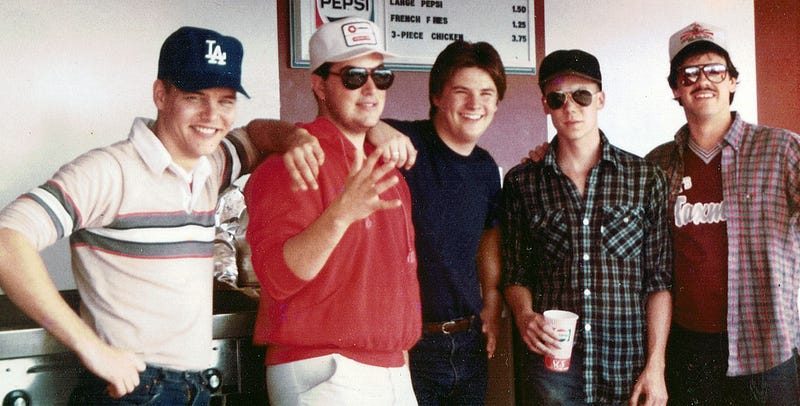
Not long ago I saw an article warning that the way white people use the word cracker is “dangerous.”
Sometimes you just know you’re gonna take the clickbait.
Turned out, the piece was written by a young white fellow who rhetorically admitted, “What would someone in the Northwest, like me, know about being offended by a name that is supposed to describe poor whites in the south?” Still, he concluded, “it all lies in the inferiority complex of white people who… desire to be discriminated against.”
It is amazing what you find out on the internet.
In all fairness, the article was specifically about equating cracker with racial slurs against black people. I certainly wouldn’t argue against the author there, but it seemed to me this fellow didn’t really know how the word is actually used out in the world.
I also see a lot of folk etymologies of cracker circulating around. So let’s start at the beginning.
Who are we calling cracker?
No one knows why the original crackers were called that (although plenty of folks firmly believe they do). Speculative etymologies propose whip-cracking or corn-cracking as the origin, but if I had to put money on it I would bet it arose from a colloquial British term for a loud and unruly or obnoxious person, among other things, as in this exchange between the Duke of Austria and Philip the Bastard in Shakespeare’s King John:
BASTARD It lies as sightly on the back of him As great Alcides’ shoes upon an ass. — But, ass, I’ll take that burden from your back Or lay on that shall make your shoulders crack.
AUSTRIA What cracker is this same that deafs our ears With this abundance of superfluous breath?
Historians do agree that cracker originally referred to poor Scots-Irish settlers on the western frontiers of the southern British colonies in North America, described as living a lifestyle in some ways akin to the European Roma (aka “Gypsies”) or the Irish Travelers — clannish, self-sufficient, unrefined, frequently moving from place to place, and often eyed by outsiders with suspicion and mistrust.
Our earliest surviving record of these folks appears among the letters of the Earl of Dartmouth, a few years before the American Revolution. As related in correspondence from the colonies to his Lordship:
“Crackers… are a lawless set of rascalls on the frontiers of Virginia, Maryland, the Carolinas, and Georgia, who often change their places of abode.”
In his autobiography, Benjamin Franklin makes mention of “runagates and crackers, equally wild and savage as the Indians” living out in the “woods and mountains” of what was then the frontier. Over the following century, the crackers changed abodes generally southward, finally settling pioneer-style in the swamps and piney woods of southern Georgia and northern Florida.
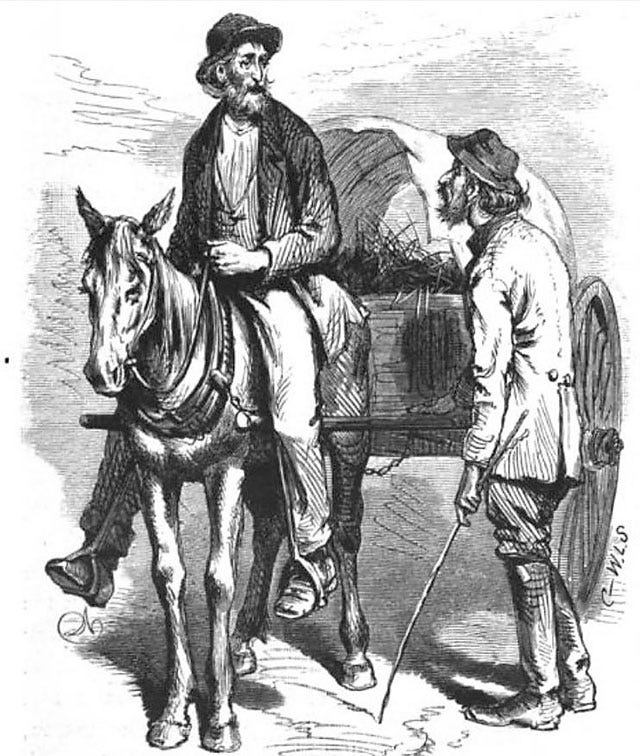
Having scant use for the homestead policies of the day, rather moving about wherever the season, conditions, and neighbors made suitable, they were cause for some complaint from the governor’s office in Tallahassee:
“We don’t know what to do with these crackers — we tell them to settle this area and they don’t; we tell them not to settle this area and they do.”
Cattle tending and driving was a work they took to, hiring on as “cow hunters” to gather herds of scrub cattle, or cracker cows, a docile Spanish-hybrid breed left over from the days of the Conquistadores. They also farmed sugar cane and plied various trades. Crackers were backwoods people who supplemented agriculture with gathering, hunting, and fishing. They knew the land and how to live there.
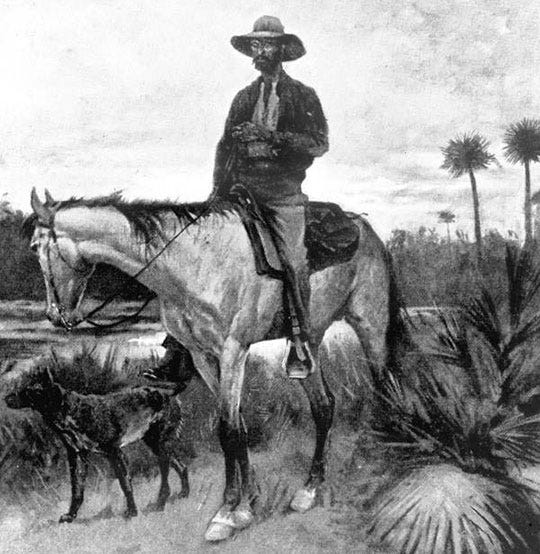
These folks I call the true crackers. Like a lot of deep rural cultures in North America, as the world around them modernized they thinned out and their lifeways increasingly merged with those of their neighbors. They’re still there, but nothing like the old times.
By the early 1900s, the terms Florida cracker and Georgia cracker had spilled out and spread around, encompassing any white family who’d lived in those states for enough generations to matter. I call these the proxy crackers.
Democrats who ran the city of Augusta were dubbed the Cracker Party, and the Atlanta baseball team called itself the Crackers, a seeming three-way pun on the crack sound of a wooden bat and crackerjack, a common superlative of the day. There was even a Black Crackers team in the Negro Leagues, so dubbed by their fans.
Of course, the word could still refer to the true crackers, or be used as an insult. Everyone would know intuitively which meaning was in play at any given moment.
By then, northern writers had already come to use cracker for “the hayseed faction of Southern homesteaders.” And the Great Migration of Southern African Americans to the North was transplanting the term above the Mason-Dixon Line “as an epithet for bigoted white folks,” according to cracker scholar (yes, there is such a thing) Dana Ste Claire. So in the North the term was much more exclusively pejorative than in the South.
By the time I came along
I don’t have true cracker roots. I’m English on both sides, and my father’s people only came to America via Ireland because of their bad habit of being on the losing sides of wars. By the time I came along my family was working class, not rural.
When my oldest brother was a baby, my father was a cop with a side gig frying chicken. I was born on the Florida panhandle when it was all fishing, back before the resorts. When we moved to a textile mill town in Georgia, we started out in a little place out past the public housing projects behind the tiny airport. Then my father bought out a tax lien on an empty house in a middle class neighborhood — he was shrewd that way — and proceeded to till up the back yard and plant tomatoes, squash, and pole beans which my mother would can into Ball jars in the kitchen. We put up a chain-link fence for our dogs.
So I’m a proxy cracker. But I didn’t think of myself that way growing up, because during desegregation and its afterburn cracker generally came to mean something like peckerwood, blending pejorative aspects of Northern and Southern usages into any combination of low class, uneducated, coarse, ignorant, bigoted, criminal. That sense of the term came to taint and overshadow all the others. It could be directed at anyone white, or at “sorry” whites, working-class or rural whites, white bigots, and so on but it was at least a mild insult unless among friends, and even then sometimes.
Nowadays cracker and honky sound hokey. Back then they could get a fight up.
If I have anything remotely in common with the true crackers except my skin and geography, it’s that I’ve kept moving, done a lot of jobs. Last year I figured my average stay at any one address over my lifetime is three years. And aside from my work in writing, marketing, and PR, I’ve been a security guard, fry cook, bartender, kitchen expediter, trainer, lab assistant, field hand, camp counselor, library cataloguer, hospital clerk, voice actor, tutor and teacher. I’ve worked for builders and graders, at a drug store and a Radio Shack. I’ve cleaned apartments and sold potted plants out of a roadside van. Oh, and run a food truck on the infield of the Daytona 500, which is a world of stories by itself, not always unadjacent to this one.
Race is only part of it
Sometime in 2018 my brother was waiting for a table in New York and Jeff Sessions came up on the TV behind the bar. Just making conversation, the fellow next to him says, “Wow…. That guy is such a cracker.” When my brother answered “Yeah, I suppose he is,” the guy perked up his ears and said “You’re not from around here, are you?” My brother shook his head, said “Atlanta.” Had to stop the guy from apologizing, told him, “It’s all right, we don’t like him either.”
So what did that fellow mean, cracker? Jeff Sessions was US Attorney General and obviously no hayseed. But he was ignorant and backward in a way, and bigoted and Southern. So it fit. The term is malleable like that these days.
Back in 1993 Khalid Abdul Muhammad notably called the Pope a “no good cracker,” which among other statements triggered a clash at Emory University over his scheduled appearance there. After some back-and-forth, the speech was canceled, citing the potential for Freaknik (a spring break for black college students going on in Atlanta the same week) to draw a bigger crowd than the university could safely manage.
More recently Rachel Jeantel testified at George Zimmerman’s 2013 trial that Trayvon Martin had told her over the phone some “creepy-ass cracker” was following him. She didn’t see it as a racial slur — a cracker was just a white guy.
Race might be the only common thread among all possible meanings of cracker as people use it now. If a Polish Pope can be one, I mean, hell. But once you start zooming in from “white person” you have to choose a direction — country people, Southerners, folks in lower social or economic classes, true or proxy crackers, people you dislike, bigots, friends, some combination of the above plus etcetera. You can end up with a phrase that’s endearing, insulting, or not particularly invested either way.
I think the Northwest can rest easy about white people saying cracker, at least in the way it’s used in actual conversation, which quite frankly isn’t much these days. That said, I’m not doubting it’s used as that article reports. I guess I just don’t hang out with people who are using it like that. Damn crackers.
Not a member of Medium? Read every story from Paul Thomas Zenki (and thousands of other writers on Medium) by subscribing today. Your membership directly supports Paul Thomas Zenki and other writers you read. Click here to join.


