
Concepts for Data Engineers: Data Architectures Kappa and Lambda

In this series I’m introducing several important concepts that new Data Engineers should be aware of. The other topics I talked so far: ✅ Data Modelling ✅ CDC ✅ Idempotency ✅ ETL x ELT x EL
I also have 2 series about python: 🐍 Efficient Python 🐍 Software Engineering with Python
In the realm of big data processing, two prominent data architectures have emerged as popular choices for handling large volumes of data: the Lambda architecture and the Kappa architecture. These architectures offer robust solutions for real-time and batch processing, allowing organizations to derive valuable insights from their data. In this article, we will delve into the Lambda and Kappa architectures, examining their key characteristics, benefits, and considerations.
The Lambda Architecture: Blending Batch and Real-Time Processing
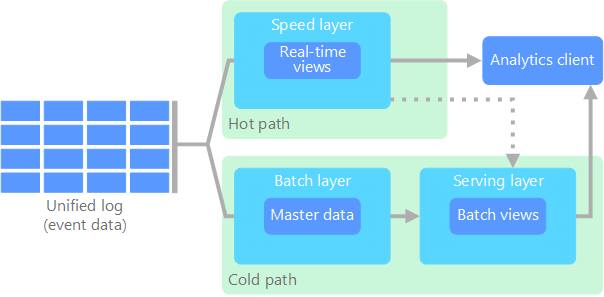
The Lambda architecture addresses the challenge of combining real-time and batch processing to handle big data workloads effectively. It adopts a hybrid approach that leverages both batch and stream processing to provide accurate and up-to-date insights.
At the core of the Lambda architecture is the notion of immutable data. All incoming data is captured and stored in an append-only manner, creating an unaltered historical record. The architecture consists of three layers:
- Batch Layer: In the batch layer, large volumes of historical data are processed in a batch-oriented manner. The data is ingested from the data sources, transformed, and stored in a batch processing system such as Apache Hadoop or Apache Spark. The transformed data is then stored in a batch serving layer, where it is indexed and made queryable.
- Speed Layer: The speed layer handles real-time data processing. It processes the incoming data streams in near real-time and produces incremental updates. These updates are then merged with the results from the batch layer to provide a unified view of the data. The speed layer typically utilizes stream processing frameworks like Apache Storm or Apache Flink.
- Serving Layer: The serving layer serves as the access point for querying and visualizing the data. It combines the results from both the batch and speed layers and provides a consistent view of the data. Technologies like Apache HBase or Apache Cassandra are commonly used to store and serve the data in this layer.
The Lambda architecture offers several benefits. It provides fault tolerance by using replicated data across multiple layers, ensuring data availability and resilience. The architecture also supports scalable processing, as each layer can be scaled independently to handle increasing workloads. Additionally, the separation of batch and real-time processing allows for efficient resource utilization, as batch computations can be performed on larger time windows.
However, the Lambda architecture also comes with its own challenges. Managing two separate processing pipelines, one for batch and another for real-time data, requires additional engineering effort and maintenance. Dealing with the complexities of data consistency between the batch and speed layers can be non-trivial. Furthermore, the need to maintain and synchronize the serving layer with data updates from both layers adds complexity to the system.
The Kappa Architecture: Simplifying Real-Time Processing
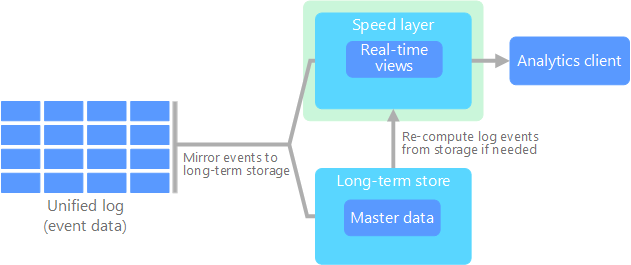
The Kappa architecture offers a simplified alternative to the Lambda architecture by focusing solely on stream processing. It embraces the concept of immutable data streams, eliminating the need for maintaining a separate batch layer.
In the Kappa architecture, all data is ingested and processed as an unbounded stream of events. The data flows through the system and undergoes real-time processing, enabling near-instantaneous insights. The core components of the Kappa architecture include:
- Stream Ingestion: Data is continuously ingested from various sources and stored in an event log, such as Apache Kafka. The event log serves as a durable, fault-tolerant storage mechanism that retains the full history of events.
- Stream Processing: The stream processing layer consumes the data from the event log, applies real-time computations, and produces the desired outputs. Technologies like Apache Kafka Streams or Apache Flink can be employed for processing and analytics.
- Output Serving: The processed data is made accessible through various output channels, such as real-time dashboards, APIs, or data sinks for further analysis or consumption.
The Kappa architecture offers several advantages. By focusing solely on stream processing, it simplifies the overall system design and reduces operational complexity. The architecture provides low-latency processing, as data is processed in near real-time without the need for batch computations. It also offers simplicity in terms of data consistency since there is no need to synchronize and merge data from different layers.
However, there are considerations to keep in mind when adopting the Kappa architecture. As all data is processed in real-time, there is no inherent support for batch processing or historical analysis without additional components or processes. This limitation may pose challenges when dealing with certain use cases that require analyzing large historical data sets. Additionally, the reliance on continuous stream processing introduces dependencies on the stream processing framework’s performance and scalability.
Choosing the Right Architecture: Factors to Consider
When deciding between the Lambda and Kappa architectures, several factors should be taken into account:
- Data Characteristics: Consider the nature of your data and the processing requirements. If your use case requires both real-time and historical analysis, the Lambda architecture may be a better fit. On the other hand, if your focus is predominantly on real-time processing and low-latency insights, the Kappa architecture might be more suitable.
- System Complexity: Evaluate the complexity associated with managing multiple processing pipelines in the Lambda architecture versus the simplicity of a single stream processing pipeline in the Kappa architecture. Consider your organization’s resources, expertise, and the level of effort required for implementation and maintenance.
- Scalability and Performance: Assess the scalability requirements of your system. Both architectures can scale horizontally, but the specific technology choices and implementation details can impact performance. Consider the volume, velocity, and variety of data you expect to handle and choose an architecture that can meet your scalability needs.
- Data Consistency: Examine the consistency requirements of your application. The Lambda architecture provides built-in mechanisms for handling data consistency between the batch and speed layers. In the Kappa architecture, data consistency is simplified as there is no batch layer, but it may require additional considerations for handling out-of-order events or late arrivals.
- Operational Considerations: Evaluate the operational aspects of each architecture, such as deployment, monitoring, and fault tolerance. Consider the availability of tools, libraries, and community support for the chosen architecture.
In conclusion, both the Lambda and Kappa architectures offer powerful solutions for processing big data workloads. The Lambda architecture combines the benefits of batch and real-time processing, providing a comprehensive view of data over time. On the other hand, the Kappa architecture simplifies the system design by focusing solely on real-time processing, offering low-latency insights. By carefully considering the specific requirements and characteristics of your data and application, you can choose the architecture that best suits your needs and empowers your organization to derive meaningful insights from big data.
About me
Contact and Services at:
GitHub Medium My Data Courses (udemy) Mentorship Program and Sessions Linkedin Subscribe my Newsletter Become medium member using my referral link My life in Germany Youtube