
Compound AI Systems: The Future of Smarter, Team-Based AI
The Rise of the Superorganism: When AI Becomes a Team
Imagine trying to build a versatile robot with only one giant pair of mechanical hands. It wouldn’t work well, right? The same idea applies to AI. Compound AI systems take a smarter approach by combining several specialized AI models to tackle big challenges.
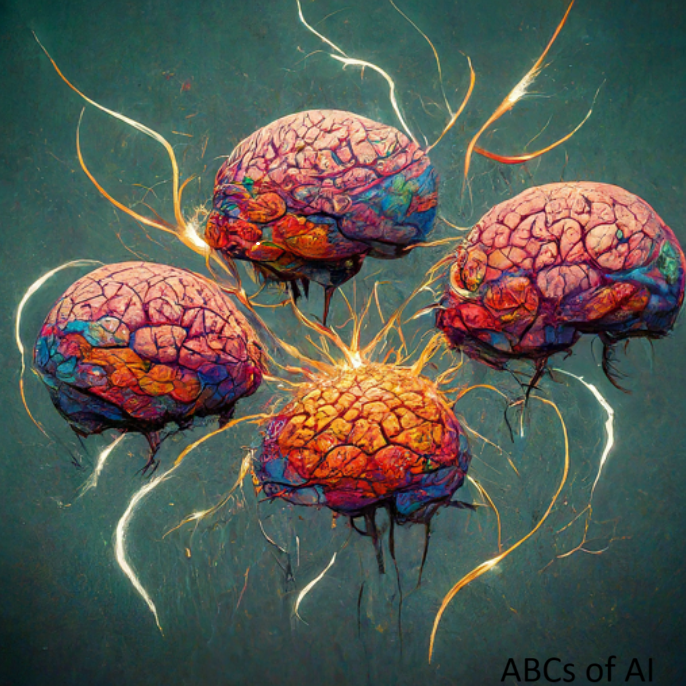
What’s a Compound AI System?
- AI Dream Team: A compound AI system that combines multiple AI models, like a team of robots with unique superpowers. For example, it may include computer vision models to analyze images, natural language processing models to understand text, reasoning models to make decisions, and retrieval systems to find relevant information.
- Specialized Tools: Just like specialized tools in a toolbox, each model in a compound AI system plays a unique role. The computer vision model acts as the “eyes”, the language model as the “communication skills”, the reasoning model as the “logical thinking”, and so on.
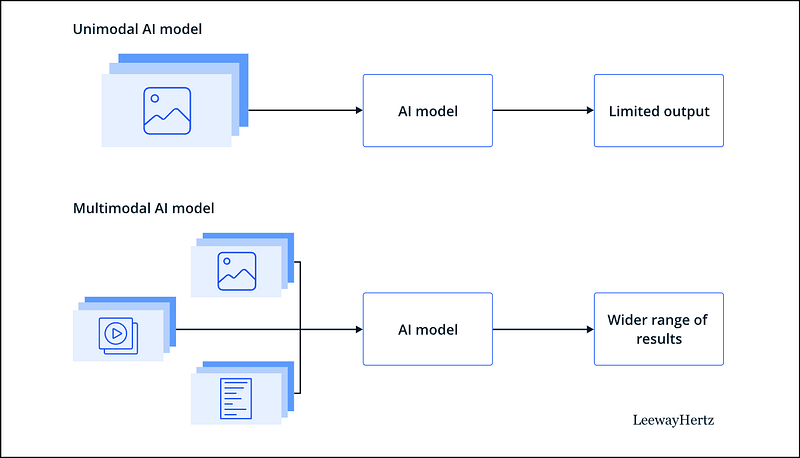
Why the Team Approach Works
- Breaking the Limits of Single Models: Scaling up a single AI model doesn’t always result in the best solution. Compound AI systems offer superior flexibility and accuracy for complex tasks.
- Handling Real-World Complexity: Compound systems are built to tackle the messy, ever-changing nature of real-world problems. They let us combine the perfect tools for any challenge.
- Accelerating Innovation: Creating powerful AI models from scratch requires massive time and resources. By smartly combining existing models, compound AI systems speed up innovation significantly
- Static models, dynamic needs: AI models trained on fixed data need integration with components like search and retrieval to stay updated and relevant in dynamic applications.
- Improving trust and control: Compound systems offer greater behavior control compared to standalone AI models, helping filter outputs and reduce unreliable results.
To combat the tendency of even the best LLMs to generate inaccurate information, compound systems that integrate retrieval capabilities can provide citations or automatic fact-checking, significantly increasing user trust.
Compound Evidence: Berkeley Researchers Weigh In
According to AI researchers from Berkeley, compound systems can outperform even the largest single AI models on many real-world tasks. Their ability to analyze complex inputs like medical scans and reports leads to accurate diagnoses and innovative solutions.
Compound AI in Action
The table below shows examples of compound AI systems. The general audience may be familiar with two of them, ChatGPT Plus and Gemini.
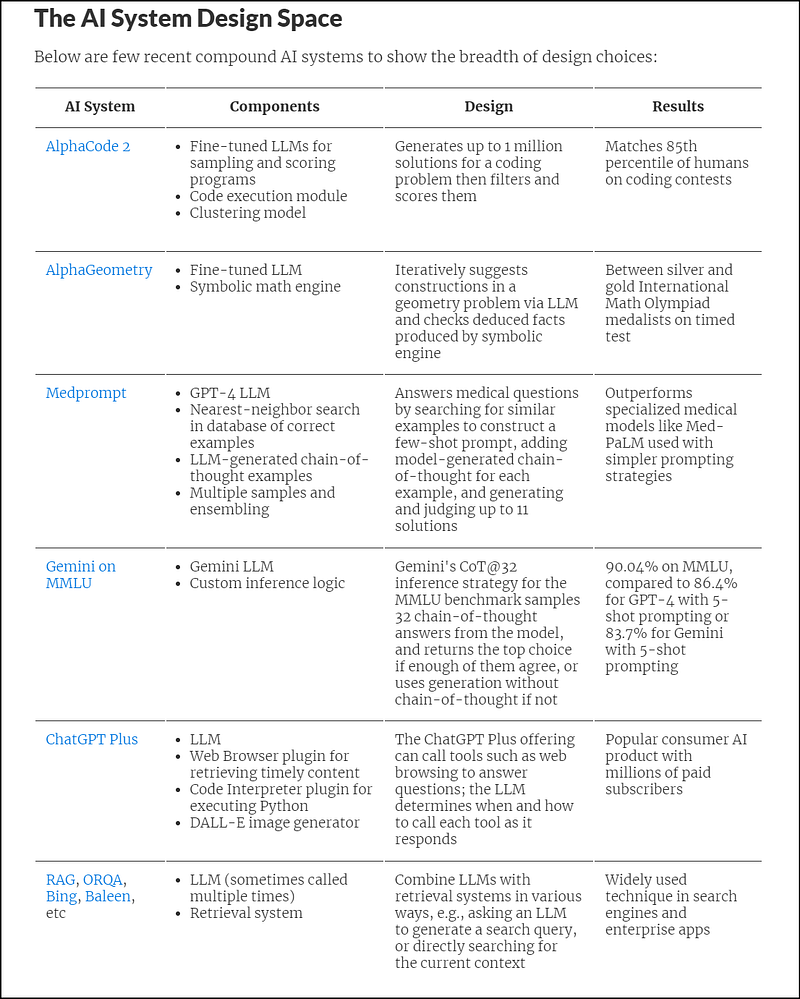
Overall,
- Chatbots That Feel Real: Compound systems power chatbots that can hold actual conversations, understand your questions and search for answers online.
- AI-Powered Doctors: Systems that analyze medical images alongside patient data help doctors make more accurate diagnoses.
- Creativity Unleashed: Have you seen AI-generated images or music? Compound systems combine different models to make this amazing creativity possible.
Ready to Dive Deeper?
Compound AI is an exciting field changing how we solve problems! If you want to learn more:
Conclusion
Generative AI offers exciting potential, but developers are turning to compound AI systems for greater control and quality in their applications. Compound systems, which combine multiple AI models, help design, optimize, and manage the complex interactions required for reliable, real-world AI solutions. This trend could be a major driver of innovation in AI during 2024.


