Complex PTSD and the Realm of Dissociation
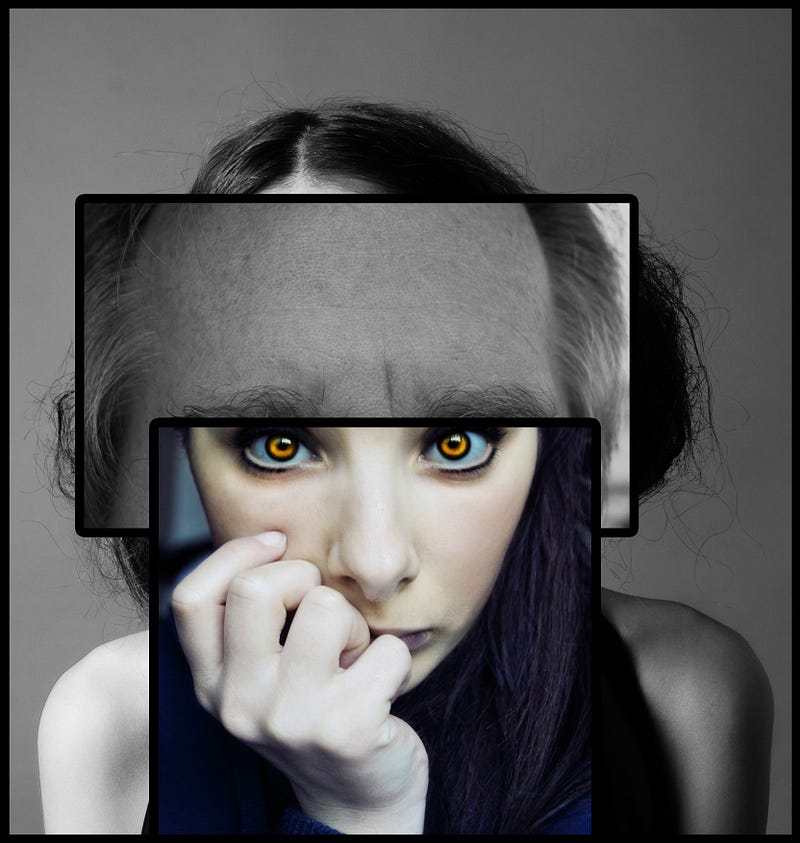
Louise often feels like part of her is “acting.” At the same time, “there is another part ‘inside’ that is not connecting with the me that is talking to you,” she says. When the depersonalization is at its most intense, she feels like she just doesn’t exist. These experiences leave her confused about who she really is, and quite often, she feels like an “actress” or simply, “a fake.” ~ Daphne Simeon (Feeling Unreal: Depersonalization Disorder and the Loss of the Self)
The majority of the clients I treat have been exposed as I was, to repeated traumatic episodes and threats during childhood. Our heinous histories of emotional, psychological and sexual abuse at the hands of trusted caregivers, led to suffering from complex PTSD.
C-PTSD is more complicated than simple PTSD as it pertains to chronic assaults on one’s personal integrity and sense of safety, as opposed to a single acute traumatic episode.
This chronic tyranny of abuse results in a constellation of symptoms, which impact personality structure and development.
The symptom clusters for C-PTSD are:
~ Alterations in Regulation of Affect and Impulses
~ Changes in Relationship with others
~ Somatic Symptoms
~ Changes in Meaning
~ Changes in the perception of Self
~ Changes in Attention and Consciousness
When one is repeatedly traumatized in early childhood, the development of a cohesive and coherent personality structure is hindered. Fragmentation of the personality occurs because the capacity to integrate what is happening to the self is insufficient.
The survival mechanism of dissociation kicks in to protect the central organizing ego from breaking from reality and disintegrating into psychosis.
Hence, fragmented dissociated parts of the personality carry the traumatic experience and memory, while other dissociated parts function in daily life. Consequentially, profound symptoms of depersonalization and dissociation linked to c-ptsd manifest. (Herman JL. Trauma and Recovery)
Dissociative disorders are conditions that involve disruptions or breakdowns of memory, awareness, identity or perception. In the context of severe chronic abuse the reliance on disassociation is adaptive as it succeeds in reducing unbearable distress, and warding off the threat of psychological annihilation.
The dissociative disorders a survivor of chronic trauma presents with vary and are inclusive of dissociative identity disorder (formerly multiple personality disorder), dissociative amnesia, dissociative fugue, and depersonalization disorder.
Identity confusion is also deemed a by-product of dissociation and is linked to fugue states when the traumatized person loses memory of their past and concomitantly, a tangible sense of their personal identity. (Onno Van der Hart, Ellert R.S. Nijenhuis, Kathy Steele Dissociation: An Insufficiently Recognized Major Feature of Complex PTSD)
The treatment process for those afflicted with c-ptsd and attendant dissociative disorders is extensive and comprehensive. Depending on the severity of the repetitious traumas, even in progressed stages of recovery a client may find himself grappling with persistent feelings of detachment and derealization.
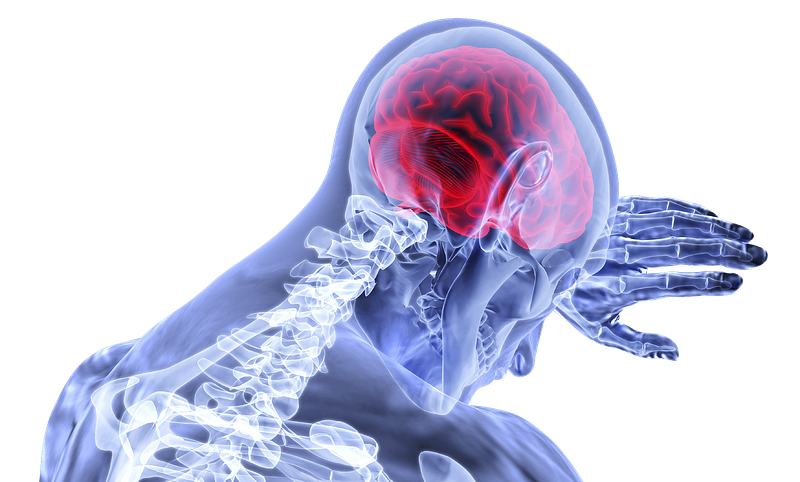
Given that the brains mediation of psychological functions is dramatically compromised by the impact of chronic trauma, this neurobiological impact may be a strong contributing factor regarding lingering dissociative symptoms in survivors of c-ptsd.
When a child’s brain is habitually set to a fear response system so as to survive daily threat, brain cells are killed and the inordinate production of stress hormones interferes with returning to a state of homeostasis.
Turning to dissociative states to relieve the pain of hyperarousal, further exacerbates the effective use of one’s executive functions, such as emotional regulation and socialization. Accordingly, neuroimaging findings reveal that cortical processing of emotional material is reduced in those presenting with c-ptsd and an increase in amygdala activity, where anxiety and fear responses persists.
In spite of the harrowing repercussions of prolonged traumatic abuse and neglect, those suffering from c-ptsd and dissociative disorders profit from working through overwhelming material with a caring seasoned professional.
Treating the sequelae of complex trauma means establishing stabilization, resolving traumatic memory and achieving personality (re)integration and rehabilitation.
Integrating and reclaiming dissociated and disowned aspects of the personality is largely dependent on constructing a cohesive narrative which allows for the assimilation of emotional, cognitive, and physiological realities.