Completely Random Facts About the Panama Canal
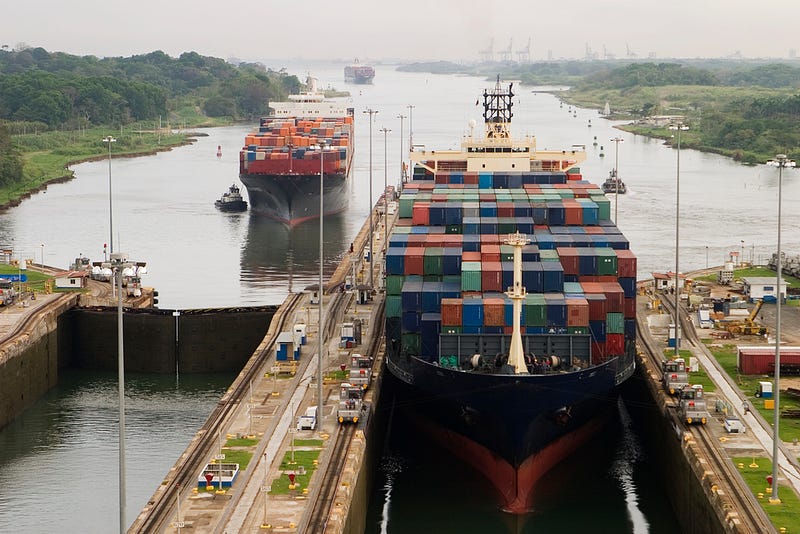
The Panama Canal underwent an incredible expansion in 2016 that added a third set of locks and doubled the capacity of the canal. Here are some other things to know about this famous canal.
About 13,000 to 14,000 ships transit the canal every year. Every ship that uses the canal must pay a toll ranging from $50,000 to $260,000 based on the ship’s size and cargo volume. The smallest toll ever paid was by American Richard Halliburton in 1928 when he swam the canal. His toll? Thirty-six cents since he only weighed 150 pounds.
The highest toll ever paid to transit the canal prior to the expansion of the canal was paid by the cruise ship Norwegian Pearl in 2010. Their toll was $375,600. Since the expansion of the locks, the COSCO Shipping Panama held the highest-paid toll at $575,545 in 2016. That record was soon eclipsed in the same year by the MOL Benefactor, which paid $829,468 to transit the canal.
A ship rises 85 feet above sea level after going through the canal’s locks, and the ships are navigated by specially trained pilots familiar with the transit and not by the ship’s captain.
The United States gave over control of the Panama Canal to Panama in 1999. The expansion that took place in 2016 allowed the canal to handle post-Panamax ships or those that hadn’t previously fit in the Panama Canal’s locks. There are still ships that the canal just can’t fit, such as the Maersk Triple E class ships. These container ships are 194 feet wide and 1,312 feet long. The new locks still won’t be able to handle them since they are 1,400 feet long and 180 feet wide.
More than 25,000 workers died constructing the canal. The French tried first and suffered more than 20,000 worker deaths, while the US suffered 5,600 deaths when they took over construction. The US significantly reduced the deaths by controlling the spread of malaria and yellow fever. They improved sanitation measures, drained areas of standing water that bred mosquitoes and other insects, and installed screening on buildings to keep the bugs out.
The first US President to travel outside of the US on official business was Theodore Roosevelt, and he sailed to Panama in November 1906. He went there to inspect the construction of the Panama Canal after the US bought the rights to the canal from the French in 1902.
NASA transported two stages of the Saturn V rocket in 1965 from California, through the Panama Canal, and to New Orleans before they were transported to Cape Canaveral, Florida. The two stages were too large to have been transported by truck, rail, or air.
Over 900,000 ships have traveled through the Panama Canal since its inception.
A gigantic crane that had been used to lift U-boats from the water was taken from Germany as part of reparations after World War II and put into service in 1948 in the Long Beach Naval Shipyard. When the Naval Station was closed in 1994, the crane, which had been nicknamed “Herman the German,” was sold to the Panama Canal Company. In 1996 it was moved to the Panama Canal and continues to operate today under the name Titan.
According to available records, the first ship to cross the Panama Canal was the SS Ancon, an American ship that carried passengers and cargo, which included tons of cement from New York to Panama that was used in the construction of the canal.
The Atlantic and Pacific Ocean levels connecting with the Panama Canal are not at the same height. The Pacific Ocean is slightly higher than the Atlantic Ocean.
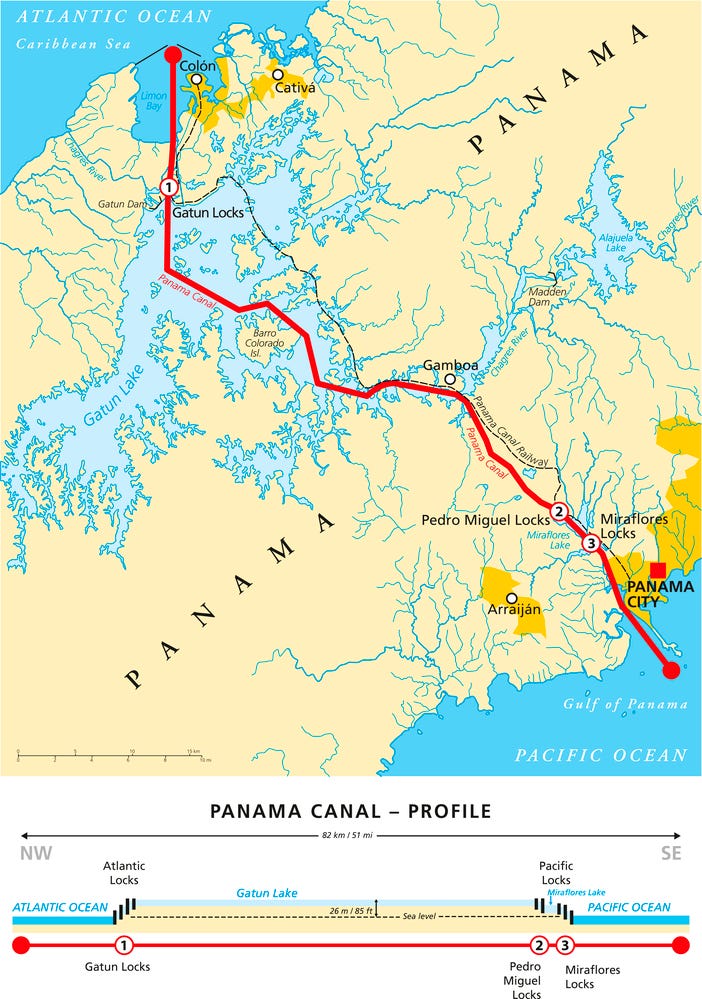
Ships save 7,872 miles between New York and San Francisco by going through the canal instead of going around Cape Horn in South America.
Around four and a half million cubic yards of concrete was used for constructing the dams and locks. The material excavated would circle the earth four times if it had been put on railroad flat cars.
The fastest transit of the Panama Canal was by the U.S. Navy hydrofoil Pegasus. In June of 1979, it made the trip in two hours and forty-one minutes instead of the average ten hours that is required today.
Transit the Panama Canal in Under Seven Minutes:
Come back again for more Completely Random Facts here on Fact World. For more fun fact articles, travel on over to Knowledge Stew here on Medium.